
Most living room paint fails because the color is ugly—they happen mainly because nobody checked the light.
In a store lit by fluorescent bulbs, you pick a shade that looks perfect on a 2-inch swatch. For the most part, about 73% of homeowners skip the step of testing large samples on multiple walls. That’s a costly mistake, especially since premium paint now costs 3,000 to 10,000 BDT per gallon.
Yet, the fix is simple if you get a handful of technical rules before you even open a can.
What should you remember and do?
- You must match color to the room’s Light Reflectance Value (LRV) needs—this metric, not the color name, determines whether a space feels airy or cramped. Ignore it, and you’ll regret it.
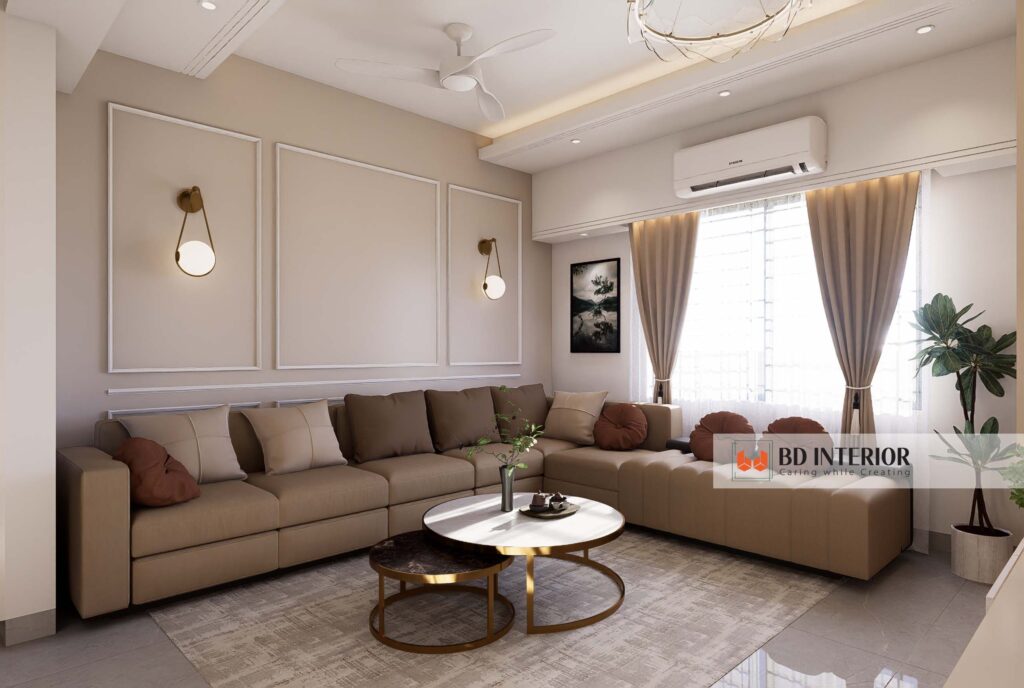
- Warm neutrals like greige and mushroom are surging, replacing sterile gray, because they work with both natural daylight and artificial warm lighting without turning blueish. Real estate data from 2024 shows homes with warmer living rooms sold 5–7% faster in many markets.
- Dark, saturated tones require 3+ coats and show fingerprints fast. They’re worth it for a media room or library but a poor choice for a high-traffic family space unless you enjoy constant touch-ups.
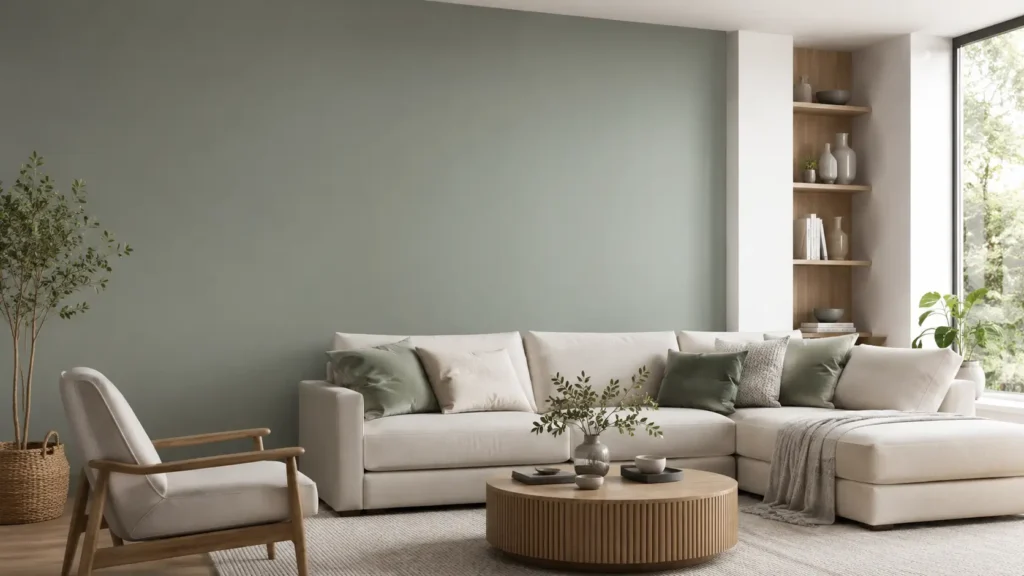
- Biophilic greens (sage, olive) connect interiors to nature and lower perceived stress, but in north-facing rooms, they often read as muddy brown. Always test with a sample board you can move around.
Before you grab that trendy terra-cotta or deep navy, let’s walk through what actually works. What doesn’t, and why the lighting in your particular room matters more than the latest Instagram post.
The One Metric That Decides If Your Color Works
Light Reflectance Value, or LRV. Is a number from 0 (pure black) to 100 (pure white) that tells you how much light a color bounces back into the room. Go lower, and you’ll rely on more artificial light, which can increase energy costs subtly but measurably. That changes the picture quite a bit.
Sue Wadden, Director of Color Marketing at Sherwin-Williams. Points out we’re moving away from ‘hospitality gray’ toward colors that (which is a critical factor) feel personal and grounded. And one of the easiest ways to ground a space is to honor the natural light already there.
North-facing rooms get cool, bluish light all day. That’s the reason. In many cases, the same color behaves completely differently; before you commit, paint a 2-foot-by-2-foot board and move it around the room at different times of day. It’s a bit tedious, but far cheaper than repainting.
At a high level, actually, let’s put that more precisely. Which means morning light is cool (around 5000K), midday is neutral. And late afternoon is very warm (around 3000K). Your wall color’s LRV interacts with that.
A terracotta with an LRV of 40 under cool morning light can look almost neon orange; the majority on Quora have complained about that. Kind of surprising, right? So you’re not just picking a color; you’re managing a physics problem.
The good news? Once you learn to read the room’s orientation, you’ll rarely ever make that mistake again.
LRV 65–75
LRV 55–70
LRV 60–72
LRV 58–70
Higher bars mean you can lean into lighter shades without washing out.
The Great Neutral Shift Away From Gray
Here’s what you should know. For almost a decade, gray was the ‘safe’ default.
But walk into a home painted in cool gray tones on a cloudy day. You’ll quickly understand why so many Reddit threads complain about feeling like they’re in a prison cell. Benjamin Moore’s Swiss Coffee remains a fail-safe warm white with a LRV of about 83.
Homeowners on Houzz praise it constantly for not turning yellow or pink under different light sources.
Switching focus for a second, these warm neutrals don’t just look cozier. They actually improve psychological well-being by reducing visual stress compared to stark white walls.
And because they have a bit of depth, they hide minor scuffs better (and that implies quite a bit) than pure white. Don’t think warm neutral means boring; a greige with subtle green undertones (like Sherwin-Williams’ Accessible Beige) can shift in different light without losing its warmth. You’ve probably wondered the same thing.
The trick is to avoid anything too yellow, which can feel dated. Aim for balanced undertones that lean just hardly toward brown or taupe.
Naturally, the shift away from gray also makes sense from a resale perspective, and real estate analysts say homes with overly trendy ‘statement’ colors can sit on the market longer. Peach Fuzz, Say, for proof, was Pantone’s 2024 Color of the Year. Arguably, what this means is a warm neutral backdrop lets buyers imagine their own style, and that’s what sells.
So you’re not just painting for yourself, you’re protecting your investment. If you plan to sell within five years.
This same principle applies to any permanent finish, which is why plenty of experts recommend neutral foundations for high-value renovations (you can consistently add color through decor).
The underlying point remains clear. How does that play out?. Plus, if you’re looking to layer these tones with texture and fabrics, the mental impact of your design choices is a really big deal. Warm spaces don’t just look good; they also slightly lower cortisol levels.
Earth Tones and the Biophilic Connection
Biophilic design—bringing nature indoors- isn’t just about plants. That’s powerful. So where does that leave us? These colors are also easier to get wrong.
Because they rely heavily on the room’s light. In a north-facing room, olive can look like muddy brown. In a west-facing room with strong afternoon sun, it can appear lively and alive. As mentioned, before you invest in three gallons, you must sample the boards.
You could say they add warmth without the pinkish tint some tan colors have. Plus, terracotta regularly looks much more intense in person than on a small swatch, as DIYers on Quora repeatedly warn. You might aim for a soft, earthy orange. And end up with what looks like a neon traffic cone. To control this, start with a lighter shade than you think you need.
And use an eggshell sheen, which reduces glare and softens the color perception.
Low-VOC and zero-VOC paint options are now standard in these premium color lines. Costing about 10–at least 15% more, but greatly improving indoor air quality. That’s a significant gap.
The VOC limit for eco-friendly paint is under 50 grams per liter. For a living room where you spend hours daily, that’s money well spent. And when you consider contemporary home decor trends that point out wellness, these colors fit perfectly.
Consider this practical perspective. But here’s something odd: painting a whole room in a saturated earth tone can actually make it feel smaller. If the LRV is below 50.
So, for small living rooms, consider a feature wall in olive. Or clay paired with a warm neutral on the other three walls. Giving you the biophilic benefit without sacrificing a sense of space, that.
Moody Colors and the Color Drenching Debate
Deep navy, charcoal, and forest green are having a moment. Especially for media rooms, libraries, or spaces where you want a cocoon-like luxury feel. Now, Patrick O’Donnell of Farrow & Ball says color drenching, painting walls, trim, and ceiling, actually, hold on, same saturated shade, is the most proven way to make a standard room feel architecturally custom.
People constantly drench everything in the same finish. And end up with a flat, dimensionless box.
High-pigment moody colors often need three or more coats, doubling labor and material costs. So your $90 gallon suddenly becomes a $270 commitment before you’ve even bought the right brushes. And dark matte finishes show fingerprints, smudges, and scuffs far more easily than lighter satin finishes. In a home with kids or pets, that can mean constant touch-ups. Many homeowners on Houzz reported regret after painting a room navy blue because, as one user put it, “it sucks all the light out” during the winter months.
If you still want drama but not the maintenance headache, consider a single lacquered accent wall behind the sofa in a deep tone. The gloss will reflect light and actually brighten the room rather than absorb it, and let me tell you, another trick is to use a moody color on built-in bookshelves or alcoves, leaving the main walls a light neutral. That way you get the depth without the cavelike effect. This approach aligns with the secrets of moody interior design that focus on layering light and texture.
The real question here is longevity; will that deep aubergine accent wall feel dated in three years? If you follow trends, probably yes. But if you love the color, paint it. So, repainting from a dark color to a light one may require a primer and two extra coats, so the cost of changing your mind is higher.
FAQs
How do I pick a living room color that still looks good in 5 years?
Choose a warm neutral base with an LRV between 60. And 75 and add trend colors through pillows, rugs, and art. That way, you can shift with the seasons without repainting. Look at Swiss Coffee, Accessible Beige, or Pale Oak by Benjamin Moore—these have proven staying power.
What is the most common mistake people make when choosing a living room color?
They ignore the room’s orientation and light quality, which means a color that looks, no, scratch that, perfect in a south-facing showroom can appear totally different in your north-facing living room. Always test a large sample on at least two walls for 48 hours before making a decision.
Are dark colors a bad idea for a small living room?
Not necessarily. If the room has plenty of natural light and you want a cozy. But if the space lacks windows or feels cramped. Yet keep the darkest shades as an accent wall, or use them below a (a detail often overlooked) chair rail to avoid overwhelming.
How many coats of paint do trendy dark colors usually need?
High-pigment, deep tones often require three coats. Or even four for full coverage, especially over a light primer. Adding up speedy—an extra gallon per coat in a medium room, that.
Budget so and ask your paint store for a tinted primer to reduce the count. At least, that outlines the core theory.
Can I safely use trend colors without hurting resale value?
Paint is the easiest thing to change, so one accent wall in a bold shade is usually fine. But if you paint all four walls. The ceiling, a trendy peach or neon terracotta, could turn off buyers (which works out well in practice).
Keep the main surfaces neutral. And use the latest color trends in easily swappable decor items.
At this point, you know the rules, the pitfalls, and the science. You’re not just chasing a trendy swatch. You’re approaching your living room like a designer who understands light, LRV. Long-term value, no absolute guarantees.
Grab a sample pot, tape a big square on the wall, and live with it for two days. That’s the only way to guarantee you’ll love the result when the paint dries and the afternoon sun hits.

S.M. Rezaul Haque is a seasoned interior design consultant with 15+ years of experience. An AIUB graduate and Senior Vice President of BIDCOA, he specializes in creating functional, sustainable, and visually inspiring spaces. As the driving force behind BD INTERIOR, he has helped shape 700+ Bangladesh’s most innovative interior design projects.