
Your speedy food shop’s biggest money-waster might be the incredibly space you’re renting. In Dhaka’s high‑rent zones like Gulshan. Every extra square foot of idle dining area bleeds taka while people queue for takeout. The hard truth is that over 70% of your orders probably leave the premises in a bag.
Why pour cash into tables and chairs that sit empty?
Key Point
- Slash construction costs by 20–40% by ditching the dining room. Build a sleek, sub‑1,000 sq ft express outlet that handles only pickups and deliveries.
- Accelerate service to under 2 minutes with a walk‑up window and app ordering. You’ll push through 30% more orders during Dhaka’s chaotic lunch hour.
- Keep a cash counter for the over 50% of Bangladeshi adults who remain unbanked. A purely cashless design can alienate a huge slice of your market, no matter how sleek it looks.
- Bold graphics and local recycled materials (like jute composite panels) transform a tiny space into an Instagram hotspot—free marketing that pays for itself.
Traditional Fast Food Layouts Are Costing You a Fortune in Bangladesh
Old‑school fast food interiors assume you need a substantial dining room. That assumption is a cash furnace. For the most part, truly, in Dhaka, where commercial rent around Motijheel or Dhanmondi can run 200–300 taka per square foot a month, every table that sits empty for hours is a direct drain.
That changes the picture quite a bit. You can decide. The arithmetic is brutal. You can easily trim 20–40% off your build budget. You could say, and you’ll fill those square feet with high‑flow pick‑up lanes instead of idle chairs.
Sure enough, let me sharpen that. The real saving isn’t just the build cost; it’s also the ongoing rent you’ll save by leasing a smaller footprint.
Many operators find that a 600‑700 sq ft unit, used solely for order assembly and a walk‑up counter, generates the same revenue as a 1,200 sq ft dine‑in outlet. Not exactly what you’d expect.
Because you’re moving more customers per hour, not per seat. That’s why progressive brands, from international chains like Captain D’s Express to local Dhaka‑based burger joints.
Now flip that around. Are ripping out dining rooms and rarely ever looking back.
Traditional Layout
3,500 Tk/sq ft
Express Model
2,450 Tk/sq ft
Construction cost per square foot in Dhaka — about 30% savings with no dining area.
Speed Service by Moving Orders, Not People
Taking a step back reveals an important factor. Walk‑up windows, app ordering. And smooth kitchen‑to‑hand, okay, more accurately, flow define the new fast food interior. The goal isn’t just a smaller footprint. It’s throughput.
Industry data shows a well‑designed express prototype can serve a walk‑up customer in under 2 minutes. And handle 30% more orders per hour than a classic counter setup. The data speaks for itself. M.
You need a layout that directs the customer’s feet without any hesitation.
Start by placing a dedicated walk‑up window right on the street frontage, with a clear digital board (which makes logical sense) showing order numbers. For the most part, a mobile‑order assembly line, a cash‑only blazing‑pay window, and a delivery bagging station. The cash‑only point is vital. Over half of Bangladeshi adults don’t have bank accounts.
You could say a separate cash window, physically apart from the app‑order pickup, keeps both flows fast and hassle-free. Similar to strategies used for low-budget restaurant interiors in Bangladesh, simplifying movement is what saves labor, too, so automation and smart zoning can reduce staffing needs by 15–25%, a big deal when wages keep climbing.
Here’s a mistake plenty of first‑time owners make. They put the cash counter right next to the main pickup window. Then the queue for cash tangles with the queue for phone orders. That’s how you acquire angry crowds and a 5‑minute wait despite an “express” layout.
Keep them apart, even. If it’s just two narrow openings on opposite sides of the facade. The spatial tension forces order. It’s like a traffic junction, you control the flow with barriers, not signs.
Make Your Interior a Social Media Magnet Without a Dining Room
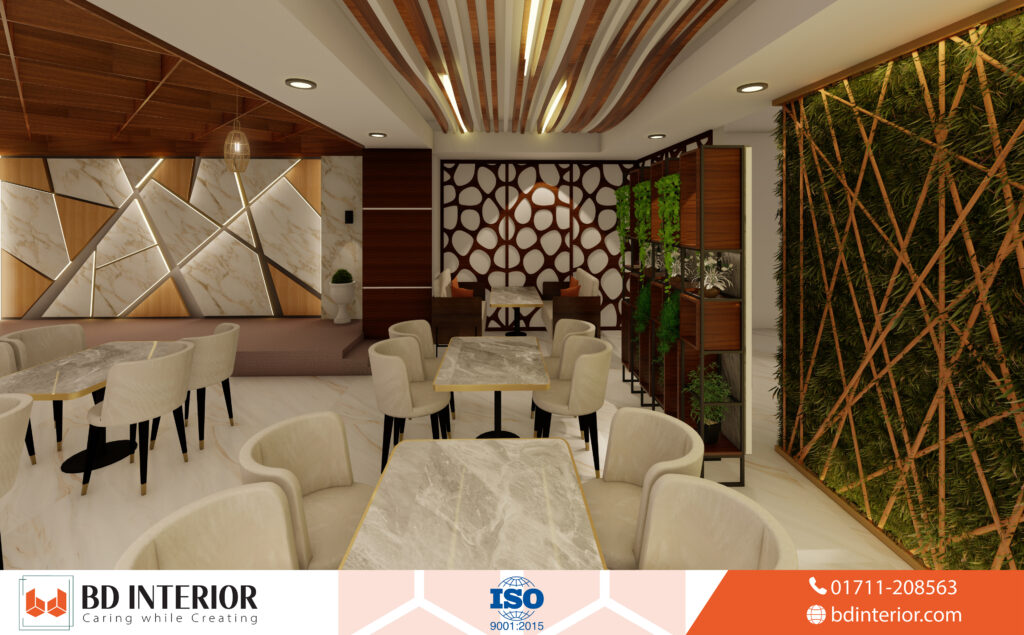
Graphic design matters even more when you’ve zero seating. Plus — with no tables to stage your food; the walls, floor, and ceiling become your Instagram set. Bold typography, saturated color palettes, and repeatable murals; to be more precise, patterns turn a 5‑minute pickup into a photo. The key here is that pF Comms notes that graphic‑heavy interiors now define modern speedy food, and the reason is dead painless.
A single customer photo shared on Facebook, or Instagram can reach 500 friends instantly. That’s not a small shift. That’s free visibility in a market where digital ad costs keep rising, so as any expert in retail shop interior design in Bangladesh will confirm, visual identity isn’t decoration, it’s your hardest‑working salesperson.
In Bangladesh, you can tap into local color psychology. More importantly, pair lively reds and greens with bold Bangla‑English bilingual text.
Hang a painless matte‑finish backdrop wall that says “Dhaka’s Fastest” and watch customers snap it non‑stop, and honestly, use low‑energy LED strip lighting to wash the walls in consistent color temperature, because harsh CFL tubes ruin photos. Worth considering and for materials, look at recycled jute‑polymer wall panels or bamboo slatted screens.
What this means is they carry a strong eco‑story that connects with younger buyers. Successful cafe interior design ideas borrow from this playbook all the time—fast food should, too.
Sustainability isn’t just a mood board concept; it’s a pricing lever. When buyers see recycled PET felt acoustic panels or low‑VOC paints, they mentally categorize your brand as premium, even if the menu price is 120 taka.
That’s not a small shift. That premium perception lifts margins by 5–10% without doing anything else. And mainly because you’re building a compact box. The material cost premium is minimal, perhaps an extra 30,000 taka overall.
Avoid the Cashless Trap That Ignores Half of Bangladesh
A just digital, app & card‑only design looks futuristic. But in Bangladesh, it’s a business blind spot. World Bank data indicates that about 50% of adults remain unbanked.
Those numbers tell a story. Plus, if your fast food shop has no cash‑accepting point, you instantly lose access to a massive customer segment.
This is probably the most common interior design mistake I see. Operators copy a Silicon Valley prototype without adapting to the local wallet.
You’ve probably noticed the fix is clear and doesn’t ask for; to be more precise, adding a full dining counter (which works out well in practice). Build a narrow, clearly marked cash‑only kiosk about 3 feet wide. Use a hassle-free glass partition and a small drawer.
Place it at a distance from the main high‑speed app pickup line. ” The key is to not blend it into the main queue. This dual‑lane approach keeps your digital throughput high. While capturing the lakhs of taka that still move in paper currency every day. In reality, you can also partner with bKash or Nagad cash‑out agents nearby to reduce physical cash handling, but the physical point must exist.
So forgetting this split is why some trendy express outlets in Banani see strong Instagram buzz. Perhaps. But disappointing total sales. This becomes way more relevant in a moment.
Also, remember natural ventilation, which means in a windowless compact box, the heat from grills and fryers quickly becomes unbearable if you rely only on AC. Build in a roof exhaust fan. Or a louvered back wall that pulls fresh air.
In Dhaka’s humid months, a well‑ventilated space cuts AC runtime by 20%, and the staff actually stays productive. The data speaks for itself. Plus, the fan noise is often quieter than an overworked split unit.
Your 5‑Step Action Plan for a Profit‑Focused Fast Food Interior
Enough theory. Here’s the condensed checklist. Funny enough, run through it with your contractor or interior designer before you sign a lease.
- Kill the dining area. Target a lease under 1,000 sq ft. Map a pickup window, a bagging station, and a small prep kitchen. Zero seats. Your business is now a fulfillment center, not a hangout.
- Route three flows separately: mobile order pickup lane, cash‑only kiosk, and delivery‑bag table. Use low barriers or floor graphics, not walls, to guide movement on a tight budget.
- Go bold on one wall. Pick a single side for a floor‑to‑ceiling graphic. Spend 15,000–25,000 taka on a durable vinyl mural that screams “Instagram this.” Change it every 18 months to stay fresh.
- Choose sustainable, cleanable materials. Use recycled plastic laminate for counters, epoxy flooring for a seamless clean, and low‑VOC paints. The payoff is lower daily cleanup time and a premium look that lasts.
- Test with real foot traffic Before finalizing, simulate a lunch rush: have a friend order via app, another pay cash, and a delivery rider pick up. Time it. Adjust the distances between stations until you consistently hit under 2 minutes.
This approach turns interior design from a cost center into a profit engine. You’ll spend less on rent, less on staff. And your walls will do the marketing for you.
FAQs
Can a fast-food shop really survive without seating in Bangladesh?
Absolutely. Most of Bangladesh’s fast food shoppers eat on the go. Or at their desks. In fact, removing seating reduces loitering and speeds up turnover. And lets you operate from a tiny, high‑visibility location. You’ll capture the same revenue with half the rent.
How much does it cost to build a compact express model in Dhaka?
For a basic 600–800 sq ft unit using durable local materials. Expect 15–25 lakh taka. That’s 20–40% less than a traditional setup — which is why you can push costs lower with exposed ceiling finishes and simple epoxy flooring.
What if my competitors still have big dining rooms?
Then they have higher overhead and slower service. Your advantage is speed and lower prices. This market is shifting; customers in Mirpur and Uttara are more and more choosing the option that takes 2 minutes, not 15. You’ll win on convenience, not on tablecloths.
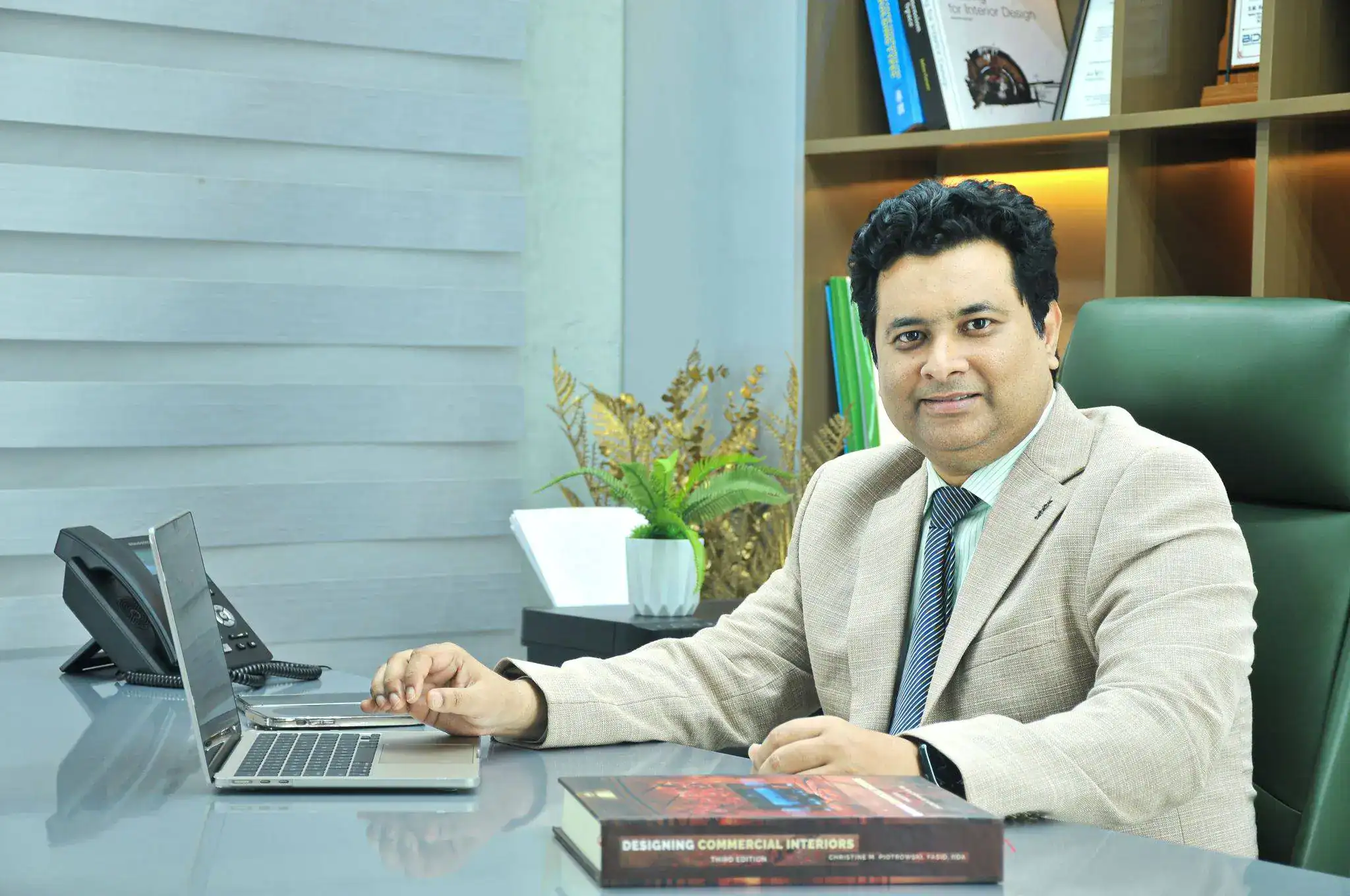
S.M. Rezaul Haque is a seasoned interior design consultant with 15+ years of experience. An AIUB graduate and Senior Vice President of BIDCOA, he specializes in creating functional, sustainable, and visually inspiring spaces. As the driving force behind BD INTERIOR, he has helped shape 700+ Bangladesh’s most innovative interior design projects.