
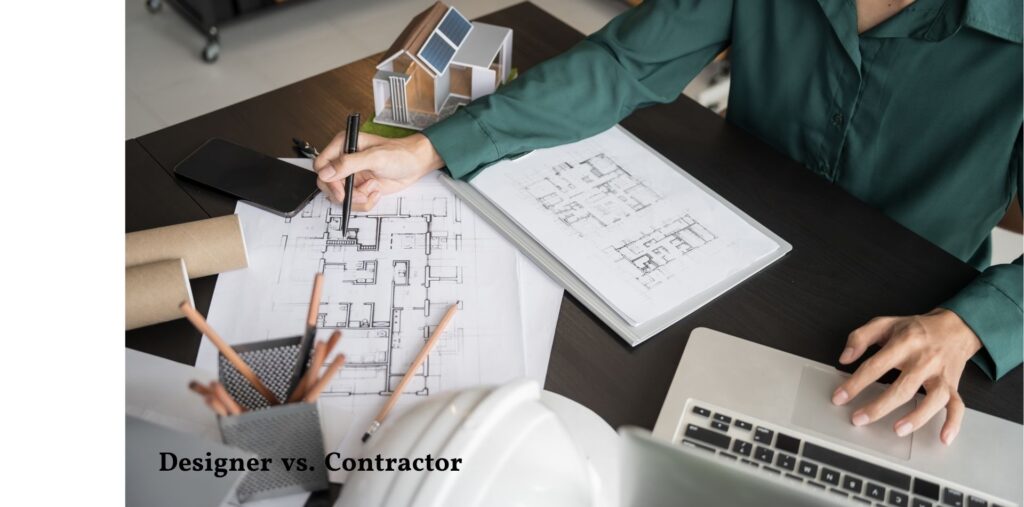
Renovating a home in Dhaka or anywhere in Bangladesh raises one central question: should you hire an interior designer, a general contractor, or both? The “Designer vs. Contractor: Your Plan for a Flawless Home Transformation” debate matters. Because your choice directly affects your budget, timeline, and stress. Choose poorly, and you may face change orders, blown budgets, and months of frustration.
- Designers define your space’s vision, layout, and finishes before construction begins, reducing decision fatigue and design errors.
- Contractors handle physical execution, labor coordination, permits, and scheduling to turn approved plans into built reality.
- Hiring a designer adds roughly 10–30% to project cost versus going direct to a contractor, but prevents scope creep and change orders.
Key Point
- Design certainty decides: homeowners who already know their layout and finishes lean contractor-direct.
- Those overwhelmed by layout, lighting, and material choices benefit enormously from a designer-first approach, which recent market guides estimate adds about 10–30% or more to total project cost.
- The cheapest contractor bid often creates more change orders and coordination stress later, so price alone should never drive your decision.
Table of Contents
- Designer vs Contractor at a Glance
- What Is an Interior Designer?
- What Is a General Contractor?
- Pricing: Designer vs Contractor
- Project Management: Designer vs Contractor
- Quality and Risk: Designer vs Contractor
- People Also Ask
- Which Should You Choose?
Designer vs Contractor at a Glance
A quick side-by-side comparison shows what each professional brings to your renovation before you commit money and time.
| Attribute | Interior Designer | General Contractor |
|---|---|---|
| Core Role | Vision, layout, materials, finishes | Construction, labor, permits, scheduling |
| Best For | Complex layouts, finish decisions | Simple renovations with clear plans |
| Cost Premium | Adds ~10–30% over direct contracting | Lower upfront cost, no design fees |
| Permits | Generally not handled | Primarily responsible |
| Timeline Impact | Adds process time for concepts and revisions | Controls construction schedule |
| Key Risk | Higher total cost | Unstable pricing without complete plans |
What Is an Interior Designer?
An interior designer is a professional who plans your space’s layout, selects materials and finishes, creates 3D visuals, and coordinates the overall design vision before any construction begins.
They determine what the space should become.
Designers develop concepts; draw floor plans; design lighting layouts, and specify materials. They produce mood boards, 3D renderings, and detailed drawings that translate your abstract ideas into concrete plans. In Bangladesh, many homeowners feel overwhelmed by layout, lighting, and material choices. Plus, a designer reduces that decision fatigue quite a bit.
“The designer determines what the space should become, while the contractor determines how to physically build it.” — Brenna Morgan
Their trade-only showroom access can secure discounts on custom furniture and unique finishes that aren’t available to the general public. Designer-led projects in Dhaka often achieve a cohesive final look that justifies the premium for homeowners who want polish over cost savings.
The designer route adds process time, and concepts — revisions — and material selections must be finalized before construction begins. If you’re struggling with this step, finding the right interior designer can prevent costly missteps early.
Strengths:
Strong concept development, better visual planning, single point of accountability across trades.
Weaknesses: Higher total cost; adds timeline before construction begins.
Ideal user:
Homeowners facing complex layout, lighting, or millwork decisions who want a cohesive result with less day-to-day coordination.
What Is a General Contractor?
A general contractor is the professional who executes the physical construction of your renovation, managing labor, scheduling, permits, and build quality to turn approved plans into a finished structure.
They focus on how the vision gets built on site.
Contractors hire and manage specialized workers like plumbers — electricians — and carpenters. They handle structural changes, enforce safety regulations, get building permits, and control the construction timeline. Laws and inspectors in Bangladesh can confuse homeowners; a trusted renovation contractor who manages compliance offers big relief.
When does a contractor-direct approach make sense?
When you already have a clear design with drawings and specifications. When your renovation is clear enough that (depending fully on the context) detailed design work isn’t necessary. The contractor takes your plans and builds them faithfully.
“Hire a general contractor directly when you already know what you want built, or you already have a designer and need someone to build their drawings faithfully.” — The Home Star Service
Strengths:
Lower upfront cost since you avoid design fees and markup; works well for simple renovations with clear plans.
Weaknesses:
Requires you to make more choices and actively manage timelines, materials, and decisions; without complete plans, pricing can be unstable.
Pricing: Designer vs Contractor
The designer route costs roughly 10–30% more than direct contracting, with some markets reporting higher premiums depending on project scope.
Contractors offer lower upfront cost because you avoid or reduce design fees and markup.
Designer hourly rates range from $75 to $500 per hour, depending on the project and location. Some charge a flat fee for a specific room or project. Others take a percentage of total project cost, regularly falling between 10–20%. Contractors usually give a fixed bid covering all materials and labor, or use a cost-plus contract. Where you pay actual costs plus a pre-agreed percentage.
Cost Comparison: Designer Route vs Contractor-Direct (Relative Index)
The catch? Incomplete scope definition leads to change orders and quote inflation during construction.
A design-first then bid approach can produce better contractor pricing because the scope is defined before quotes. The designer premium can pay for itself through fewer change orders. If budget is tight, you can reduce interior design costs without sacrificing the planning phase fully.
Round Winner: Contractor wins on raw cost, but the designer route wins on cost predictability when scope is complex.
Project Management: Designer vs Contractor
Designers provide a single point of accountability, reducing miscommunication across trades. Contractors require homeowners to make more choices and actively manage timelines.
The best choice depends on how much project management you want to keep.
Homeowners with limited time prefer a designer or design-build setup, which means someone handles project coordination, concept design, and material selection. Hands-on owners who enjoy controlling decisions lean contractor-direct, trading convenience for lower cost.
When layout, lighting, materials, and millwork all interact in the same space, involving design early prevents costly conflicts. A contractor can build anything. But without a coordinated design plan, you risk inconsistent finishes, misplaced lighting, and layout problems that are expensive to fix after drywall goes up.
Round Winner: Designer wins on coordination and reducing homeowner management burden, especially for complex projects.
Quality and Risk: Designer vs Contractor
Designers carry liability for design errors and material specification mistakes, while contractors bear responsibility for structural integrity, code compliance, and worker safety.
Both professionals need adequate insurance, and understanding this distinction protects your investment.
If a chosen material proves unsuitable or a layout causes a safety hazard. Because of the design itself, the designer’s professional indemnity insurance covers those claims. If a beam is improperly installed or an electrical system fails inspection, the contractor’s general liability and workers’ compensation insurance applies.
The real risk isn’t either professional individually; it’s the gap between them. A common complaint from direct contractor projects is that quotes become unstable when scope isn’t fully defined. Without drawings, specs, or enough time to supervise closely, quality suffers. The design development phase creates a clear specification package that the contractor builds against, reducing ambiguity.
“Designers communicate the design vision. Contractors focus on how that vision is realised on site.” — Decor Buddi
Round Winner: Tie; both carry distinct, non-overlapping liabilities. The safest approach is having both roles covered, either separately or through a design-build firm.
People Also Ask
Should I hire a designer or contractor first?
Hire a designer first if your project involves layout, lighting, material, or millwork decisions. It’s worth noting that hire a contractor straight up. When you already have clear drawings and specifications. Recent expert consensus strongly favors a design-first, then bid workflow.
Can a contractor also do interior design?
Some contractors offer basic design services. But their expertise is in construction execution, not concept development. For complex spaces where layout and finishes interact, a dedicated designer produces better results.
How much more does a designer cost versus a contractor?
Recent market guides estimate that hiring an interior designer adds roughly 10–around 30% or more to project cost versus going direct to a contractor, depending on scope and market conditions.
What happens if I choose the cheapest contractor bid?
In most scenarios, forum discussions and expert commentary consistently warn that the cheapest contractor regularly creates more change orders, disputes, and delays later. Low bids regularly reflect incomplete scope understanding, not better value.
Which Should You Choose?
The Designer vs. Contractor: Your Plan for a Flawless Home Transformation decision comes down to two factors: how much design certainty you already have, and how much project management you want to handle yourself. Choose a Designer first if you face complex layout, lighting, or material decisions and want a cohesive result with less day-to-day coordination. This route adds roughly 10–somewhere around 30% to cost but prevents scope creep and change orders.
Choose a Contractor directly if you already have clear drawings, specifications, and the ability to manage decisions actively. This route saves on design fees and works well for simple renovations.
Choose a Design-Build firm if you want a single point of contact with integrated design and construction, accepting slightly higher cost for simplified communication.
- Define your vision — Collect inspiration images and describe how you want the space to look and feel.
- Assess project scale — Decide whether your renovation is cosmetic or structural; this dictates which professional you need most.
- Research professionals — Look for qualified, insured designers and licensed contractors with relevant portfolio experience.
- Interview thoroughly — Ask how design decisions will be communicated to the build team and how they handle change orders.
- Review contracts — Scrutinize scope, fees, timelines, and change order procedures before signing anything.
Your path to a remarkable home starts with a well-informed choice, and the designer sparks the vision that captivates. The contractor builds the quality that endures. Whether you choose separate experts or a unified design-build team, clear contracts and open communication are your strongest tools for transforming your house into the dream home you deserve.

S.M. Rezaul Haque is a seasoned interior design consultant with 15+ years of experience. An AIUB graduate and Senior Vice President of BIDCOA, he specializes in creating functional, sustainable, and visually inspiring spaces. As the driving force behind BD INTERIOR, he has helped shape 700+ Bangladesh’s most innovative interior design projects.