
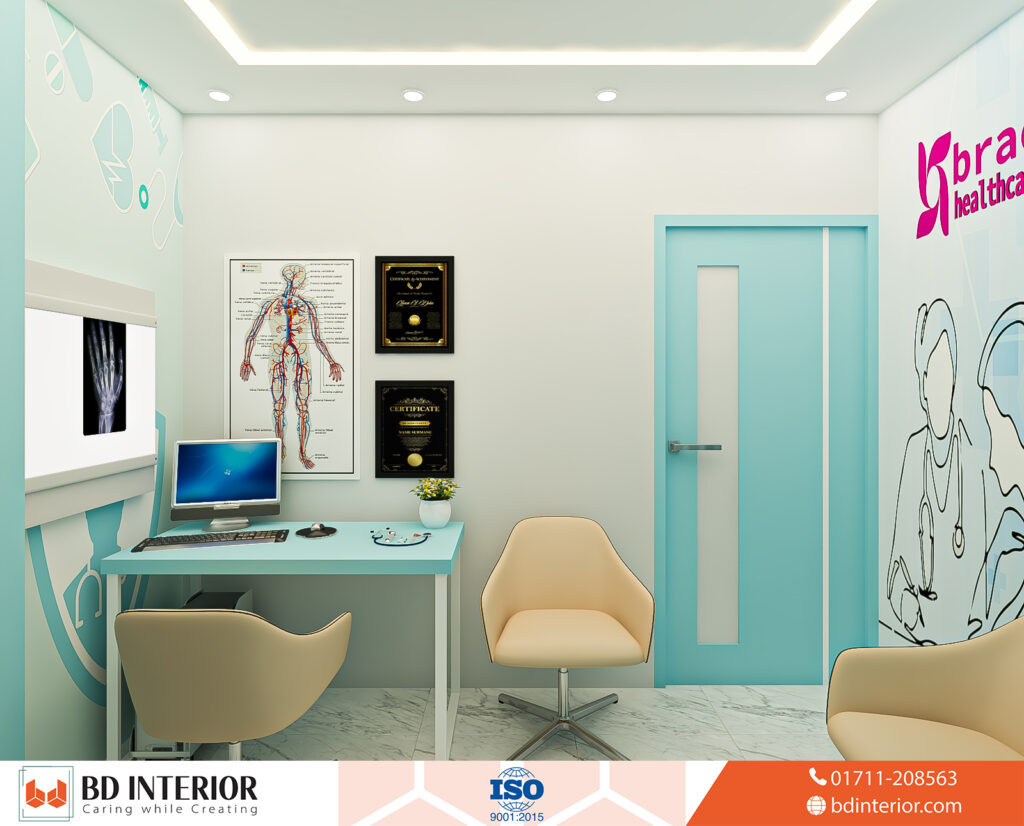
Walking into a standard diagnostic center in Dhaka always feels like walking into a high-pressure bunker (and that’s quite an implication). The air is thick with the smell of disinfectant, and the lighting is harsh enough to give you a migraine. The layout feels more like a maze than a medical facility. This outdated approach not only makes patients uncomfortable; It actively causes physiological stress.
For the owner, this causes lower patient retention rates and increased staff burnout. Modern healthcare environments require a shift from sterile isolation to clinical excellence using hospitality; we’re not just building a lab. You’re building a place where people receive life-changing news.
Often, the strict requirements of medical physics. The soft human need for reassurance coexists.
When spatial psychology is ignored. The key here is that we prioritize money and clinical accuracy.
Key points
- Evidence-based design (EBD) isn’t a luxury; it’s a measurable clinical tool that can drop patient cortisol levels by about 15% through simple biophilic additions like indoor plants or nature-inspired textures.
- Technical shielding is where most budgets break. Standard X-ray rooms need precisely 1.6mm of lead lining, but an MRI suite demands specialized radio-frequency (RF) copper shielding and non-magnetic materials to keep the equipment functioning without interference.
- Zoning matters more than decor. By separating your high-traffic blood collection areas from the quiet imaging zones, you can increase patient throughput by 15% to 20% without adding a single member of staff.
- Modern centers are moving toward doctor chamber layout strategies that prioritize consultation privacy over volume, ensuring patients don’t feel ‘exposed’ when discussing sensitive test results.
Understanding the core of Diagnostics Center interior Design
Diagnostic Center interior design strategically integrates medical-grade engineering, Clinical Workflow Improvements, and patient psychology to create a facility that is technically compliant and emotionally supportive.
It means complex technical requirements like radiation shielding and high-capacity HVAC systems while ensuring the environment remains approachable for patients and efficient for medical professionals.
Implementing smart HVAC systems powered by AI climate control cuts energy consumption by up to 30% while maintaining the precise temperatures medical machines demand.
On average, it explains how the intimidating environment of a sterile, actually increases a patient’s blood pressure and heart rate. To combat this, modern designers are adopting evidence-based design (EBD).
This isn’t just a fancy term. And this is a data-powered method showing that certain colors. Sounds, and layouts improve healing. For proof, using high-NRC (Noise Reduction Coefficient) materials in an, correction, MRI suite is key mainly because these machines can hit 120 decibels.
That’s no small change. That’s about as loud as a rock concert. Also, no sound management. The noise doesn’t just bother the patient. It creates physical pain.
Under normal conditions, the technical aspects are only half the battle. The other half is logistics. Diagnostic centers are processing-intensive machines. Also, if the reception desk is too close to the sample collection room.
When designing advanced pathology laboratories, planning the exact footprint for mass spectrum stations ensures delicate diagnostic equipment has dedicated, vibration-free workbenches.
Time is lost when radiology staff have to walk across the building to get to the central nursing hub. Distributed stations reduce staff response times by nearly 25%. These numbers are hard to ignore. Actually, Let’s be more precise. The idea is to reduce the number of steps nurses take, allowing them to spend less time in the hallway and more time providing care.
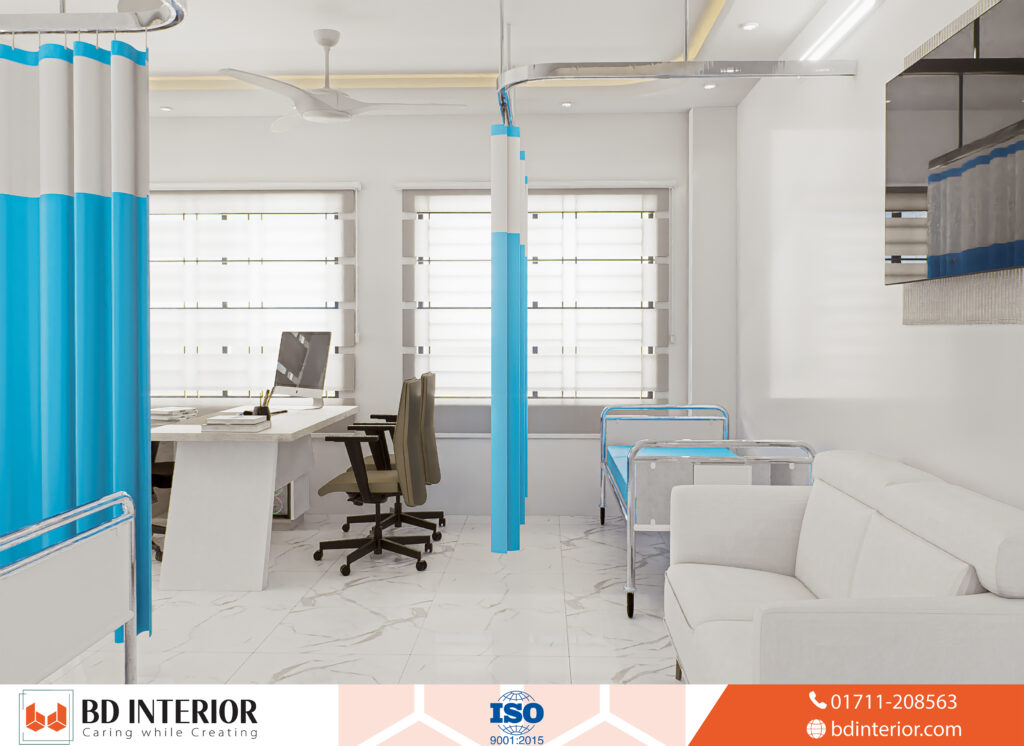
Technical requirements and safety standards for medical imaging
Medical imaging suites require high-density shielding, dedicated power supplies, and extreme environmental controls to protect both patients and sensitive equipment from radiation and thermal interference.
All modalities, like X-ray, CT, and MRI, have their own non-negotiable physical constraints that determine the skeleton of a room before even considering the first coat.
Consider a X-ray room. 147. See things objectively. If the contractor missed even a small gap around the door frame.
The underlying point remains direct. This room has failed a safety audit, and its license is at risk. MRI rooms are even more demanding.
Since it uses a huge magnet, non-ferrous materials must be used. Plus, the floor must be non-magnetic. This means all screws, all light fixtures, and even reinforcement bars.
No need to worry about oxygen cylinders. Or, if the scissors get too close to a working MRI, it becomes a projectile.
Now go back to what you started with. Then there’s the HVAC issue. Typical CT scanners generate enormous amounts of heat. While a normal office might need 6 air changes per hour (ACH), a specialized lab.
Or imaging zone calls for 12 to 15 ACH to keep the machines from overheating and to stick with air purity.
These numbers tell a story. This is obviously difficult in Bangladesh’s humid climate. From what we can tell, you must use antimicrobial, non-porous surfaces that can withstand heavy-duty disinfectants without cracking, and honestly, aSTM F1700 Class III solid vinyl tile is the industry gold standard here.
At busy blood draw cubicles, installing non-porous solid surface counters prevents chemical stains and ensures sanitizing wipes can easily eliminate pathogens between collections.
For back-of-house areas and pantry cabinets, using moisture-resistant Akij and Partex Star grade melamine boards provides long-lasting durability without exceeding your interior fit-out budget.
To eliminate microscopic gaps where pathogens breed, installing welded seam vinyl flooring is critical for maintaining sterile environments in high-traffic lab environments.
It can withstand the loading of heavy machinery; however, it’s smooth enough to prevent bacteria from hiding in the seams.
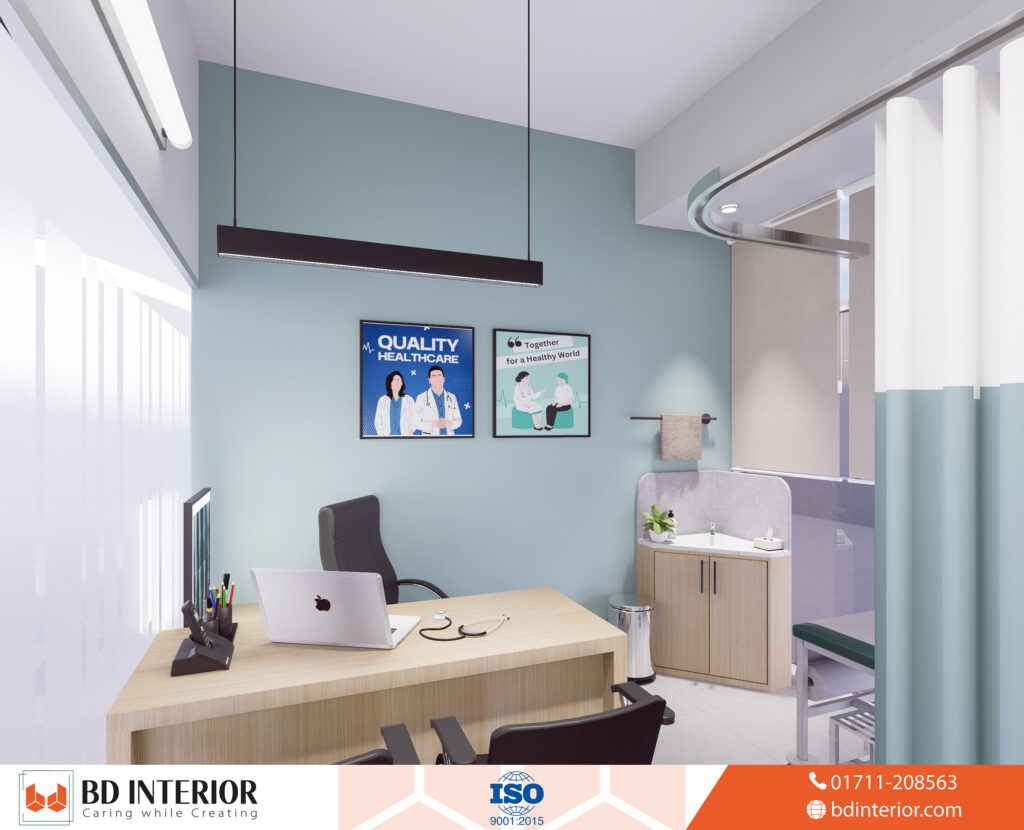
Workflow optimization and staff efficiency layouts
Improving the floor plan of a diagnostic center involves a ‘lean’ design approach that cut down ons patient travel distance while maximizing the visibility of staff across clinical zones. By placing high-volume services like blood draws near the entrance and long-duration services like MRIs in the rear, you can manage crowd flow and reduce the perceived wait time for every visitor.
Keeping high-voltage lines clean and accessible requires routing them through overhead cable trays, which prevents floor clutter and simplifies future diagnostic equipment upgrades.
This is exactly what the first point led to, at the High Intensity Diagnostic Center in Dhaka. The biggest bottleneck is almost always the waiting area. Most centers make the mistake of only having one giant hole. This is a nightmare for infection control and patient anxiety.
Integrating isolated sub-waiting alcoves prevents cross-contamination, directly driving down the transmission rates of dangerous hospital-acquired infections (HAIs) among compromised patients.
Instead, look in the “sub-wait” zone. Not just that, once a patient is registered. They’ll be moved to a small, quiet area near the workup room.
This reduces navigation errors by approximately 20%. Generally speaking, elderly patients, and especially those who struggle, have difficulty with large spaces that are confusing.
Color-coded wayfinding means the blue line on the floor leads to Radiology and the green line to Pathology, so you don’t have to constantly ask staff questions.
Staff efficiency and layout type
*Data is based on response time improvements in a distributed nursing station model.
As you can see, Staff burnout is also a silent killer in diagnostic centers. In a high-volume center, a technician might see 40 patients in a day.
From a broader view. If the break room is a windowless closet in the basement, performance will decrease. Plus, incorporating natural light into staff areas is a proven way to maintain high retention rates.
Sounds simple. That’s to incorporate more equipment into the plan. Even a small window. Alternatively, a well-designed office lighting strategy can make a substantial difference in long-term operational success.
Creating a patient-centric environment through biophilia and privacy
The patient-centered diagnostic center uses sensory designs such as natural light, soft textures, and sound attenuation to reduce the fear and claustrophobia associated with medical exams.
Installing interactive Trilight motion sensor art along low-light corridors distracts patients visually, offering an engaging sensory experience that eases pre-exam claustrophobia.
In practice, the dynamic changes slightly. This idea is to move away from the “bunker” aesthetic and towards a hospitality-inspired environment that respects patient dignity and personal space.
On a bit of a different note. Privacy is probably the biggest complaint among patients in Bangladesh. The key here is that in many local institutes, the changing rooms are (at least in many practical scenarios) located in the hallway.
Patients who feel exposed are the ones who won’t come back. You need to design a transition zone. These are small, private pockets where the patient can store (of course) a change of clothes and belongings. Wait for your scan without being stared at by passersby.
This also concerns the impact of design on mental health. This is seeing as feeling in control of your surroundings directly reduces anxiety. We’re committed to making use of natural wood grain.
Stone texture and nature images. Research by Dr. Roger Ulrich suggests that just looking at a photo of a park can slow your heart rate. In practice, the dynamic changes slightly. The windowless basement imaging suite.
Color therapy studies consistently show that soft blue hues induce calmness, lowering a patient’s physical anxiety levels when applied to waiting room walls.
Features a high-resolution LED “sky ceiling” that mimics the movement of clouds. It’s an investment, but it’s an investment that’ll turn the scary face of an (and that implies quite a bit) MRI into something manageable.
Of course, actual metrics may shift.
As of now, most scenarios, Now let’s talk about the costs of these choices. In Bangladesh, the interior design costs per square foot of the diagnostic center range from 18,000 BDT to 42,000 BDT.
Hard to ignore those numbers. Depending on the complexity of the medical machine. See things objectively. This becomes way more relevant in a moment.
Lead shielding and heavy-duty HVAC are non-negotiable costs, but flexibility can be found in “soft” elements like better lighting and modular walls. In fact, modular wall systems are becoming a favorite of savvy owners.
To secure heavy medical monitors and protective lead aprons safely onto walls, builders rely on a robust French cleat system to distribute weight evenly.
For the average user, that’s. Because you can upgrade your equipment in five years without demolishing an entire wing (which works out well in practice) of the building.
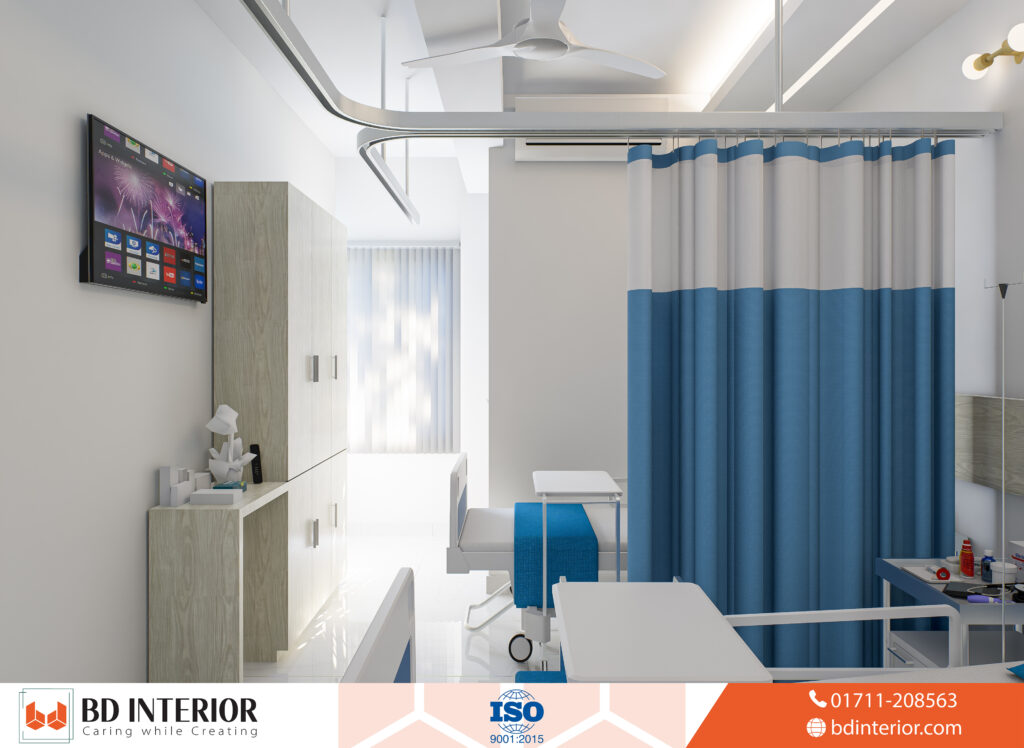
Common design mistakes and regulatory hurdles in Bangladesh
The most common mistakes in the design of diagnostic centers include ignoring the DGHS (Directorate General of Health Services) layout regulations and failing to consider the specific drainage needs of pathology laboratories. Avoiding these traps requires real knowledge of local building codes and specific plumbing requirements for medical-grade waste management.
Sourcing heavy-duty commercial plumbing fixtures from the Hatirpool sanitary ware market helps developers manage procurement costs while securing durable, clinical-grade patient toilets.
Legally, ignoring the structural load-bearing parameters outlined in the BNBC (Bangladesh National Building Code) can halt your licensing process before medical equipment is even delivered.
One common oversight is the “underground bunker” trap. Many owners rent out their basements. Because they are cheap. And of course useful for radiation containment.
Naturally, without a high-end air filtration system — these spaces can become (which works out well in practice) humid, smelly, and claustrophobic. If you go underground, the budget for air conditioning calls for doubling, so you also need to consider the multi-generational nature of Bangladeshi families.
When a person undergoes a test, as many as three relatives often accompany them. If the waiting room is designed exclusively for patients. The hallway is clogged with family members, creating a chaotic environment.
| Feature | Minimum Requirement | Modern Best Practice |
|---|---|---|
| Lighting (Waiting) | 200 Lux | 400 Lux (Warm Tones) |
| Air Changes (Lab) | 6 ACH | 12-15 ACH |
| Flooring | Standard Tile | Antimicrobial Solid Vinyl |
| Shielding | Lead Lining | RF Shielding + Lead |
| Wayfinding | Paper Signs | Integrated Color Coding |
Building a future-proof diagnostic facility
Investing in a diagnostic center costs a lot of money. In reality, ignoring the human element in favor of technical compliance (at least in many practical scenarios) results in. You’ll, over time, reach the high-tech bunker that patients fear.
If you balance the two. We create facilities that build trust. Trust is the most valuable currency in healthcare. Keep this in mind; it shows up again soon.
When patients feel safe and respected. They become loyal supporters of your brand.
Still, as you move forward, remember — Hold on, let me rephrase, that your facility is a living thing. It changes things. We need to grow as technology evolves. So focus on modularity, and invest in high-quality air filtration.
Aligning structural specifications with WHO guidelines ensures that your clinical layouts meet international infection control and patient safety benchmarks from day one.
For standard clinical zones without heavy shielding needs, basic decorative and non-radiation fit-out cost ranges from ৳2,500 to ৳4,500 per square foot depending on materials.
Specifying an eco-friendly product like Belka Natural Wall Coating provides an odorless, fire-resistant surface finish that also dampens ambient noise in busy clinical corridors.
Never underestimate the power of well-placed windows. For those looking to combine these clinical standards into their next project. Explore the specialized pharmacy design to gain further insight into managing medical inventory and patient flow in a hybrid retail-clinical environment.
Your goal isn’t just to pass the test. It’s about setting a new standard of care in our communities. Plan with empathy, Build with precision, and the results will follow.

S.M. Rezaul Haque is a seasoned interior design consultant with 15+ years of experience. An AIUB graduate and Senior Vice President of BIDCOA, he specializes in creating functional, sustainable, and visually inspiring spaces. As the driving force behind BD INTERIOR, he has helped shape 700+ Bangladesh’s most innovative interior design projects.