
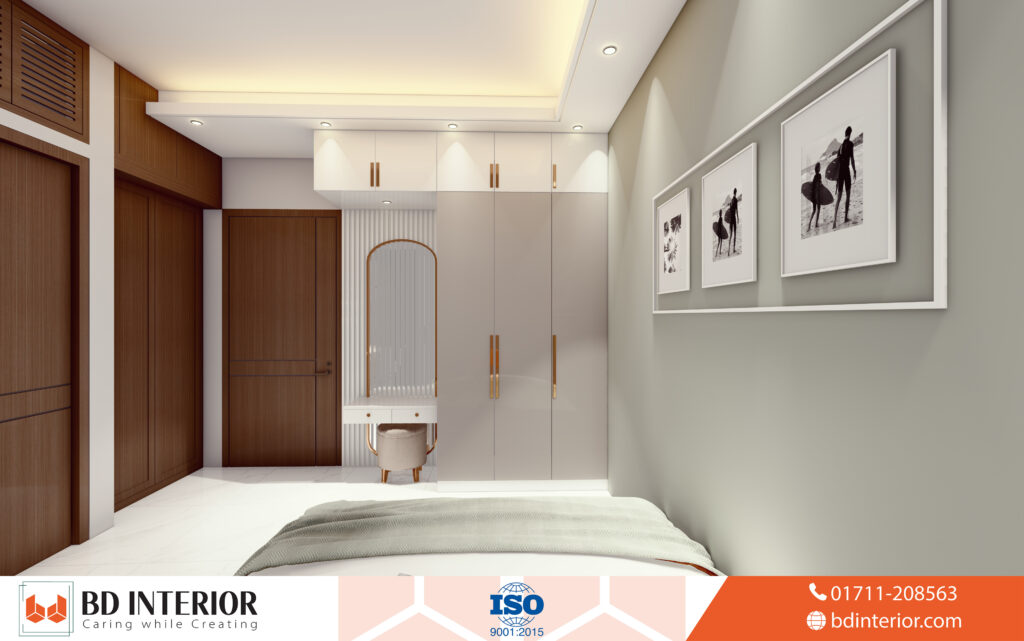
Interior PVC wall panels have transformed residential renovations across Bangladesh by offering a tough, moisture-proof alternative to conventional plaster and paint. High humidity and seasonal monsoon dampness a lot ruin expensive paint coats within months, but synthetic wall boards tackle this by creating a durable, water-resistant barrier. This Interior PVC Wall Panels Guide for Homeowners Seeking Smart Upgrades covers everything from panel types to installation specs.
Tenants often prefer self-adhesive renter-friendly peel-and-stick variants that allow for a temporary aesthetic upgrade without requiring permanent mechanical fasteners or timber battening that could damage the original walls.
For a more tactile architectural effect, 3D PVC Wall Panels use deep-embossed geometric patterns that create dramatic shadows and depth on flat surfaces like entryways or reception areas.
Current market data shows that uninstalled Interior PVC Wall Panels price ranges from 25 to 250 BDT/sqft, spanning from basic thin liners to high-density decorative sheets used in luxury interiors.
As of 2026, premium options like Trusscore Wall & CeilingBoard cost between ৳45 to ৳65 per square foot for materials, giving property owners an accessible, long-lasting surface finish.
Key Point
Here’s what matters: if you’re skimming.
- PVC panels block moisture completely, lasting 15 to 20 years versus painted walls that degrade in 2 to 3 years
- Standard hollow boards span 6 to 12 inches wide with thicknesses from 5mm to 10mm; solid boards reach 2.6mm to 25mm for distinct structural applications
- Always leave a 2 to 5 mm expansion gap and acclimatize panels for 48 hours before fixing
Table of Contents
- What Are Interior PVC Wall Panels for Homeowners?
- Structural Types and Aesthetic Finishes
- Performance Advantages and Practical Tradeoffs
- Pricing Breakdown and Installation Steps
- People Also Ask
- Final Verdict on PVC Wall Panels
What Are Interior PVC Wall Panels for Homeowners?
Interior PVC wall panels are extruded polymer sheets made from polyvinyl chloride that serve as decorative, moisture-proof interior cladding for walls and ceilings. They install via interlocking tongue-and-groove joints and shield masonry from humidity, water splashes, and persistent dampness. These panels are finish layers, not structural wall systems.
Domestic manufacturers like RFL PVC Ceiling & Wall Systems have standardized these polymer components across Bangladesh, making replacement parts and matching trims readily available in local hardware hubs.
Plus, standard hollow panels measure 8 to 12 feet long and 6 to 12 inches wide. Thickness ranges from 5mm to 10mm depending on quality, with internal webs separating hollow chambers that add rigidity without adding weight.
On average, solid decorative sheets starting at 2.6mm thickness offer higher impact resistance for busy hallways. Heavier industrial boards reach up to 25mm for commercial partition applications.
Designers regularly specify large 4ft x 8ft sheets to cut down on visible seams on expansive feature walls. When you cut a panel cross-section, those internal ribs give structural stability while keeping overall weight minimal. (Which is why one person can carry a 10-foot board without straining.)
For large-format coverage without visible horizontal seams, many suppliers now stock a sheet dimension 4 ft x 9.5 ft (1220mm x 2900mm) which aligns perfectly with standard modern apartment heights.
For the average user, as global construction output surpasses $13 trillion in 2025, synthetic polymer cladding keeps replacing fragile gypsum boards in coastal and humid climates. The polymer resin has an absorption rate near zero, creating an impervious shield against airborne moisture that would normally bubble emulsion paint and soften drywall cores.
That earlier discussion becomes relevant here. In my experience working with these panels in Dhaka apartments, the biggest surprise was how rapidly they go up, but hollow panels feel noticeably less real when you tap them.
Structural Types and Aesthetic Finishes
Interior PVC panels come in three main categories: hollow-core extruded profiles, solid mineral-loaded composites, and WPC-PVC hybrid sheets. Finishes range from wood-grain textures simulating teak or oak to high-gloss marble patterns with UV-protective coatings that resist fading and scratches.
Detail-oriented contractors always include matching PVC edge banding and end caps to hide the exposed hollow core at corners, ensuring a seamless look that mimics professional solid carpentry.
| Panel Category | Standard Thickness | Primary Strength | Ideal Residential Placement |
|---|---|---|---|
| Hollow Fluted Panels | 8mm to 12mm | Lightweight, acoustic dampening | Living room accent walls, ceilings |
| Solid Polymer Sheets | 2.6mm to 5mm | High impact resistance | Corridors, staircases, busy entryways |
| UV Marble Sheets | 3mm to 4mm | Scratch-resistant gloss finish | Bathrooms, dining backdrops, lobbies |
| Heavy Industrial Boards | 10mm to 25mm | Structural rigidity, self-supporting | Utility rooms, partitions, garages |
Hollow PVC represents the budget tier. Standard grade boards at 7mm with impressive patterns offer a solid middle ground for domestic feature walls. Nine times out of ten, solid PVC costs more. But resists impacts better in high-traffic corridors. WPC-PVC composite blends wood fiber with polymer for a warmer, more natural look.
For wet zones, pairing polymer wall boards alongside smart bathroom tile designs prevents mildew growth across grout joints. When planning overhead lighting, matching wall elements with a modern false ceiling ensures visual harmony across the room.
Which finish suits your smart upgrade?
Wood-grain profiles simulate natural timber without pest vulnerability or rot, and fluted panels add vertical architectural lines that make low ceilings feel taller. Marble-finish sheets replicate Carrara veining at a fraction of genuine stone weight.
For those seeking the latest global designs, vendors like Meble Bangladesh (Amtoli, Dhaka) provide access to imported UV-coated sheets that carry longer warranties against fading compared to local generic stocks.
High-end projects often utilize a calcium polymer composite sheet which offers superior fire resistance and a stone-like rigidity that feels significantly more substantial than standard hollow-core extruded profiles.
Advanced installations often incorporate integrated LED strip backlighting within the hollow cavities of fluted panels to create a soft, indirect glow that highlights the vertical texture of the accent wall.
One of the most common residential applications is a TV Backdrop Feature Wall, where fluted or marble-patterned boards hide messy cabling while providing a focal point for the living room.
Unlike timber or plywood alternatives, this inherently termite-proof material eliminates the risk of structural pest damage in tropical climates where wood-boring insects often compromise traditional wall framing and decorative finishes.
Interior designers often specify Charcoal Louver Panels to achieve a matte, sophisticated dark finish that resists fingerprint oils and provides a striking contrast against lighter furniture or metallic accents.
While polymer-based, PU Stone Wall Panels offer a distinct high-density polyurethane alternative that mimics the rugged texture of slate or volcanic rock more convincingly than standard flat-printed sheets.
This connects to something touched on above. Actually, the finish matters less than where you use it. Across a full bedroom, glossy marble looks great on a feature wall but feels cold.
Why does room humidity ruin conventional finishes?
High relative humidity causes standard emulsion paint to bubble, peel — and harbor fungal spores. Porous gypsum plaster absorbs moisture from ambient air— or at least — softens the drywall core and causes dark mildew spots. PVC avoids this because polymer resins have an absorption rate near zero.
Performance Advantages and Practical Tradeoffs
PVC panels deliver strong water resistance, fast installation, and minimal maintenance, yet they carry strict load limits and need proper substrate preparation. They excel in splash zones and damp basements but can’t support heavy wall-mounted cabinets without dedicated framing.
Trusted local suppliers such as Partex PVC Boards provide a consistent density that professionals prefer when they need a reliable substrate for heavy-use areas like kitchen backsplashes or laundry rooms.
Quality PVC panels last 15 to 20 years without replacement, whereas painted surfaces in damp rooms deteriorate within 2 to 3 years. Over a standard 10-year period, total maintenance costs for painted walls far exceed the first investment in polymer boards.
For homeowners seeking smart upgrades, hollow PVC isn’t a cure-all for severe building issues. For wet or high-traffic spaces, the answer is usually yes, according to Trusscore’s 2026 buyer guidance on suitability.
What’s the catch with PVC panels?
Installing decorative panels over active plumbing leaks merely conceals water damage behind the plastic, and the wall assembly still rots. PVC panels aren’t structural and should rarely be treated like load-bearing building material.
Forum discussions from late 2025 and early 2026 show mixed sentiment. Anyone on the platform appreciates the easy cleaning and moisture resistance. But a bunch of people worry about a colder look, echo, and a less natural feel in living spaces. Bedroom-focused commenters say PVC panels can feel cold, shiny, and echo-prone.
So they work better as an accent than a full-room finish.
Can you mount heavy items on hollow PVC?
Never mount heavy flat-screen televisions, deep shelving, or heavy mirrors straight up into hollow PVC faces without anchoring structural screws into solid timber studs. Some forums recommend products designed to mount right away to studs rather than generic thin panels when replacing drywall.
Selecting a heavy-duty liquid nails adhesive designed specifically for non-porous plastics ensures a permanent bond that won’t become brittle or fail during the high-temperature fluctuations of the summer season.
Before mounting panels, check base conditions. If your masonry shows deep cracks, learn how to repair interior walls thoroughly first. Multiple 2026 sources stress that walls must be dry — flat — and free of leaks. One guide advises wall moisture below 12% and a flatness tolerance around 3 mm per meter.
Recent expert guidance also stresses checking fire ratings, emissions compliance, and trim system compatibility before buying. Look for B1 fire-rated and E0 emission-certified products.
Pricing Breakdown and Installation Steps
Hollow PVC material prices range from ₹55 to ₹120 per sq ft, with installed costs of ₹90 to ₹180 per sq ft. Solid PVC runs ₹120 to ₹250 for materials and ₹180 to ₹350 installed. WPC-PVC composite costs ₹180 to ₹400 for materials and ₹250 to ₹500 installed.
Material pricing depends on resin density and decorative film coatings. More often than not, standard grade 7mm boards with impressive patterns represent a solid middle tier for domestic feature walls. Premium solid formulations and imported UV boards sit at higher price bands, offering real durability against everyday impacts. One 8-foot panel covers about 10.67 sq ft, according to the 2026 Trusscore guide.
When calculating material requirements for modular 3D designs, remember that each 50x50cm panel covers 2.69 sq ft (0.25 sqm), requiring roughly 38 panels to complete a standard ten-foot-wide wall.
Buyers should note that premium louver panel price approx 1,400 to 1,800 BDT/piece for standard 9-foot lengths, reflecting the increased polymer density and intricate fluted geometry required.
PVC Wall Panel Installed Cost (BDT per sq ft)
The chart shows that the maximum installed costs are ৳234 per sq ft for Hollow PVC, ৳455 for Solid PVC, and ৳650 for WPC-PVC Composite. The jump from Hollow PVC to WPC-PVC Composite means the budget increases by nearly three times.
Homeowners managing renovation budgets can apply proven strategies for reducing interior design costs by reserving premium panels for high-visibility accent walls while using standard boards elsewhere.
Visiting regional showrooms like Decornculture (Mohakhali, Dhaka) allows homeowners to physically inspect the weight and finish quality of various grades before committing to a full-room renovation project.
A professional two-person team can clad a 150-square-foot room in roughly 3 to 4 hours. Because interlocking boards fit without wet plastering, there’s almost no airborne dust during installation.
- Acclimatize raw boards — Keep all panels unboxed inside the destination room for 48 hours so the polymer adapts to local temperatures.
- Measure wall moisture — Verify underlying masonry registers below 12% moisture with a digital meter before starting.
- Construct framework battens — Secure treated timber battens vertically at 12-inch intervals across uneven masonry walls.
- Apply neutral adhesive — Use solvent-free, pH-neutral polymer adhesive along the back of each panel strip.
- Interlock tongue edges — Slide each board firmly into the adjacent groove and secure with stainless staples.
- Maintain expansion margins — Leave a 2 to 5 mm gap at top and bottom edges before snapping perimeter trim.
People Also Ask
Can you install PVC panels directly over damp concrete or old tiles?
Yes, if the surface is structurally sound and wall moisture stays below 12%. Secure treated timber battens over old tiles to make an air gap that lets moisture evaporate naturally without trapping humidity against the panel rear.
Do PVC panels release harmful odors or toxic indoor gases?
High-grade interior PVC panels produce virtually no detectable odor, and look for products meeting E0 emission benchmarks with low volatile organic compounds. These certified boards are safe for bedrooms, dining areas, and children’s rooms.
Designing a master bedroom headboard cladding with padded-look PVC or wood-grain fluting adds a layer of acoustic insulation that softens ambient noise while providing an easy-to-clean surface.
How long do hollow PVC panels last compared to traditional paint?
Quality hollow PVC panels last 15 to 20 years without surface degradation, discoloration, or rotting. Conventional wall paint in humid climates needs repainting every 2 to 3 years, making panels the lower-maintenance choice over time.
Field data from property managers suggests a 12+ years durability lifespan for these panels even in high-traffic commercial settings, provided the interlocking joints are correctly seated during the initial installation.
What expansion gap is required during installation?
Installers should keep an expansion gap of 2 to 5 mm along floorboards, ceiling edges, and corners. Polymer boards expand a bit when room temperatures climb during summer heat waves. This perimeter margin prevents buckling or warping over time.
To manage the natural expansion of polymer boards, using aluminum T-profile trims at vertical junctions provides a professional finish while allowing the material to shift slightly without buckling or popping.
Professional installers generally look for a standard panel thickness 5mm to 12mm to ensure the tongue-and-groove joints remain rigid enough to prevent visible sagging after the initial setup.
Final Verdict on PVC Wall Panels
This Interior PVC Wall Panels Guide for Homeowners Seeking Smart Upgrades covered the specs, pricing, tradeoffs, and installation process. PVC panels offer a practical, high-value solution for homeowners fighting damp walls or seeking modern feature finishes. For wet or high-traffic spaces, they’re usually the right call. For bedrooms and main living rooms, think of them as accent pieces rather than full-wall coverage.
By selecting certified fire-rated boards, preparing a flat substrate below 12% moisture, and observing expansion tolerances, you achieve a low-maintenance interior that lasts decades. The key is matching the panel type to the space: hollow PVC for budget bathrooms, solid PVC for corridors, and WPC-PVC composite where warmth matters most.

S.M. Rezaul Haque is a seasoned interior design consultant with 15+ years of experience. An AIUB graduate and Senior Vice President of BIDCOA, he specializes in creating functional, sustainable, and visually inspiring spaces. As the driving force behind BD INTERIOR, he has helped shape 700+ Bangladesh’s most innovative interior design projects.