
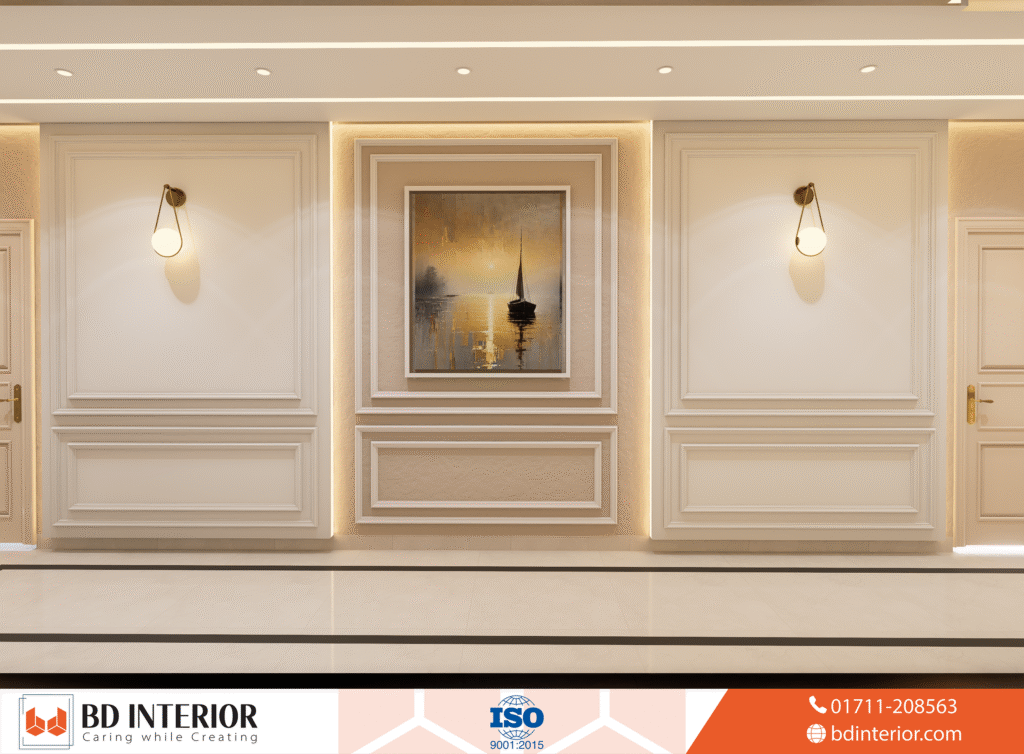
It can feel overwhelming to walk into your living room and see a big empty wall. Many of us have wondered how to decorate a large wall without making it look cluttered or too empty. That blank space really stands out.
Large walls give you options that smaller spaces don’t. You can make bold choices, show off your style, and create a strong focal point. When decorating a big wall, remember that what looks good in a small bedroom might seem too small on a large living room wall.
We’ll share practical strategies that work in real homes, and you don’t need a design degree to use them. Whether you’re decorating above your sofa, an entryway, or a tricky staircase, we have budget-friendly ideas. From gallery walls to oversized art and textured features, these options can turn empty walls into conversation pieces.
For those in apartments, renter-friendly hacks like using oversized tension rods for tapestries or lightweight foam core art allow for dramatic changes without risking a security deposit.
This guide will show you how to decorate large living room walls effectively. You’ll learn the key differences big walls present, specific ideas that work, and a clear, step-by-step process for choosing and arranging decor. We’ll also cover pitfalls to avoid to ensure your wall looks intentional and impactful.
Why Large Living Room Walls Need Special Attention
Big walls follow different rules than smaller ones. A regular 16×20 photo that looks great in a hallway can seem tiny on a 12-foot-wide wall. The proportions change a lot, and your eyes need something bigger to focus on.
A big, empty wall can make a room feel unfinished, as if something is missing. Even with nice furniture, empty walls can make the space feel cold and less inviting. We often focus on sofas and rugs first, and leave the wall behind them for last.
Large walls can be tricky to decorate. You’re not just filling space; you’re creating balance and making the wall feel grounded. A wall that goes from floor to ceiling and stretches 10 or 15 feet needs bigger pieces. Small decorations can get lost and make the wall look messy or unfinished.
Large walls set the tone for your living room. If you leave them empty, the room can feel cold, echoey, and unfinished. But when you decorate a big wall thoughtfully, it becomes a focal point that draws attention and shapes the mood of the space. These factors are unique to big walls:
- Scale requirements differ completely from standard walls.
- Empty space becomes more noticeable and problematic.
- The wall’s relationship to the furniture below matters more.
- Lighting hits larger surfaces differently throughout the day.
Use special strategies for large walls. It’s not just about size. Decorating big walls means thinking about proportion, layering, and adding interest across a wide area. Make sure your approach fits the scale of your wall.
Best Ideas for Decorating a Large Living Room Wall
Here are some real solutions that can turn blank walls into standout features. These ideas have worked in real homes and don’t require professional help.
Gallery walls are popular because they work well. Instead of hanging just one piece, you create a group that fills the space and tells a story. Mix frame sizes, like large 24×36 prints with smaller 8×10 photos. Use different frame colors for an eclectic look, or keep them the same for a more unified style. Plan your layout on the floor before you start hanging anything.
Oversized art makes a big impact. A single large canvas or framed print, like 40×60 inches or bigger, really stands out. This works well above sofas or in dining rooms. You don’t need to buy expensive originals—affordable prints and canvas copies look great if they’re the right size.
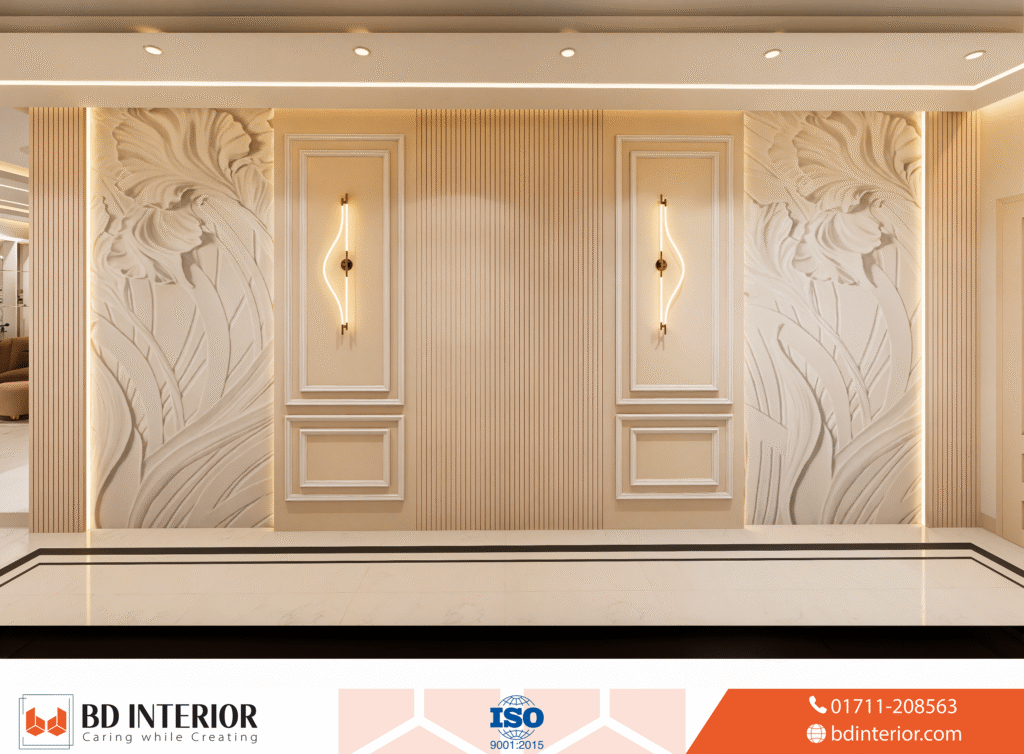
Textured wall treatments add dimension that flat art can’t. Try wood-plank accent walls, 3D wall panels, or fabric pieces. These options create shadows and make the wall feel more interesting. Shiplap is still popular because it adds character and works with many styles. Floating shelves arranged in interesting patterns let you showcase books, plants, small art pieces, and personal treasures. This approach works especially well if you like changing things up seasonally. The best part? You can adjust and rearrange without creating new nail holes.
For walls that catch significant light, a high-quality finish like Asian Paints Royale Luxury Shyne provides a subtle glow that enhances the richness of your chosen wall color.
Precision-cut MDF panels are frequently used by DIY enthusiasts to create geometric patterns on large walls, as they are easy to paint and hold sharp edges beautifully.
Innovative PVC back paneling provides a moisture-resistant and lightweight alternative to heavy wood, mimicking the look of marble or slate for a fraction of the weight and cost.
Natural stone cladding offers a high-impact, permanent solution that introduces organic shapes and cooling properties, making it a favorite for contemporary desert or mountain-style homes.
Using reclaimed wood planks for an accent wall adds a sense of history and warmth, with each piece offering unique grain patterns that modern factory-made materials cannot replicate.
Environmental experts suggest sourcing decor made from sustainable materials like bamboo or cork, which offers a unique texture while supporting eco-friendly manufacturing practices.
Exposed brick walls provide a natural, rugged texture that requires very little additional decor, as the material’s inherent variations create enough visual interest to stand alone.
Installing traditional wainscoting or picture frame molding adds architectural depth, transforming a flat drywall surface into a permanent design feature that anchors any additional artwork you hang.
Architects often specify felt or wood-slat acoustic wall panels to dampen sound echoes in large rooms while providing a sophisticated, linear texture that fills the vertical space.
Incorporating elements like preserved moss walls or botanical prints leans into biophilic design, a trend that the American Society of Interior Designers highlights for its ability to reduce stress.
Here are more options that work on large walls:
- Mirror arrangements (one huge mirror or multiple smaller ones).
- Tapestries or large woven wall hangings.
- Metal wall sculptures for industrial or modern spaces.
- Mounted collections (plates, baskets, hats, vintage finds).
- Statement clocks with architectural presence.
How to Choose the Right Wall Decor for Your Space
Selecting pieces that actually work together requires thinking about several elements simultaneously. Start by measuring your wall—not approximately, but with an actual tape measure. Write down the dimensions. A wall that “feels big” might be 9 feet wide or 15 feet wide, and those scenarios require different solutions.
Your current furniture affects what works on the wall above it. If you have a big sectional, your wall decor should go beyond the edges of the furniture. A good rule is to make your wall arrangement about two-thirds to three-quarters the width of the furniture below. Anything smaller can look out of place.
Interior design standards dictate that the width of your art should span between two-thirds and three-quarters of the furniture piece it sits above to maintain visual harmony.
Professional stagers recommend that your chosen decor should occupy roughly 60-75% of the available wall space to ensure the arrangement feels substantial and well-proportioned.
Color coordination is even more important on large walls because there’s more space to notice. Use colors from your room’s palette, like those in your pillows, rug, or curtains. If your room is mostly cool blues and grays, add a bit of warm color in your art for contrast, but don’t cover the whole wall in clashing colors.
Establishing a visual rhythm through repeating shapes or colors across the wall helps the eye move smoothly across the expanse, creating a sense of cohesive energy.
Applying principles of color psychology can influence how the room feels; for example, blues promote tranquility while warm terracotta tones can make a cavernous wall feel more intimate.
Balance is achieved by considering the visual weight of objects, where darker colors or heavier textures require more breathing room to avoid overwhelming one side of the wall.
Consider your room’s purpose and your family’s lifestyle. A formal living room where you entertain might call for more sophisticated art or elegant mirror arrangements. A family room where kids hang out can handle more playful, personal elements like family photo collages or colorful prints.
Room Style Influences Your Choices
Let your overall style guide your choices. Modern, minimalist rooms look best with simple, clean-lined pieces like geometric art or floating shelves with a few special items. Traditional rooms work well with ornate frames, classic prints, or balanced arrangements. Farmhouse style pairs well with natural textures like wood signs, woven baskets, and old window frames.
The ‘quiet luxury’ aesthetic, currently dominating high-end design circles, suggests using high-quality materials and muted tones rather than flashy patterns to convey a sense of timeless sophistication.
Don’t forget about the wall’s location relative to natural light. Art near windows might face glare issues. Mirrors opposite windows amplify natural light beautifully. Textured pieces, like woven wall hangings, cast interesting shadows when light hits them from the side.
Step-by-Step Guide to Arranging Wall Decor on Big Walls
Now let’s go through the steps for arranging decor so your large wall looks thoughtfully designed, not just filled in. Each step builds on the last to help you succeed and avoid common mistakes.
Step 1: Plan your arrangement on the floor. Lay out all intended pieces—frames, art, or decor—in the order you want them displayed. Stand above to take a photo. This gives you a full picture view and helps with spacing.
Step 2: Find the center point for your arrangement. For art above a sofa, measure 8 to 10 inches above the top of the furniture. For a bare wall, place the center about 57 to 60 inches from the floor, which is about eye level.
Galleries and museums frequently employ the 57-inch rule, where the center of the artwork sits exactly 57 inches from the floor to align with the average human eye level.
Step 3: Use paper templates to plan your layout. Cut paper to the size of each piece, tape them to the wall, and step back to look. Leave them up for a day to see if the arrangement feels right before making any holes.
When precision is key, using heavy-duty Command Strips allows for minor adjustments during the installation process without leaving a trail of holes in your drywall.
Step 4: Hang your largest piece first. This will be your anchor. Put it at the center you chose, then add the other pieces around it according to your plan.
Step 5: Keep the spacing between items even. Professionals usually leave 2 to 3 inches between frames or objects. Use a tape measure to make sure the gaps are the same everywhere.
For gallery walls: Use painter’s tape to make a straight line as your guide. This keeps everything lined up, even if the frames are different sizes. You can line up the bottoms or the centers of the frames, but choose one way and stick to it.
When hanging more than one shelf, leave 10 to 12 inches between them. This gives enough space for your items and avoids awkward gaps.
Check your lighting after you hang everything. Add picture lights or move lamps if needed. Large walls often need extra lighting to show off your decor.
Modern installations now often integrate smart lighting, allowing homeowners to adjust the intensity and color temperature of picture lights via smartphone apps to suit the time of day.
Common Mistakes to Avoid When Decorating Large Walls
These mistakes are common, but they’re easy to avoid once you know what to look out for.
Hanging things too high ranks as the number one mistake. People forget that art should relate to the furniture and the people in the room. If your wall decor floats near the ceiling, it feels disconnected from the living space below. Even on tall walls, keep the bottom of your arrangement relatively low—usually no more than 10-12 inches above furniture.
Picking pieces that are too small for the wall makes the decor look like an afterthought. A nice 16×20 print might look great on a small wall, but it gets lost on a big one. Don’t be afraid to go bigger than you think at first. Large walls need bold choices.
If you don’t think about spacing, your arrangement can look too crowded or too empty. Measure the gaps and keep them even. Random spaces between frames or objects make the wall look unplanned.
Don’t forget about the wall’s features, like windows, doors, or built-ins. Work with these elements instead of against them. Frame them with your decor or create balance around them.
In luxury residential projects, custom millwork like floor-to-ceiling built-ins provides a structured solution that integrates storage with the architectural footprint of the home.
Avoid these specific pitfalls:
- Using dozens of tiny frames when fewer large pieces would work better
- Hanging everything in a straight horizontal line (boring and predictable)
- Forgetting to anchor shelves properly (heavy items require solid support)
- Mixing too many different styles without a unifying element
- Neglecting the space between the wall decor and the ceiling
Rushing the process leads to regret. Live with your paper templates for several days. Ask family members for input. Take photos and look at them on your phone—sometimes seeing the space through a camera lens reveals issues our eyes miss in person.
If you don’t consider how your wall decor fits with how people move through the room, it can cause problems. Make sure everyone can walk through the space easily without bumping into anything protruding from the wall.
Final Thoughts on Mastering Your Large Wall
Decorating a big wall in your living room doesn’t have to be overwhelming. With the right approach, that blank space can become your favorite feature, bringing the whole room together and showing off your style.
Designers emphasize leaving intentional negative space around your pieces, as cluttering a massive wall can actually make the entire living room feel smaller and more chaotic.
Choosing a diptych or triptych—a single image split into two or three panels—offers an effective way to cover large square footage while keeping the individual pieces manageable for hanging.
Selecting matte finishes for your frames and prints is a professional trick to minimize distracting glare from overhead lighting or large, sun-drenched windows.
Large walls are opportunities, not problems. They let you make bold choices that smaller spaces can’t. Whether you pick a dramatic oversized piece, a gallery wall, or textured features, you’re creating a focal point for your living area.
Tech-forward designers are exploring projection mapping to cast digital art or cinematic visuals onto large walls, allowing for an ever-changing display that takes up zero physical space.
Begin by measuring and planning. Pick pieces that fit your wall’s size and your room’s style. Arrange everything carefully instead of hanging things at random. This helps you avoid common mistakes that make walls look unfinished or unbalanced.

S.M. Rezaul Haque is a seasoned interior design consultant with 15+ years of experience. An AIUB graduate and Senior Vice President of BIDCOA, he specializes in creating functional, sustainable, and visually inspiring spaces. As the driving force behind BD INTERIOR, he has helped shape 700+ Bangladesh’s most innovative interior design projects.