
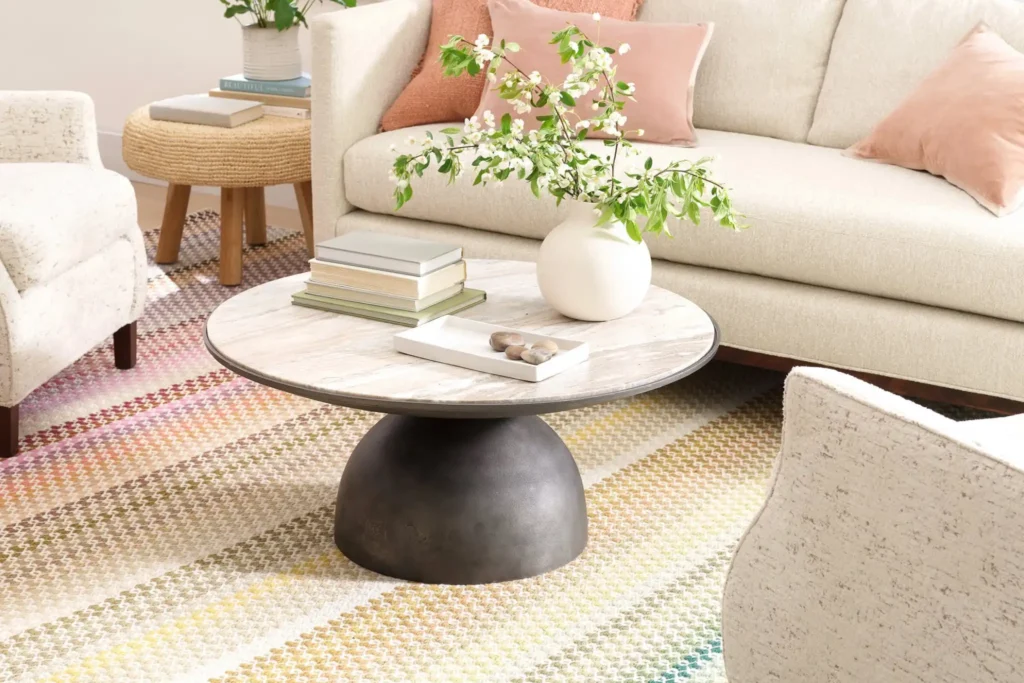
Walking into a furniture shop in Dhaka. You see dozens of rugs rolled up like colorful burritos. The shopkeeper unrolls one, then another. Your eyes glaze over.
Which size fits your sofa? Which is why most buyers just pick whatever looks pretty, then regret it six months later when the edges curl or the fibers shed dust everywhere. Basically, these tips for choosing the perfect living room rug will save you from that headache.
- Measure your seating area first and leave 8 to 18 inches of bare floor around the rug edges for balanced proportions.
- Pick low-pile synthetics for high-traffic zones and wool for natural stain resistance and long-lasting comfort.
- Always place at least the front legs of your sofa and chairs on the rug so the furniture feels anchored.
Quick Action
- Size matters most — a rug that is too small makes the whole room look disjointed and cheap.
- Wool remains the gold standard because it repels light spills thanks to natural lanolin coating and ages better than petroleum-based synthetics.
- Avoid viscose or art silk rugs in homes with pets since they turn yellow and lose structural integrity when wet.
- Invest in a felt and rubber rug pad cut one inch smaller than your rug on all sides for grip and cushion.
Table of Contents
- What Is the Ideal Living Room Rug?
- Sizing and Placement Rules That Actually Work
- Material Selection for Durability and Comfort
- People Also Ask
- Final Thoughts on Rug Shopping
What Is the Ideal Living Room Rug?
The ideal living room rug is a floor covering sized to anchor your seating furniture, made from a material that matches your traffic level, and thick enough to add comfort without becoming a tripping hazard. It should visually connect your sofa, chairs, and coffee table into one cohesive zone rather than floating aimlessly in the middle of the room.
You’d not build a house on a tiny slab. When I helped my cousin furnish her flat in Banani last year, she bought a 5-by-7-foot rug for a full-sized sofa. It looked like a bathmat. The whole space felt off balance and awkward.
That’s where most of us stumble. They treat the rug as an afterthought. But interior designers treat it as the starting point.
You select the rug, then you arrange furniture around it. Not the other way around.
Why does rug size matter so much?
Because a tiny rug makes expensive furniture look cheap. Emily Henderson, a widely followed stylist, puts it bluntly: a rug that’s too small is the number one design mistake she sees in living rooms. It makes the space look disjointed.
When all four legs of your sofa sit on the rug. The room suddenly feels luxurious and high-end. That consensus comes up again and again in home design forums.
Sizing and Placement Rules That Actually Work
For a standard medium room, go with an 8 by 10 foot rug; for a large room, choose 9 by 12 feet. Leave about 18 inches of bare floor around the perimeter to maintain classic proportions. Though 8 inches works fine in tighter spaces.
The front legs of all seating furniture should sit on the rug to anchor the arrangement.
Here is where things get practical. The 18-inch rule is classic advice, but in a Dhaka apartment where every square foot counts, that much bare floor can feel wasteful. So adjust down to 8 inches. The room still looks intentional.
Front legs only or all legs on the rug?
You’ve probably found that the front legs-only approach is the most popular compromise, so at least the front two feet of your sofa and chairs sit on the rug. This anchors the furniture without requiring a massive rug that covers every corner. But if you want a really high-end look, put all furniture legs on the rug. Forum people overwhelmingly agree that this makes a room feel more expensive.
Quick review: When arranging furniture, think about traffic flow. A rug that blocks the natural walking path becomes a tripping hazard. 25 inches — low-pile rugs prevent uneven wear patterns and reduce the chance that someone catches a toe and falls.
- Measure your seating area — Trace the outline of your sofa and chairs on the floor with tape to visualize the rug footprint.
- Choose your rug size — Pick 8×10 for medium rooms or 9×12 for large spaces based on your measurements.
- Test placement — Position the rug so front legs of all seating pieces rest on it before committing.
- Add a rug pad — Cut a felt and rubber hybrid pad one inch smaller than the rug on all sides.
Material Selection for Durability and Comfort
Wool is the gold standard for living rooms since it’s durable. Easy to clean and ages beautifully compared to petroleum-based synthetics.
For high-traffic areas, solution-dyed nylon and wool both perform well. Natural fiber rugs like jute and sisal offer high durability. But they are notoriously hard to clean once stained because their plant fibers (a detail constantly overlooked) absorb spills quickly.
In practical terms, let me put that differently. The material you pick determines whether your rug (as one might expect) lasts five years or fifty. Hand-knotted rugs with a high knot count of 100.
| Material | Durability | Cleanability | Best For |
|---|---|---|---|
| Wool | High | Easy | General living rooms |
| Polypropylene | Medium | Stain resistant | Budget, high traffic |
| Jute or Sisal | High | Difficult | Low traffic areas |
| Viscose | Low | Poor | Decorative only |
Is polypropylene safe for homes with toddlers?
Synthetic rugs made of polypropylene are constantly treated with PFAS chemicals for stain resistance. This is a growing health concern for households with toddlers. The stain resistance is convenient, but the chemical exposure gives quite a few parents pause. Wool, by contrast, is naturally flame resistant.
It has a protective lanolin coating that repels light spills without added chemicals.
What about washable rugs like Ruggable?
Many Reddit users complain that washable rugs can be difficult to fit with their Velcro-like base and often suffer (and that implies quite a bit) from edge curling after washing. They are convenient for spills, but the hassle of reassembly frustrates many owners, and jute rugs also have a hidden downside: they shed dust underneath, requiring you to clean the floor beneath a lot.
Viscose and art silk rugs lose their structural integrity and turn yellow. When wet, making them rough choices for households with pets. If you’ve a cat or dog, skip these wholly.
For more on arranging your space in practice, check our guide on fixing awkward room layouts before buying furniture.
People Also Ask
How thick should a rug pad be?
Which means this delivers enough cushion to make walking, let me put it differently, comfortable while keeping the rug low enough that doors clear it (and rightly so) and tripping risk stays minimal.
Can I use a jute rug in a dining area?
Jute works in low-traffic dining spaces. But traps crumbs in its woven fibers, making cleanup frustrating. For dining rooms where food drops regularly. A flat-weave wool or synthetic rug cleans more easily.
Do I need a rug pad on carpet?
Yes. A rug pad prevents the rug from bunching and creeping even on carpet. Cut the rubber hybrid pad one inch smaller than the rug on all sides for best results.
How long does a wool rug shed?
New wool rugs usually shed for the first 3 to 6 months as loose fibers work their way out. Vacuum regularly with a suction-only attachment, and the shedding gradually stops.
Final Thoughts on Rug Shopping
These tips for choosing the perfect living room rug come down to three things: measure your space, match material to your lifestyle, and anchor your furniture properly. It’s the structural foundation of your seating area. Get the size wrong, and nothing else looks right. Get the material wrong, and you replace it in two years.
Moving on to something related, so take your time. Tape out the dimensions on your floor before buying. Think about who walks across that rug daily. Kids, pets, guests, or just you? Each scenario points to a different material.
If you’re also planning the broader room, our living room color guide can assist you in coordinating the rug with your walls. The right rug lasts decades. The wrong one becomes a dust collector in storage. Choose wisely.

S.M. Rezaul Haque is a seasoned interior design consultant with 15+ years of experience. An AIUB graduate and Senior Vice President of BIDCOA, he specializes in creating functional, sustainable, and visually inspiring spaces. As the driving force behind BD INTERIOR, he has helped shape 700+ Bangladesh’s most innovative interior design projects.