Finding the right professional for your property can feel like walking through a minefield of Pinterest-perfect (at least based on current observations) promises and hidden costs. If you’re searching for how to find an interior designer in Bangladesh. Ultimately, you’ve probably noticed this market is flooded with firms claiming to be the best.
Between swollen MDF boards during monsoon season. Projects dragging months past deadlines, the stakes are genuinely high. This guide walks you through a direct process to vet. Weigh and hire the right professional for your specific needs.
- Verify credentials through the Institute of Architects Bangladesh (IAB) to confirm formal training in spatial planning and structural safety.
- Request a detailed Bill of Quantities (BOQ) upfront to avoid hidden costs that typically surface during the execution phase.
- Visit at least one active site to inspect finishing quality, especially edge-banding and tile grout lines where local firms cut corners.
Key Point
- Design fees in Bangladesh typically range from BDT 150 to BDT 500 per square foot, while turnkey projects run BDT 2,500 to BDT 8,500+ per square foot.
- High initial design fees can range from 10% to 15% of the total project cost, so budget accordingly before signing anything.
- Standard timeline runs 90 to 180 days for a 1,500 sq. ft. unit. Firms promising faster delivery are likely cutting corners on finishing.
- Differentiate between turnkey (design + construction) and design-only consultations based on your budget and desired involvement level.
Table of Contents
- What You’ll Need
- Step 1: Find an Interior Designer in Bangladesh Through IAB Verification
- Step 2: Evaluate Bangladesh Climate Adaptation and Portfolio Originality
- Step 3: Visit Active Sites and Finalize Your Contract
- Common Mistakes to Avoid
- People Also Ask
- What to Do Next
What You’ll Need
Before starting your search for an interior designer in Bangladesh, gather your project budget range, rough square footage, a list of functional needs, and at least 3 to 5 firm names to evaluate. You’ll also need basic familiarity with local material grades like Gorjan plywood, Canadian Oak, HPL, and Malaysian processed wood.
Skill level: no prior design knowledge needed. Basic contract literacy helps. An apartment means BDT 225,000 to BDT 750,000 just for the design phase. You should also figure out the difference between ready-made and design-only services. Plug-and-play means the firm handles both design and construction.
With costs ranging from BDT 2,500 to BDT 8,500+ per square foot, design-only gives you the plans and 3D renders, but you hire contractors separately.
Step 1: Find an Interior Designer in Bangladesh Through IAB Verification
Start by confirming your designer’s credentials through the Institute of Architects Bangladesh (IAB) member list, then demand a detailed Bill of Quantities before committing. When figuring out how to find an interior designer in Bangladesh, this two-part step eliminates roughly 70% of unqualified firms operating in the Dhaka market.
Why does IAB verification matter so much?
Designers with formal architectural training understand spatial planning and structural safety in ways that self-taught decorators simply don’t, so what does that mean for you?
You’re not just paying for aesthetics. You’re paying for someone who knows whether that wall can be removed.
Here’s where tons of property owners slip up. They get seduced by a polished 3D render and, thinking about it more, sign contracts without seeing a technical plumbing or electrical layout.
“The biggest mistake owners make is choosing a designer based on a 3D render without asking for a technical plumbing or electrical layout.”
Before you move to Step 2, make sure you understand the cost per square feet structure, so you can spot inflated line items in the BOQ.
Step 2: Evaluate Bangladesh Climate Adaptation and Portfolio Originality
Assess whether the designer understands Bangladesh’s high-humidity climate and can produce original work rather than copying Pinterest templates. This step separates professionals who build for durability from decorators who build for Instagram.
How do you spot a Pinterest clone versus original work?
Ask the designer to explain their material choices for specific rooms, which is why if they default to MDF board for kitchen cabinets without mentioning humidity-specific treatments, that’s a red flag. What happens when you do? Those using it on local forums often complain about firms using low-grade MDF that swells during monsoon season.
A designer who genuinely understands Dhaka. Or Chittagong climate will specify Gorjan plywood or HPL for moisture-prone areas.
When reviewing portfolios, look for functional solutions in small spaces. A common praise from Dhaka flat owners is for designers who fit smart storage into cramped servant rooms or utility areas. If every project in their portfolio looks like it could be from a Scandinavian catalog with no adaptation for local apartment layouts, you’re looking at a Pinterest clone.
| Evaluation Criteria | What to Look For | Red Flag |
|---|---|---|
| Material Specification | Gorjan plywood, HPL, Canadian Oak for humid areas | Generic “quality wood” with no grade specified |
| Climate Strategy | Ventilation plans, moisture-resistant treatments | Same materials are used across all rooms, regardless of function |
| Portfolio Originality | Solutions adapted to local apartment layouts | Identical designs repeated across different projects |
This is also a good time to visualize your interior design before committing. The key here is to ask the designer to show you how their proposed layout would work with your actual floor plan, not a generic template.
Step 3: Visit Active Sites and Finalize Your Contract
Visit at least one active construction site or recently completed project to inspect finishing quality firsthand, then finalize your contract with clear milestones tied to payment schedules. This step prevents the most expensive mistakes in the entire process.
What should you actually look for on a site visit?
Focus on the finishing details.
“In Bangladesh, the finishing is where the quality is won or lost; always check the edge-banding on furniture and the grout lines in tiles.”
Edge-banding is the thin strip of material applied to the exposed edges of plywood or MDF, which is why if it’s peeling, uneven, or poorly matched, the firm cuts corners on execution. Grout lines in tile work should be even and clean. Sloppy grout means sloppy oversight.
Under normal conditions, be aware of the kickback culture. Some designers push concrete brands regardless of quality because they get commissions, and if your designer insists on one particular brand for everything from plywood to paint without explaining the technical reasoning, ask for alternatives.
Also, consider how your designer handles wardrobe design for small bedrooms. And other space-constrained areas. A capable designer gets the most from every square foot, especially in Dhaka’s compact apartment layouts.
Common Mistakes to Avoid
The most common mistakes when learning how to find an interior designer in Bangladesh include skipping site visits, ignoring the kickback culture, accepting vague timelines, and choosing designers based solely on 3D renders. Avoid these, and you’re already ahead of most property owners.
1. Choosing based on 3D renders alone. A render is marketing, not engineering. Always ask for technical layouts.
2. Ignoring the kickback culture. Some designers push brands that pay them commissions. Demand technical justifications for material choices.
3. Accepting vague timelines. Many property owners report that designers over-promise on timelines but rarely deliver on the agreed-upon date. Get penalties for delays written into the contract.
4. Skipping the site visit. You wouldn’t buy a car without test-driving it. Don’t hire a designer without seeing their finished quality in person.
Then again, if you’re dealing with existing interior design problems in your Dhaka flat. A good designer should address those issues before proposing new aesthetic changes.
People Also Ask
How much does an interior designer cost in Bangladesh?
Design fees typically range from BDT 150 to BDT 500 per square foot, and honestly, depending on the firm’s involvement and project complexity. High first design fees can range from five. Or take 10% to 15% of the total project cost. Ready-made projects that include construction run from BDT 2,500 to BDT 8,500+ per square foot.
How long does an interior design project take in Bangladesh?
The unit takes 90 to 180 days from design approval to final handover; larger or more complex projects may take longer. Be cautious of firms promising unrealistically short timelines. As they may compromise on finishing quality.
Should I choose turnkey or design-only services?
Choose plug-and-play if you want a single point of accountability. And have the budget for it. Choose design only if you want more control over contractor selection and material sourcing. Ready-made costs more upfront but reduces your management burden bigly.
What materials are best for Bangladesh’s climate?
Across the board, Gorjan plywood, Canadian Oak, HPL. That’s only part of it, though. And Malaysian processed wood is a common material grades that perform well in high-humidity environments. Also, avoid low-grade MDF in moisture-prone areas like kitchens and bathrooms, as it tends to swell during monsoon season.
- Shortlist 3 to 5 firms, Check IAB membership and review at least two completed projects from each.
- Request detailed BOQs, Compare line items across firms to spot inflated material costs or hidden charges.
- Visit one active site per firm, Inspect edge-banding, grout lines, and hardware quality firsthand.
- Negotiate milestone payments, Cap upfront payment at 25% and tie remaining payments to specific deliverables.
What to Do Next
Now that you know how to find an interior designer in Bangladesh…which means start by building your shortlist this week. Search for designers in your area. By most accounts, schedule initial consultations with at least three firms. Bring your budget range, square footage, and functional needs to each meeting.
Ask for BOQs within the first conversation, which means the right designer will make (at least based on current observations) you feel confident, not pressured.
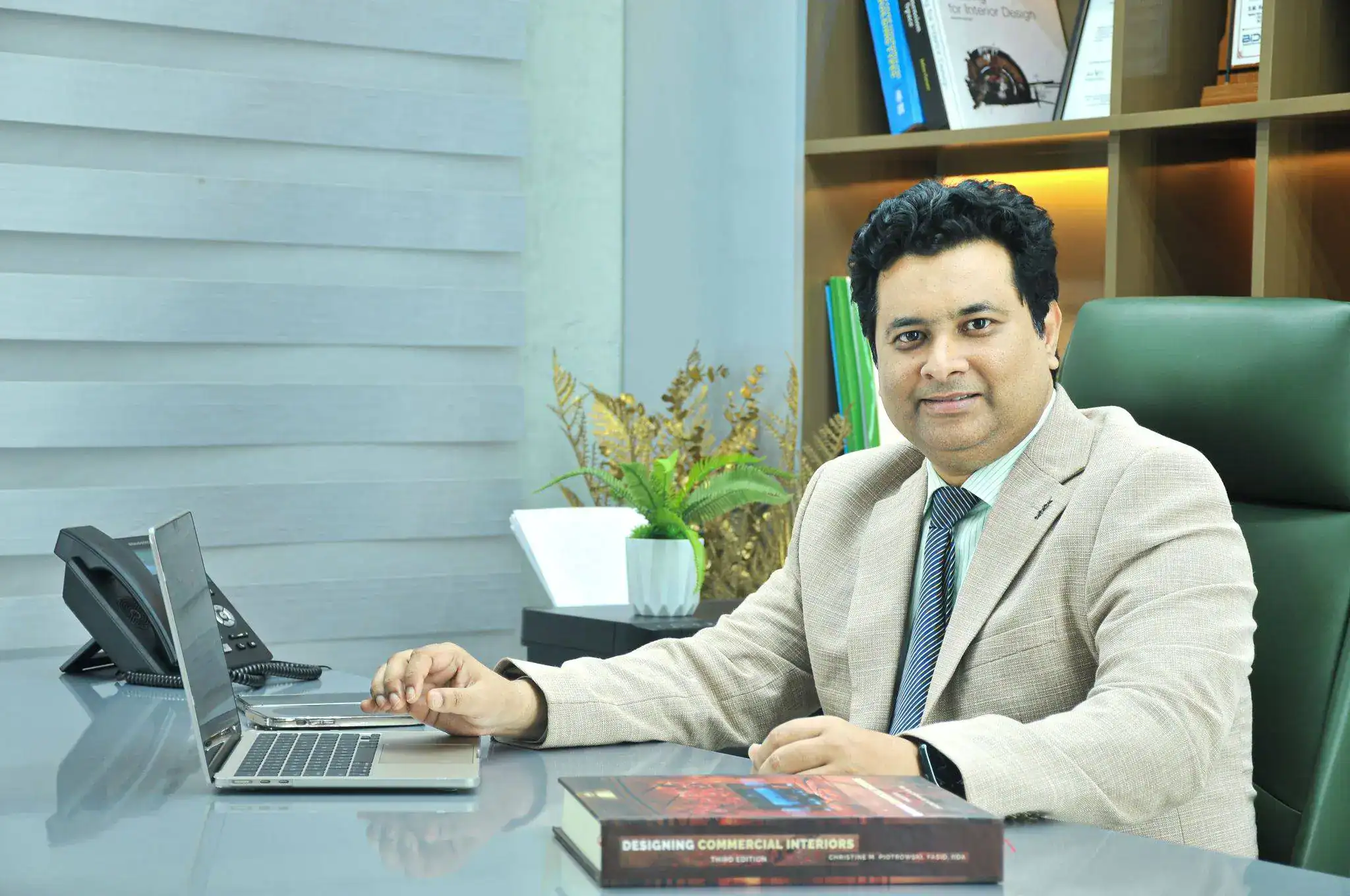
S.M. Rezaul Haque is a seasoned interior design consultant with 15+ years of experience. An AIUB graduate and Senior Vice President of BIDCOA, he specializes in creating functional, sustainable, and visually inspiring spaces. As the driving force behind BD INTERIOR, he has helped shape 700+ Bangladesh’s most innovative interior design projects.