
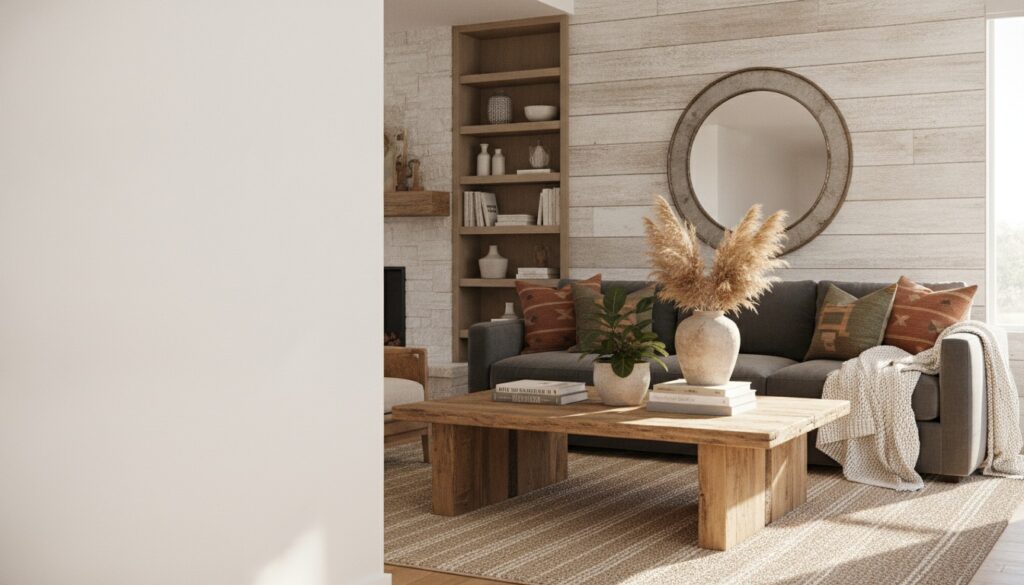
In the middle of Dhaka’s chaotic concrete expanse. Your home asks for organic warmth and tactile, raw textures to feel livable. A Few people assume a rustic style makes a dusty city home look worn out and dirty. That is the point. (We must make sure the weather is considered. )
- Natural materials like old stone and reclaimed timber ground this style, providing a cooler environment and a quiet retreat from the heat of Bangladesh.
- Moving away from the chaotic farmhouse clutter of past years, the modern rustic trend pairs refined elegance with organic earth tones like warm beige, sage green, and terracotta.
- Authentic materials require a higher initial budget and tight organizational habits (especially with open shelving); yet their extreme durability offers true long-term value.
Key points
- Old seasoned timber outlasts new wood because properly aged teak handles the intense Bangladeshi humidity without warping or twisting. Budget around Tk 600 to 900 per square foot for sourcing reclaimed timber in Dhaka.
- Cramming heavy, dark furniture into tight city flats remains a massive mistake; you should select light, distressed grains that preserve a sense of open space.
- Earthy tones prevent heat buildup because shades like soft terracotta and sage green absorb less thermal energy than bright, blinding whites, lowering indoor temperatures by roughly 2 to 3 degrees.
- Mismatched textures are mandatory for this design to work; so you must mix linen, hand-molded clay, natural cane, and raw timber instead of buying packaged showroom sets.
What Exactly is Rustic Interior Design?
Taking a step back here, basically, this approach celebrates the natural asymmetry. And raw wear of materials over factory-line perfection. In a world of sterile plastics, seasoned wood, that’s not quite right, and stone offer an immediate sense of permanence.
You’ve probably found that instead of relying on slick laminates, you build your space using textured textiles. Unfinished timbers and stones that display their natural cracks, knots, and irregular glazes. What this means is the modern aesthetic combines this organic depth with sharp, clean lines. Creating a balanced style that designers a lot call the modern rustic revival.
Sleek lighting fixtures keep the space from looking like an old, dusty museum, grounding it in the present.
Most likely, the style pulls directly from traditional village huts, rural farmhouses, and open courtyard homes. High overhead, exposed ceiling beams replicate — or at least, the structural bones of old village houses. While hand-laid stone floors and shiplap walls tell a distinct story. By avoiding mass-produced, toxic particleboard, this design relies heavily on recycled elements, directly aligning with sustainable sourcing practices.
Sure enough, walk into any standard furniture market in Dhaka, and you will find imitation pieces that are, to be more precise, merely scuffed up with sandpaper and dark stain. Genuine rustic design demands real, time-honored craftsmanship rather than speedy factory distressing.
Why does rustic design feel so calming?
Much of this calm comes from the way the design mirrors the uneven patterns of the natural world.
Taking a step back reveals an important factor. Still, to our brains, perfect, razor-sharp synthetic lines feel cold. Unnatural, whereas organic textures signal safety and ease. Looking more closely, experts in environmental psychology consistently note that contact with real stone, textured grain, and soft, indirect sunlight (a pressing factor here) actively reduces stress levels (which works out well in practice).
Also, a breeze change like swapping out a glossy white laminate wardrobe for an aged. A reclaimed wood panel can change a room. Within days, the harsh, clinical atmosphere disappears. And the bedroom starts to feel like a genuine sanctuary.
Why Rustic Design Makes So Much Sense for Bangladeshi Homes
Facing intense summer heat and nonstop humidity, local homes require porous materials that breathe naturally. Unlike slick ceramic tiles that trap heat, traditional terracotta flooring and raw timber. Breathable lime-wash walls naturally draw away dampness and feel cool to the touch. This physical property can lower your reliance on air conditioning.
In reality, keeping your rooms comfortable even in the peak heat of April.
From a broader view, to verify this, look at the transition from glazed floor tiles to unpolished Kota stone in local apartments. During the stifling heat of June. The stone-clad rooms feel roughly 3 degrees cooler than their tiled counterparts.
Yet, in a dusty city like Dhaka. High-gloss floors show every single speck of dirt within minutes of cleaning.
By incorporating open shelves and exposed rafters, you create a sense of visual openness that counteracts the cramped, overstuffed feeling common in urban apartments.
During the damp monsoon season, the untreated rattan and cane can rapidly breed mold if left in dark corners. You must keep your layout open and well-ventilated. Allowing plenty of fresh air to protect your design choices that support mental well-being.
This small detail is far more critical than most homeowners realize. Stick with me here; this pays off.
Can I pull off rustic decor in a small Dhaka apartment?
Taking a step back reveals an important factor. Actually, smaller flats are regularly easier to change.
Because they asks for fewer pieces to build a mood. So to keep the space from feeling claustrophobic, you should install slim.
Vertical timber panels on a single accent wall; pairing them with floating shelves and soft, (and rightly so) light earth tones. Loads of people mistakenly think this style only works in sprawling country lodges.
In a compact 500-square-foot layout, careful curation is everything. A single console table made of live-edge mango wood paired with a woven cane light fixture can define your entire living area without crowding it.
Common Pitfalls That Ruin the Rustic Look (And How to Avoid Them)
Many homeowners fall into the trap of overusing rough burlap and heavily distressed paint finishes; this style belongs to the dated 2010 shabby chic era rather than the clean, organic lines of today.
Ignoring the brutal reality of the Bangladeshi monsoon is another common path to failure. High moisture levels cause untreated cane to warp, raw steel to corrode, and poorly sealed lumber to swell. For instance, placing a beautiful woven jute rug next to a damp balcony window can turn it into a moldy. Ruined mess in under eight weeks.
To avoid this issue. Switch to tightly woven cotton dhurries or properly sealed seagrass mats.
Because open shelving leaves your storage on display (which is a critical factor), it needs strict visual discipline. Lining these shelves with bright, mismatched plastic containers will instantly ruin the natural aesthetic. You should use hand-woven storage baskets to hide daily clutter; reserving — to be more precise — the open shelves for ceramic bowls, clear glassware, or simple dried botanicals.
You should also avoid the temptation to buy matching furniture sets. A successful rustic room relies on a deliberate balance of contrasting textures. You could say instead of buying a complete bedroom or dining set, select one stunning centerpiece; like a massive reclaimed wood table; and build the rest of the (which works out well in practice) room around it.
What’s the best flooring for a rustic Bangladeshi living room?
Unglazed terracotta tiles and wide. Seasoned teak planks are the best options for handling local wear. These materials naturally mask fine dust and feel wonderfully cool underfoot. And slowly develop a beautiful character over the years.
While terracotta is pretty affordable at about Tk 80-120 per square foot, old teak planks command a premium. You should stay away from cheap vinyl flooring printed with fake wood grains.
These synthetic sheets look artificial and, let me put it differently, peel easily when seasonal rainwater leaks through balcony doors.
People Also Ask
Is rustic interior design expensive in Bangladesh?
Sourcing real reclaimed wood in Dhaka can carry a high initial cost. A solid, hand-built dining table made from salvaged timber usually costs between Tk 25,000 and Tk 60,000.
Kind of surprising, right? This might seem steep. But the furniture lasts for generations and almost never goes out of fashion. You can also introduce cheaper salvaged iron fixtures to balance your overall budget.
How do I mix modern appliances with rustic decor?
You can combine modern stainless steel appliances with rough, raw timber countertops and open shelving; this active contrast between technology. It’s best to avoid shiny white appliances mainly because they clash with the warm, organic atmosphere.
Can I DIY a rustic accent wall?
Yes, you can easily build an accent wall. But you should avoid cheap, printed wallpapers. Instead, use thin shiplap boards or lightweight reclaimed planks.
Before mounting, seal the wood with a flat, matte polyurethane to protect it from Dhaka’s high indoor humidity; this is especially vital for the wall directly behind your main living room sofa.
Applying a coat of breathable sage green. Or warm beige paint to the surrounding walls will instantly ground the wooden panels.
What colors go best with rustic furniture?
To complement raw wood tones. Start with a soft base of oatmeal, warm beige, or sandy grey.
You can then layer in terracotta accents to highlight the depth of the wood grain. What this means is adding deep navy blue or rich olive green throws. And painted doors will introduce excellent contrast without relying on loud, artificial colors.
FAQs
Can rustic design work in a modern Dhaka high-rise?
Yes, this approach works beautifully when you combine clean. Floor-to-ceiling windows with raw accent textures like exposed brick or unpolished slate. The modern variation is simply about layering organic, tactile materials onto a clean and minimal contemporary frame.
How do I maintain distressed wooden furniture in humidity?
You must seal your wooden pieces with a breathable. Microporous finish that blocks external dampness while allowing internal moisture to escape.
And another thing, run your dehumidifier during the wet monsoon months. Wipe up surface spills immediately. Plan to apply a fresh coat of matte sealant every two to three years to maintain the finish.
Are ceiling beams necessary for a rustic look?
Ceiling beams aren’t required to achieve this look. While real overhead beams look fantastic, you can replicate this depth by installing lightweight faux beams made of stained pine, which is a detail a lot of renovators overlook.
Alternatively, you can skip the ceiling entirely. And focus on vertical wood cladding on your main walls.
- Choose breathable wall colors; apply zero-VOC lime wash in warm oatmeal or pale sage to create a rich, cloudy texture on your plaster walls.
- Invest in one vintage centerpiece; hunt for a solid console table or bench sourced from the timber merchants in Old Dhaka.
- Layer local hand-woven fabrics; style your seating with traditional nakshi kantha throws, cotton cushions, and durable seagrass floor coverings.
- Replace shiny cabinet pulls and faucets; install matte black metals or oil-rubbed brass to bring aged character to your kitchen and bath.
- Introduce a bold living element; drop a broad-leafed fiddle-leaf fig or a lush areca palm into an unglazed clay pot to ground the layout.
The Bottom Line
Now, adopting this look isn’t about pretending you live in a rural log cabin. It’s about bringing that same organic stillness into your busy urban home. Instead, focus your energy on sourcing true, natural materials and (and rightly so) breathable matte finishes.
When you get those fundamentals right. The rest of the room settles into place without begging for attention.

S.M. Rezaul Haque is a seasoned interior design consultant with 15+ years of experience. An AIUB graduate and Senior Vice President of BIDCOA, he specializes in creating functional, sustainable, and visually inspiring spaces. As the driving force behind BD INTERIOR, he has helped shape 700+ Bangladesh’s most innovative interior design projects.