
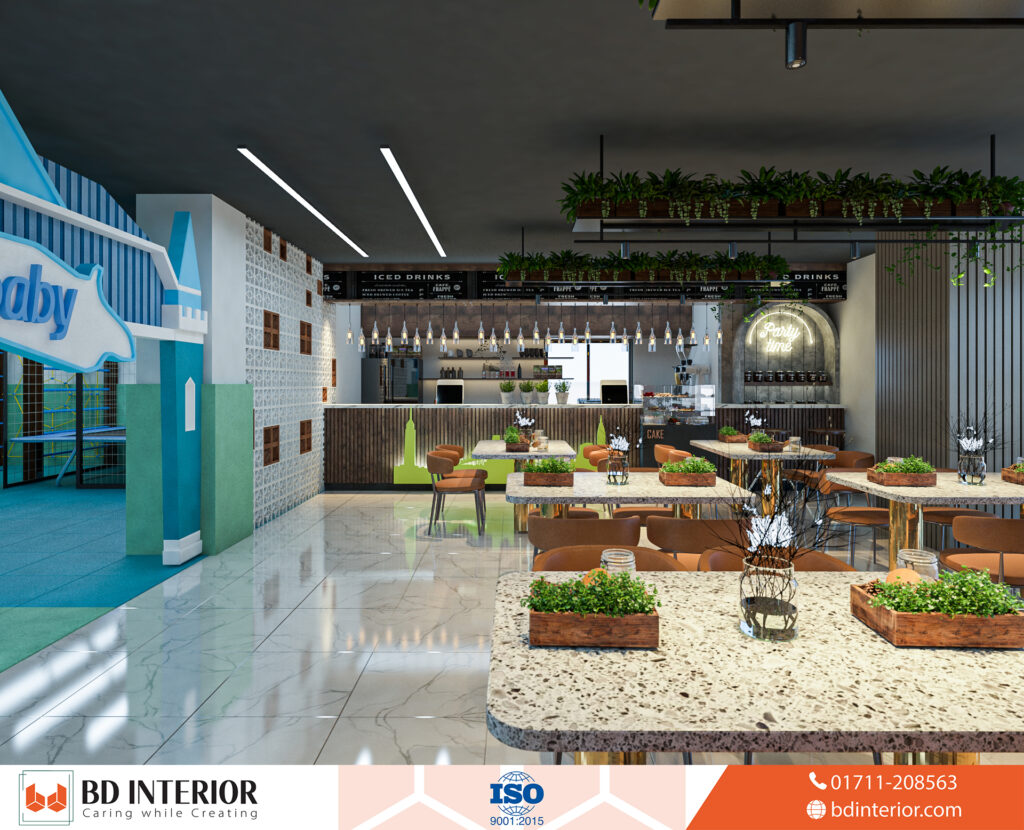
Designing a restaurant is more than arranging chairs and painting walls. In Bangladesh, restaurant owners now view interiors as a key factor in attracting customers and retaining them. As dining becomes more about experiences than just food, 2026 brings fresh interior design trends shaped by global influences, cultural heritage, and evolving customer expectations.
Let’s explore the most important styles and practical tips that matter for restaurants in Bangladesh today.
Modern Minimalist Restaurant Design with Cultural Fusion Elements
Minimalism is a strong trend worldwide, and Bangladeshi restaurants are embracing it with a unique twist. Instead of plain white spaces, designers mix simplicity with cultural heritage. Clean lines, uncluttered layouts, and neutral colors are paired with elements like handwoven Jamdani wall panels, bamboo partitions, or subtle terracotta patterns.
Several Bangladeshi interior projects have recently garnered international attention, with some even being shortlisted for the Dezeen Awards 2025 for their innovative use of regional materials in commercial spaces.
Insights from Milan Design Week 2025 suggest that the future of hospitality lies in ‘raw luxury,’ where unrefined natural textures are treated with high-end craftsmanship to create a tactile experience.
This style creates a calming space that retains its cultural identity. A diner can enjoy a modern setting but still feel connected to Bangladeshi roots. For example, a café in Dhaka may feature sleek black tables paired with traditional cane chairs, striking a balance between modern aesthetics and familiar comfort.
Advanced acoustic solutions, such as perforated ceiling panels or fabric-wrapped wall treatments, are increasingly used to manage noise levels in bustling cafes without detracting from the overall visual theme.
Industry veterans like Ariful Islam of Zero Inch emphasize that this fusion approach is crucial for creating a narrative that resonates with the sophisticated tastes of Dhaka’s emerging middle class.
Data from BD Interior indicates that venues integrating these cultural fusion elements often see a 35% sales increase as local diners gravitate toward spaces that reflect their personal identity.
Why it works in Bangladesh:
- Minimalist design reduces maintenance costs.
- Fusion with culture sets restaurants apart from competitors.
- Customers enjoy both sophistication and tradition.
Sustainable and Eco-Friendly Interior Solutions for Bangladesh Restaurants
Sustainability is no longer optional. In 2026, many restaurants in Dhaka, Chattogram, and Sylhet are shifting toward eco-friendly interiors. This means using locally sourced woods, recycled furniture, natural lighting, and low-energy appliances. Clay lamps, bamboo ceilings, and handmade fabric wall art minimize environmental impact while preserving authentic design.
With the global technosphere now estimated at 30 trillion tonnes, the responsibility of designers to minimize the physical mass of new interior fit-outs has never been more urgent.
Seamless HVAC integration is vital for maintaining a consistent climate, particularly in the humid climate of Bangladesh, where air circulation directly affects how long a customer chooses to stay.
This shift aligns with broader market trends, as the global sustainable hospitality sector is projected to grow at a 14.1% CAGR between 2026 and 2032, according to recent industry forecasts.
Eco-friendly interiors also attract conscious customers who want to support businesses that prioritize the planet’s well-being. Beyond aesthetics, sustainable solutions lower long-term energy and maintenance expenses.
Top-tier establishments are now aiming for LEED certification or the WELL Building Standard to demonstrate a rigorous commitment to environmental stewardship and the physical health of their patrons.
Examples of sustainable ideas for Bangladesh restaurants:
- Solar-powered lighting for outdoor seating.
- Furniture made from reclaimed wood or bamboo.
- Green walls with indoor plants for natural air purification.
- Paints are free of harmful chemicals.
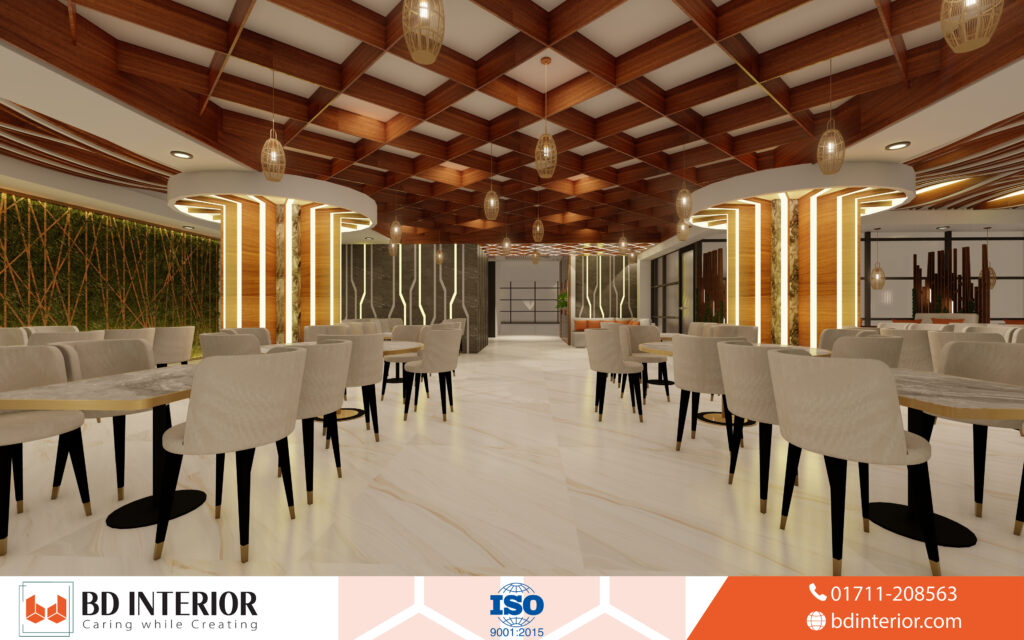
Open Kitchen Layouts and Bold Color Schemes That Attract Diners
Transparency builds trust. An open kitchen layout allows diners to watch chefs prepare food, boosting confidence in hygiene and quality. This trend has become popular in Bangladesh, especially in barbecue houses, pizzerias, and cafés. It also creates entertainment, as cooking becomes part of the dining experience.
At the same time, bold color schemes are making an entrance. While soft tones dominated the past decade, vibrant palettes like mustard yellow, deep green, or terracotta orange are now drawing attention. Bright colors energize the space and make restaurants more memorable, especially for younger customers who love to share pictures on social media.
Designers are beginning to experiment with Cloud Dancer White, a forecasted Pantone 2026 shade, to provide a softer and more inviting backdrop than the stark, clinical whites of previous years.
Leveraging customer psychology through specific color palettes can subtly influence ordering behavior, with warmer tones often stimulating appetite and cooler hues encouraging a more relaxed, lingering dining pace.
Benefits of this approach:
- Enhances customer engagement.
- Builds trust through visible hygiene.
- Creates Instagram-worthy dining spots.
Essential Elements of Functional Restaurant Interior Design in Bangladesh
A restaurant must balance beauty with function. Interiors that look great but feel cramped or uncomfortable will fail. In Bangladesh, where urban spaces are often crowded and customers frequently come in groups, functionality is just as important as style.
Strict adherence to modern fire safety standards is also non-negotiable, ensuring that the aesthetic layout never compromises emergency exit accessibility or the placement of critical suppression systems.
Space Planning and Layout Optimization for Maximum Seating Capacity
Every square foot counts. Proper space planning ensures restaurants seat more customers without making the area feel crowded. Designers in Bangladesh now use innovative layouts: modular furniture, foldable chairs, and flexible table arrangements. This allows quick adjustments during peak hours.
Key strategies for better space use:
- Narrow yet comfortable aisles for smooth movement.
- Booth seating along walls to save central space.
- Round tables for family-style dining.
- Multi-level shelving for storage.
By focusing on planning, restaurants can maximize seating while maintaining comfort.
Mastering the nuances of zoning and circulation allows for a friction-free experience where staff can navigate the floor efficiently while diners enjoy a sense of privacy and ease.
Optimizing the table turnover rate through thoughtful seat spacing ensures that the restaurant remains profitable during high-traffic windows without making guests feel rushed or overcrowded.
Lighting Design, Furniture Selection, and Material Choices for Durability
Lighting sets the mood. Soft warm lights work best for cozy restaurants, while brighter LED options fit fast-food spaces. Many restaurants in Dhaka now mix pendant lights, spotlights, and natural daylight to create depth and character.
Research suggests that atmospheric lighting has a direct average check impact, as guests are more likely to order desserts or extra drinks in a warmly lit, comfortable environment.
Furniture selection is another crucial factor. Durable materials such as teak wood, metal frames, or high-quality laminates handle daily use better. Since restaurant furniture faces heavy traffic, choosing a style without durability often leads to high replacement costs.
Evaluating furniture at a material lifecycle level ensures that the choices made today do not contribute to landfill waste a decade from now, promoting a truly circular economy.
Checklist for smart design choices:
- Use LED lights for energy savings.
- Select stain-resistant fabrics for chairs.
- Combine wood and metal for long-lasting furniture.
- Pick flooring that resists moisture and wear.
Incorporating Traditional Bangladeshi Crafts (Jamdani, Terracotta, Woodwork)
Bangladesh has a rich heritage of handicrafts, and many restaurants are showcasing them to create unique atmospheres. Jamdani fabric can be used as wall art or table runners. Terracotta tiles bring warmth to walls or flooring. Hand-carved wooden panels add elegance to entryways.
These crafts not only enhance design but also support local artisans. By incorporating them, restaurants celebrate culture while standing out from modern, generic interiors.
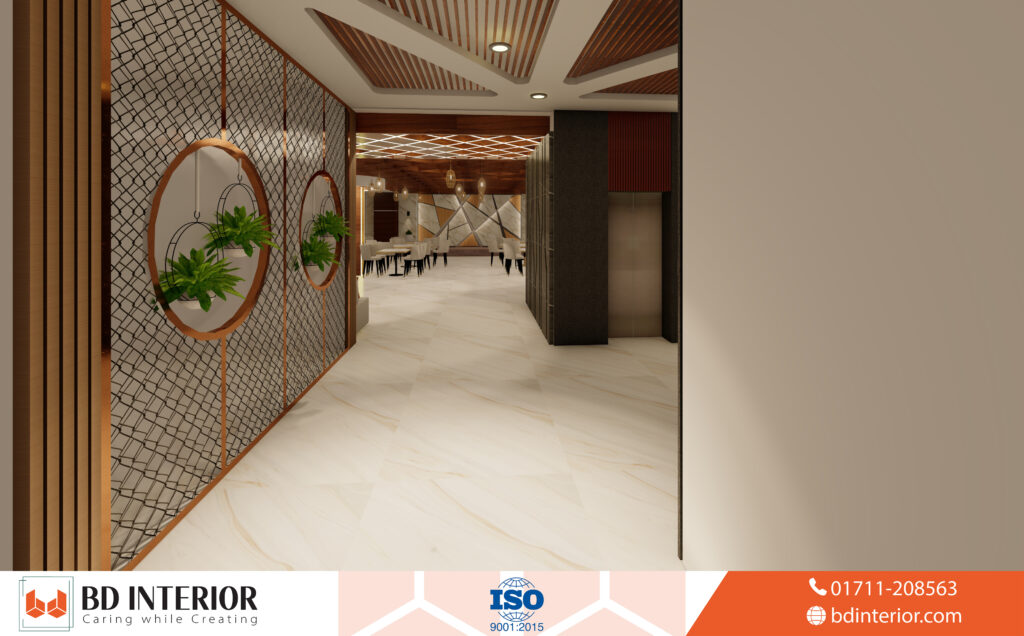
Restaurant Interior Design Cost and Budget Planning in Bangladesh
Designing a restaurant requires clear financial planning. Costs depend on size, concept, and materials. In Bangladesh, prices vary widely, but with the right approach, both premium and budget restaurants can achieve attractive designs.
Average Interior Design Cost Breakdown
Most medium-sized restaurants, such as those with an area of around 800 sqft, in Bangladesh, spend between BDT 1,200,000 and BDT 2,000,000 on their interiors. This includes design fees, materials, furniture, lighting, and décor. Luxury restaurants in upscale areas may spend more, particularly if they import materials or use premium finishes.
Working within a BDT 1.2M-2M budget requires a strategic allocation of funds, prioritizing high-impact areas like the storefront and lighting while utilizing cost-effective local finishes for secondary zones.
Budget-Friendly Design Ideas Using Local Resources and Materials
Not every restaurant needs a million-taka investment. Many owners save money by using local resources creatively.
Budget-friendly options:
- Locally made bamboo chairs instead of imported ones.
- Terracotta tiles from Cumilla instead of marble.
- Upcycled wood furniture.
- Jamdani or nakshi kantha fabric as wall hangings.
These solutions reduce costs while maintaining an authentic and appealing design.
Adopting an adaptive reuse strategy for existing structures not only reduces the carbon footprint of a new opening but also adds a layer of historical character that cannot be replicated in new builds.
Choosing the Right Interior Design Company in Dhaka and Bangladesh
Selecting the right design partner ensures your vision comes alive without financial surprises. Many firms in Dhaka specialize in restaurant interiors, but it’s essential to check portfolios, customer reviews, and pricing before making a decision.
Prioritizing agencies with a track record of 200+ completed projects across various sectors provides peace of mind that they can handle the logistical complexities inherent in large-scale restaurant fit-outs.
Most professional studios now provide photorealistic 3D visualization during the planning phase, allowing owners to virtually walk through the space and approve every detail before construction begins.
Seeking out firms that offer turnkey solutions can simplify the process, as they manage everything from the initial architectural concepts to the final installation and décor procurement.
A reputable firm will ensure that every structural modification complies with BNBC standards, safeguarding the business against legal liabilities and ensuring the long-term safety of the building.
Tips for choosing wisely:
- Visit past projects for quality checks.
- Ask about maintenance support after project completion.
- Compare at least three companies for fair pricing.
- Ensure they understand both aesthetics and functionality.
A good design company strikes a balance between creativity and practicality, helping you achieve interiors that attract diners and support business growth.
FAQs on Restaurant Interior Design in Bangladesh
u003cstrongu003eHow long does it take to complete restaurant interiors in Bangladesh?u003c/strongu003e
Most small to medium projects take 2–3 months, while larger restaurants may need up to 3-5 months, depending on complexity.
Managing a strict 2-3 months timeline requires precise coordination between contractors and suppliers to prevent the common delays associated with custom furniture fabrication or imported material shipments.
u003cstrongu003eCan I design my restaurant interiors in phases to save money?u003c/strongu003e
Yes. Many owners first focus on essentials like seating and lighting, then add décor and upgrades later.
u003cstrongu003eWhat interior style works best for small restaurants in Dhaka?u003c/strongu003e
Minimalist designs with foldable furniture and bright lighting maximize space and attract younger customers.
u003cstrongu003eIs it necessary to hire a professional designer?u003c/strongu003e
Calculating the projected ROI on design early in the process helps owners justify the initial capital expenditure by aligning spatial aesthetics with long-term revenue growth goals.
The successful implementation seen in the Red Chickn project demonstrates how a visible prep area can transform a fast-casual dining environment into a high-energy theater for the senses.
While not mandatory, professionals save time, prevent costly mistakes, and create layouts that improve both seating capacity and customer experience.
Want to calculate the cost of your home interior?
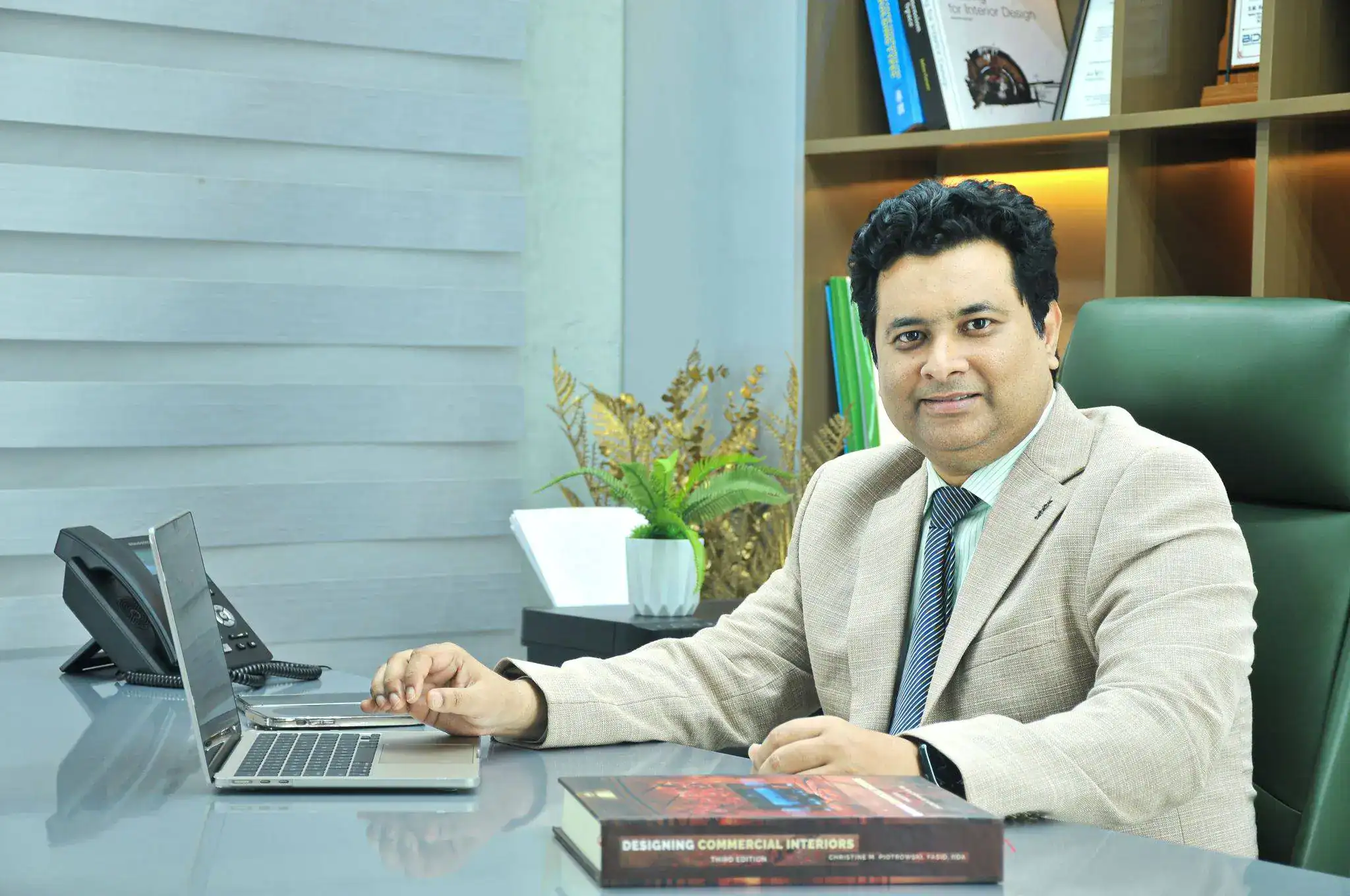
S.M. Rezaul Haque is a seasoned interior design consultant with 15+ years of experience. An AIUB graduate and Senior Vice President of BIDCOA, he specializes in creating functional, sustainable, and visually inspiring spaces. As the driving force behind BD INTERIOR, he has helped shape 700+ Bangladesh’s most innovative interior design projects.