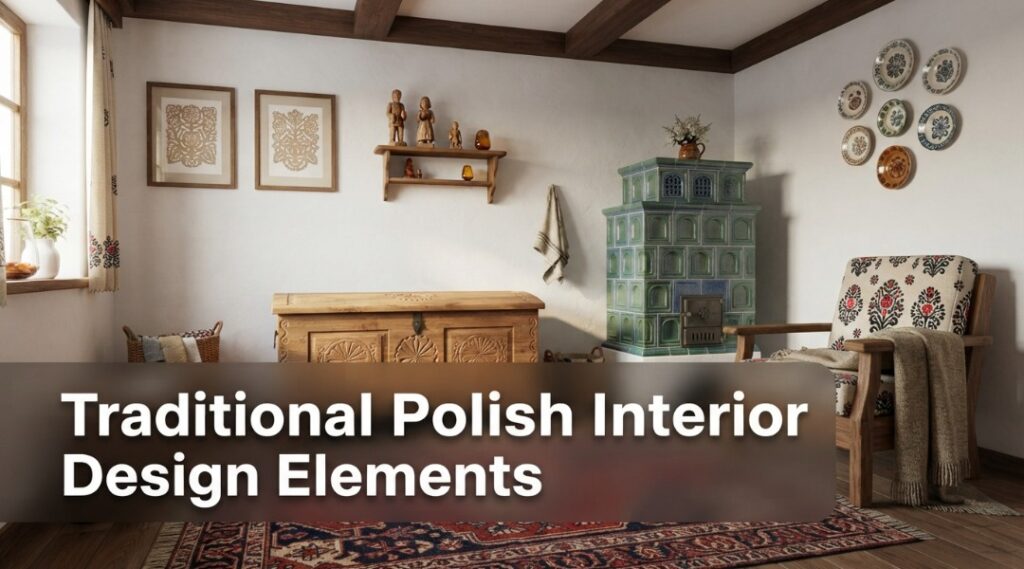
Traditional Polish interior design blends rustic folk heritage with a restrained, modern sensibility that prioritizes warmth over visual perfection. If you’ve ever walked into a room that felt instantly welcoming without trying too hard, you already understand the core appeal. It uses natural wood and white or beige foundations, along with people-inspired accents like wycinanki paper-cut art. The result feels human and authentic rather than over-designed.
- Traditional Polish interior design combines natural wood, white or beige bases, and folk motifs like wycinanki paper-cut art for warm, authentic spaces.
- The style adapts to modern homes through small accents like cushions, rugs, and wallpaper rather than requiring full-room renovations.
- Contemporary interpretations use restrained color palettes with rich reds, greens, yellows, and blues in balanced combinations instead of heavy ornament.
Key Point
- White or beige walls with natural wood furniture form the visual base.
- Folk accents like wycinanki, floral motifs, and striped rugs add regional character without overwhelming the room.
- About 6 to 8 decor pieces across textiles, ceramics, and wall art can carry the look without a full renovation.
- The style works best when comfort and practicality take priority over visual perfection.
Table of Contents
- What is Traditional Polish Interior Design?
- Core Elements That Define the Polish Folk Aesthetic
- Applying Polish Folk Decor Without Overwhelming a Space
- Common Mistakes and Sourcing Challenges
- People Also Ask
- Bringing It All Together
What is Traditional Polish Interior Design?
Traditional Polish interior design is a decorating style that combines rustic folk craft heritage with natural materials, white or beige foundations, and folk-inspired accents like wycinanki paper-cut art, floral motifs, and striped textiles to create warm, authentic, human-centered spaces.
The approach is rooted in regional craft traditions from Polish farming communities. Where paper-cutting, weaving, and pottery were everyday practices rather than decorative afterthoughts.
What sets this style apart from generic rustic decor is its particular cultural DNA. Wycinanki, the symmetrical cut-paper art form originating from Polish farming villages, remains probably the most recognizable visual signature. These complex paper cuts usually feature birds, flowers, trees, and geometric patterns arranged in symmetrical compositions. In contemporary interiors, you’ll find these motifs translated into wallpaper, framed wall art, and printed textiles.
In real-world terms, Pl notes that Polish interiors are shifting away from cool perfectionism toward warmer, more sensory spaces. The emphasis is on natural materials, warm palettes, and emotional comfort. So this matters mainly because the style isn’t about recreating a museum diorama. It’s about borrowing warmth and craft heritage to make the home livable.
Polish interiors do not feel heavily composed or over-designed, but more human and authentic., Adorno Design
That observation captures something I’ve noticed repeatedly when examining Polish-inspired rooms. They feel assembled over time rather than styled in an afternoon. From a practical standpoint, that marginally imperfect, lived-in quality is exactly what makes the aesthetic connect with homeowners who want personality over polish.
Core Elements That Define the Polish Folk Aesthetic
The core elements of Polish folk decor include natural wood furniture, white or beige wall foundations, wycinanki paper-cut patterns, floral and geometric folk motifs, striped rugs, and a controlled palette of warm reds, greens, yellows, and blues used in balanced combinations rather than saturated displays.
Think about this – each element serves a specific purpose in building the layered, warm character that defines the style.
Natural wood is the structural backbone. Think pine, oak, or birch furniture with visible grain and minimal staining. The wood grounds the space and gives folk patterns something neutral to sit against. Without that neutral base, the folk motifs can quickly overwhelm the eye.
Color matters, which means traditional Polish folk art usually used seriously saturated displays with bright reds, greens, yellows, and blues layered together. Contemporary interpretations pull back on that intensity, which means it stresses rich colors used in more controlled combinations. This lets the folk patterns breathe without disappearing fully.
Traditional vs. Contemporary Polish Folk Color Usage (Relative Saturation Index)
Textiles carry much of the folk character; striped wool rugs, embroidered cushions, and folk-patterned bedding all feed into. So user-facing product listings show continued demand for Polish folk and wycinanki patterns across home decor categories like bedding, pillows, curtains, and wallpaper. That demand signals the style’s flexibility; you can introduce it through small swaps rather than structural changes.
How do wycinanki patterns work in modern rooms?
In most scenarios, practically speaking, wycinanki patterns translate into modern interiors through framed prints, wallpaper borders, and textile designs that preserve the symmetrical cut-paper aesthetic while using contemporary color palettes. The key is restraint. One large wycinanki-inspired piece on a white wall makes a stronger statement than four smaller pieces scattered across the room.
The most successful applications treat wycinanki like a focal point rather than background texture. When you place a single bold paper-cut design above a plain wooden sideboard, the pattern gets room to breathe. Cram three of them onto the same wall and the complex detail starts competing with itself.
Applying Polish Folk Decor Without Overwhelming a Space
You can apply Polish folk decor in modern homes by starting with a neutral white or beige foundation and natural wood furniture. Then introduce folk motifs through small accents like cushions, rugs, ceramics, and wallpaper rather than attempting a full-room renovation. This incremental approach lets you test the aesthetic and adjust before committing deeply.
Users appreciate that Polish folk decor can be added in small doses, like pillows or rugs, without changing the whole room. That flexibility matters mainly, seeing as folk patterns are visually dense. Even a single embroidered cushion or a striped wool runner introduces enough character to shift a room’s mood.
Here’s a practical approach: for instance, begin with your base layer: white or beige walls and natural wood furniture.
If you’re starting from scratch, consider how minimalist interior design principles can keep the foundation clean. Then layer in one textile element, perhaps a folk-patterned rug. For guidance on rug selection, basically, these tips for choosing the perfect living room rug can help you match scale and material to your space.
What’s the catch with bright folk colors?
For the average user, too quite a bit of saturated patterns at once make a room feel cluttered rather than cozy. A common complaint is that layering multiple bright folk textiles and wall pieces puts together visual noise that undermines the warmth the style aims to deliver.
The solution is color discipline. Pick two accent colors from the classic palette, say warm red and forest green, and let them repeat (and that implies quite a bit) across different pieces. A red-striped rug, a green floral cushion, and a single wycinanki print that incorporates both colors craft coherence. Adding yellow, blue, and bright pink and to add to that starts to feel chaotic.
Common Mistakes and Sourcing Challenges
The most common mistakes in Polish folk decor include overloading a room with too many bright patterns, relying on stylized commercial versions instead of authentic regional craft pieces, and softening the historical character so much that the style loses its cultural identity.
Still, these issues stem from nostalgia meeting limited access to genuine materials.
From a broader view, authentic regional detail can be a pain to source. Many shoppers end up with commercial versions that are simplified or stylized rather than true craft pieces; some modern reinterpretations soften historical character and may disappoint buyers seeking a more traditional look. The gap between mass-market folk-patterned items and genuine artisan work is real and affects how a room Actually, reads.
When sourcing, look for Polish artisan marketplaces and fair-trade craft cooperatives rather than generic home decor retailers, and focus on natural materials. If sustainability factors into your sourcing decisions, understanding how to choose sustainable materials can help you identify pieces that are both authentic and responsibly produced. This detail matters more than it might seem right now.
Put differently: the sourcing problem isn’t just about authenticity versus commerce. It’s about understanding what you’re buying, so a printed cushion with a wycinanki motif isn’t pretending to be a hand-cut paper original.
It’s a modern translation. The mistake happens when buyers expect commercial pieces to carry the same cultural weight as artisan craft and then feel disappointed. When the room reads as inspired-by rather than authentic.
You’ll see how this ties into the previous point: for adding finishing touches, interior design accessories can help you think through how smaller folk pieces interact with your existing decor without creating clutter.
People Also Ask
What are wycinanki in Polish interior design?
Wycinanki are traditional Polish paper-cut art forms featuring symmetrical designs of birds, flowers, trees, and geometric patterns. In interior design, they appear as framed wall art, wallpaper motifs, and printed textile designs that bring folk heritage into contemporary spaces.
Can you mix Polish folk decor with modern furniture?
Yes, Polish folk decor pairs well with modern furniture. Because the style adapts through small accents like cushions, rugs, and ceramics rather than requiring period-right pieces. The contrast between clean modern lines and warm folk patterns creates visual interest.
What colors work best in traditional Polish interior design?
On the surface, warm reds, greens, yellows, and blues form the standard palette, but contemporary interpretations use these colors in more controlled combinations. Sticking to two or three accent colors keeps the space from feeling visually busy.
Where can you buy authentic Polish folk decor pieces?
Authentic Polish folk decor is available through artisan cooperatives, Polish craft marketplaces, and specialty retailers. Many commercial versions exist, so checking the maker’s background and production method helps distinguish genuine craft from stylized reproductions.
Is Polish folk decor expensive to implement?
Polish folk decor can be set up at different price points. Because the style works through incremental additions like pillows, rugs, and wall art rather than requiring full-room renovation. Starting with one or two pieces lets you build gradually.
- Establish a neutral base, Paint walls white or beige and keep furniture in natural wood tones to create a clean canvas for folk accents.
- Choose two accent colors, Pick from warm reds, greens, yellows, or blues and repeat them across textiles and wall pieces for visual coherence.
- Add one statement folk piece, Start with a single wycinanki-inspired wall art or a striped folk rug rather than multiple small items at once.
- Layer incrementally, Introduce cushions, ceramics, or curtains one at a time over several weeks to assess whether the room feels balanced or busy.
Bringing It All Together
Traditional Polish interior design offers a practical path to warm, authentic spaces by combining natural materials, restrained folk motifs, and a human-centered approach that values comfort over visual perfection. The style’s greatest strength is its flexibility; you can introduce it through a single rug or a framed paper-cut print without rebuilding a room.
For broader application ideas, exploring interior design ideas for living room spaces can help you think through how folk accents interact with seating arrangements and traffic flow.
The core insight to carry forward is this: Polish folk decor works because it feels personal rather than generic; the motifs carry regional stories and the materials age well. The style accommodates both heritage seekers and modern minimalists through its adjustable intensity. Start small, choose pieces you genuinely respond to, and let the room assemble naturally over time.

S.M. Rezaul Haque is a seasoned interior design consultant with 15+ years of experience. An AIUB graduate and Senior Vice President of BIDCOA, he specializes in creating functional, sustainable, and visually inspiring spaces. As the driving force behind BD INTERIOR, he has helped shape 700+ Bangladesh’s most innovative interior design projects.