
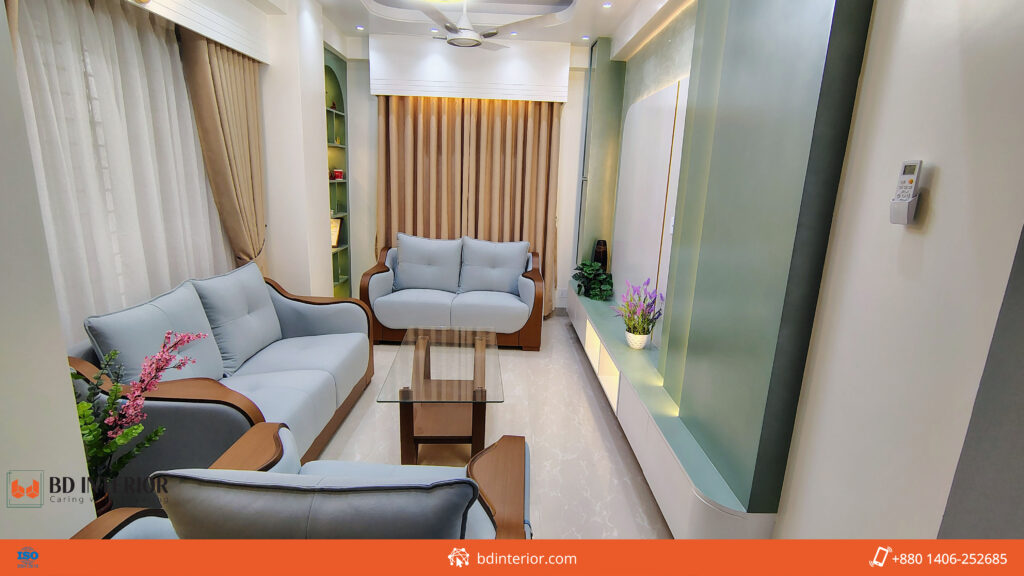
The question “can we do interior designing with arts” is asked constantly, and most design blogs give a weak, hedged answer. That’s wrong; art shouldn’t be an afterthought or a final accessory you hang after the furniture arrives. It should be the first decision you make.
When you build a room around a piece of art you genuinely love, every subsequent choice, from paint colors to sofa fabric, has a clear direction. Rooms designed this way feel intentional and personal. Rooms where art gets tacked on at the end feel staged and forgettable. In reality, this position is backed by consistent guidance from working designers who treat art as the foundation, not the decoration.
- Art should lead interior design decisions, not follow them. Build your room’s palette, mood, and layout around a chosen artwork from the start.
- Pull one or two colors from your art into textiles and paint. Never match everything exactly, or the room looks flat.
- Scale and placement matter enormously. One designer guideline places the center of artwork at about 145 cm from the floor.
Main points
- Art-first design creates immediate focal points
- Pull one or two colors from your artwork into soft furnishings, never exact-match everything
- Artwork above furniture should span roughly two-thirds of the furniture’s width
- Lighting determines whether your art reads well or disappears
Table of Contents
- Why This Matters Now
- The Case For Art-Led Interior Design
- What Critics Get Wrong
- The Bigger Picture
- People Also Ask
- The Path Forward
Why This Matters Now
The interior design conversation has shifted from “what furniture do I buy” to “what feeling do I want this room to create.” Art answers that question faster than any Pinterest board. When you start with art, you skip the paralysis of choosing from thousands of fabric swatches. The art tells you what to do.
By that point, the room’s palette is locked. Any art you add is forced to fit a predetermined scheme, which is backwards.
Furniture arrives in neutral tones, and then homeowners wonder why their living room feels like a hotel lobby. The data backs it up. The art, when it finally shows up, fights the room instead of grounding it.
Starting with art flips this completely. You pick a piece that moves you and let, I mean, it dictate wall color, accent cushions, and rug choices. One decision cascades into twenty smaller ones, each easier because the direction is set.
The Case For Art-Led Interior Design
Building a room around art works because art provides a complete design brief in one object: color palette, mood, texture, and scale. Instead of assembling a room from dozens of unrelated decisions, you get a single source of truth. Every fabric and paint chip either supports the art or doesn’t.
The strongest argument for art-led design is coordination without monotony. The key here is that. When you pull accent colors from a painting into your throw pillows or curtains, the room feels connected. Watch this space.
But here’s the high-stakes nuance. Exact color matching can make interiors look flat and less sophisticated, according to design guidance from multiple sources.
You want harmony, not cloning. If your artwork has deep teal. Buy a cushion with a whisper of that teal. Paint a narrow accent wall in a muted version. Let the art keep its authority.
When everyone asks whether we can do interior design with art, they’re really asking whether art can carry the weight of a room’s identity. It can, and it does that best. When you treat it as the starting point rather than the finishing touch.
“Always choose your art because you love it.”, Homes & Gardens
This sounds simple; most the majority choose art to match their sofa. That’s backwards. The sofa should respond to the art.
Buying art to fill a gap on a wall you’ve already designed is decoration. Your mileage may vary, of course. Choosing art first and designing around it’s interior design.
How does art-led palette building actually work?
You pick your artwork first. Then you extract one or two dominant colors and repeat those in soft furnishings, accessories, or a single painted surface. The rest of the room stays neutral so the art can breathe. This gives you a coordinated room without the dead, flat look that comes from buying matching sets from a catalog.
Design Approach Comparison (Effectiveness Score)
What about scale and placement?
Scale kills more art installations than color ever will; a painting that’s too small looks accidental.
One that’s too large overwhelms everything, so one designer guideline places the center of artwork at about 145 cm from the floor. Nine times out of ten, for pieces above a sofa or bed, the artwork should span roughly two-thirds of the furniture’s width.
In practical terms, these are proportional anchors that keep art and furniture in conversation, not competition.
What Critics Get Wrong
The main counter-argument is that art-led design is impractical: most people already have furniture, and buying art first is expensive. This misunderstands the approach. Art-led design doesn’t require buying a gallery piece before a sofa. It means identifying the visual anchor and letting it guide remaining decisions.
Keep in mind what we talked about earlier: some critics argue that art is subjective. So unreliable as a design foundation. They say you can’t build a room around something. So personal, but that’s exactly the point.
Your home isn’t a showroom. It should reflect your taste.
The strongest opinion across design sources is that art should feel personally chosen. A room becomes more successful. When the art reflects the homeowner’s taste rather than following a rigid decorating rule.
Another pushback: art-led rooms look cluttered. This happens, but it’s a placement problem, not a philosophy problem. If artwork is too large or too busy for the room, it overwhelms the furniture. The fix is choosing art with fitting scale and balancing busy pieces with calmer furniture and negative space.
On the surface, I’ve watched homeowners in Dhaka cram five framed prints onto a wall that needed one strong piece. When decor and accessories are chosen without a guiding vision, you get accumulation instead of design.
The Bigger Picture
Art-led interior design isn’t just about aesthetics. It changes how you experience your home daily. Rooms built around meaningful art feel personal and emotionally expressive in ways that furniture-only rooms never do. Your home becomes a space that tells your story rather than replicating a catalog.
Here’s what most design guides won’t tell you. Art lets your home evolve. Furniture is expensive and semi-permanent.
You don’t swap a sofa every year. But art is modular. You can rotate pieces, add new ones, shift a painting from the living room to the bedroom, and the room feels new without a renovation.
This flexibility matters in Bangladesh, where apartments are getting smaller. Different formats give you options.
Here’s the thing – a large canvas anchors a wall. A gallery wall fills a staircase. Sculpture adds three-dimensional presence. Murals change a whole wall.
Is art-led design worth it for small apartments?
Yes, and probably more so. Plus, small spaces benefit from a single strong visual anchor more than large rooms do. One well-placed, well-lit piece gives a compact apartment a sense of intention that furniture alone can’t achieve. Choose art proportional to the wall and light it properly.
People Also Ask
Can we do interior design with art without an art background?
Yes. You don’t need formal art training to design a room around artwork. What you need is the confidence to choose pieces you genuinely respond to and the discipline to let those pieces guide your color and layout decisions. The technical skills are learnable rules, not artistic talent.
Should art match the furniture in a room?
No, and this is a typical error. In the end, art should either harmonize with the room’s palette or put together controlled contrast, and exact matching makes interiors look flat and staged. The room should feel like the art belongs there, not like everything came from the same factory.
How high should artwork be hung on a wall?
Taking a different approach here, one widely cited guideline places the center of the artwork at about 145 cm from the floor. This height works for most viewing angles, whether someone is standing or sitting. For pieces above furniture, keep the bottom edge about 15 to 20 cm above the furniture line.
What size artwork goes above a sofa?
Still, the general rule is that artwork above a sofa or bed should span roughly two-thirds of the furniture’s width. This proportion keeps the art and furniture visually connected, which means anything much smaller looks lost, and anything wider overwhelms the furniture below it.
The Path Forward
The next time someone asks, “can we do interior design with art?” the answer should be confident. Not “yes, sometimes” but “yes, and you probably should.” Art-first design produces rooms with more personality, better coordination, and genuine emotional resonance.
Start with one piece. Nine times out of ten, a print from a local Bangladeshi artist, a textile from a craft fair, or even a photograph you took yourself. Fair point either way.
On a slightly different note, what matters is that you respond to it. Then build outward. Let it tell you what colors to use; actually, that’s not quite right. Where to place furniture, and what to leave bare.
Remember that lighting matters as much as the artwork itself; a poorly lit piece loses impact no matter how strong it’s. If you’re planning a full renovation, consider redesigning your space with art placement and lighting as core decisions.
The homes that feel most alive aren’t the ones with the most expensive furniture, so as it turns out, they’re the ones. Where someone made decisions based on what they loved, not what was safe.
- Choose one artwork, Pick a piece you genuinely love before buying any furniture or paint.
- Extract your palette, Pull one or two colors from the artwork into textiles, accessories, or a single accent wall.
- Plan your scale, Measure your wall and furniture. Aim for artwork spanning roughly two-thirds of the furniture width.
- Position at 145 cm, Hang the center of your artwork at about 145 cm from the floor for optimal viewing height.
- Light the piece, Add a directional spotlight or position near natural light so it reads clearly.

S.M. Rezaul Haque is a seasoned interior design consultant with 15+ years of experience. An AIUB graduate and Senior Vice President of BIDCOA, he specializes in creating functional, sustainable, and visually inspiring spaces. As the driving force behind BD INTERIOR, he has helped shape 700+ Bangladesh’s most innovative interior design projects.