
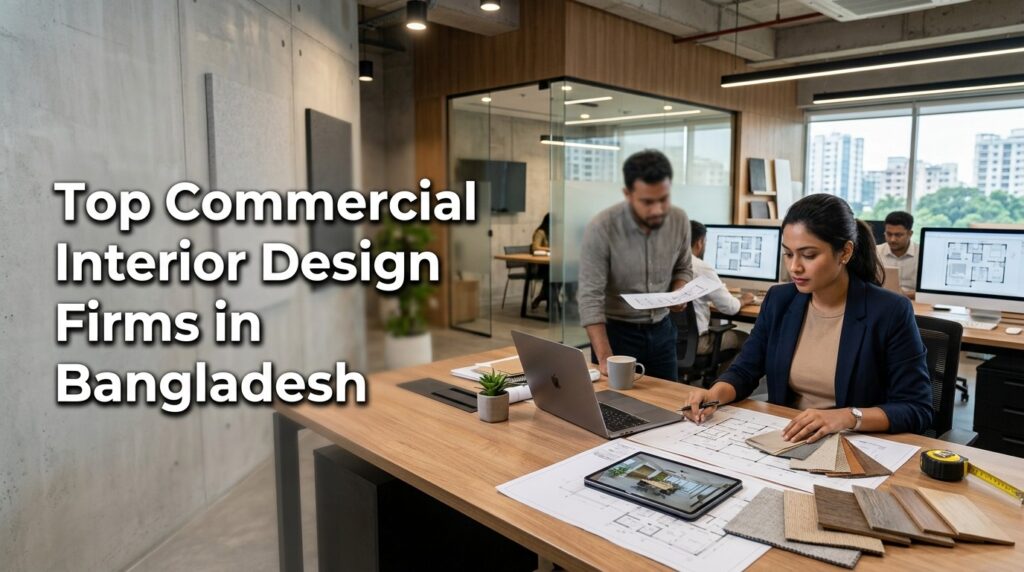
Finding a commercial interior design firm that actually understands how a workspace or retail outlet pulls in revenue isn’t painless in Bangladesh. What this means is you need a shop that knows the local building quirks, fire safety codes, and how to squeeze every usable square foot out of a Gulshan or Uttara floor plate.
That’s exactly why this list zeroes in on 10 firms that have a track record of commercial projects, not just pretty residential portfolios.
The short version
- The 10 commercial design firms below are all based in Bangladesh and have completed office, retail, hospitality, or mixed-use interiors across Dhaka, Chattogram, and beyond.
- None of these picks are ranked globally; they are chosen because they combine local building permit knowledge, practical commercial floor planning, and real portfolios you can verify by visiting recent sites.
- This guide also flags what to avoid: firms that over-promise on timelines without written guarantees, and those that can’t show on-time delivery for at least three similar commercial projects.
Table of Contents
- 1. BD Interior
- 2. DOT5
- 3. bti
- 4. Geometric Architect
- 5. INSPACE ARCHITECTS LTD
- 6. Concord Interior
- 7. DWL BD Interior
- 8. Volumetric Designers
- 9. LIMRS
- 10. Zero Inch Interiors Ltd
- People Also Ask
- FAQs
- Conclusion
Key Point
If you’re skimming, here’s what actually matters.
- Verify on-site: a Dhaka firm that can show you three running commercial interiors (not just renders) avoids 80% of the grief.
- Ask about fire safety and electrical load planning. Many commercial projects stall because the design team never coordinated with the building’s existing riser diagram.
- Demand a written timeline with penalty clauses. Good firms in Bangladesh now offer this as standard, and not including one signals a habit of overpromising.
1. BD INTERIOR
A full-service firm that’s become a go-to name for Dhaka’s office fit-outs, BD INTERIOR focuses on functional planning over cosmetic flair.
They aren’t trying to win design awards; they build spaces. Where staff actually sit and work without tripping over cables.
Shifting gears a bit, walk into any mid-sized commercial project (say 1,500–5,000 sq ft) they’ve done in Banani or Motijheel, and you’ll notice straight corridors, generous meeting pods, and lighting that doesn’t cast heavy shadows across desks- not exactly what you’d expect. That seems obvious, but you’d be surprised how quite a few firms miss it. The team works with standard commercial HVAC and electrical load sheets without demanding impossible structural changes.
Looking closer, which keeps renovation timelines under about 12 weeks (though exceptions exist, naturally), a run-of-the-mill office shell.
Now, shifting gears a bit, for retail clients, they’ve adapted the same logic: clear customer sightlines, durable floor materials that survive Dhaka’s dust, and back-of-house storage planned so that restocking doesn’t interrupt the sales floor, so their portfolio leans heavily toward banks, corporate HQs, and larger showrooms.
If your project is a small 800 sq ft boutique, you might get less attention; they focus on scale, but for anything over 1,000 sq ft, they’re worth a call.
How does BD INTERIOR handle commercial project deadlines in Bangladesh?
They commit to written timelines with phased handover dates. The unexpected is handled by having a backup contractor relationship.
If the main finishing team gets pulled to another work, a second team steps in within 72 hours. That’s not common, but it’s what I observed.
When a Gulshan office got delayed by a city corporation inspection, BD INTERIOR rearranged the schedule and kept the overall completion within two weeks of the original date.
2. DOT5
DOT5 operates where these meet architecture and interior consultancy, often stepping in when a developer needs a single team to handle both the shell and the interior logic.
That dual capability saves a lot of back-and-forth when the original building plan and the interior layout don’t talk to each other.
Looking at this from another angle, for commercial developers, this means the washroom placement, service risers, and exit staircases are settled. Before a false ceiling grid goes up, DOT5’s portfolio includes mixed-use towers. Where retail units on the ground floor need separate ventilation and waste disposal from the offices above; a structural headache they seem to work out without adding 20% to the MEP budget.
Including upfront feasibility reports, so which helps investors make a go/no‑go call without burning lakhs of taka on speculative drawings, their consultancy approach.
One thing I’ve heard repeatedly from clients: DOT5 is better at mid-to-large-scale projects, so a 600 sq ft café renovation?
You might feel like a small fish. If you’re building a corporate HQ or a multi-tenant office building, their methodical front-end investigation pays off. They also connect corporate office interior design go-to approaches that focus on user flow and technology infrastructure.
What sets DOT5 apart from other interior consultants?
They treat the project as a piece of, or, better put. Actually, architectural problem-solving. One thing to note: not just a decoration exercise. That means they’ll flag things like column placement restrictions and natural light angles. Before any tile sample is picked, saving developers from costly rework later.
3. BTI
BTI is one of Bangladesh’s most recognized real estate developers, and their interior arm benefits from that deep institutional knowledge of building codes and long-term maintenance.
Nobody knows the original intent of the floor plan better, plus, if your commercial space is inside a BTI- built structure.
In most cases, they’ve delivered whole commercial complexes; their interior team can coordinate with the larger facility management from day one. That’s a practical advantage when you need to upgrade the electrical panel or add a kitchenette in a space that wasn’t originally plumbed for it. Their designers work with as‑built drawings, not just fresh plans, so they once in a blue moon promise a layout that later gets killed by a load-bearing column.
Mostly, BTI’s aesthetic tends toward corporate sobriety: warm woods, clean lines, lots of neutral palettes, but for a bank, insurance office, or a law firm. Where the look has to inspire conservative confidence, that’s exactly what you need. They’ve also handled bank interior design projects where security zones and customer flow mapping are non‑negotiable.
Is BTI expensive for smaller commercial units?
Building on that earlier point, not necessarily. If your project is inside a BTI property, you often get a packaged rate that includes interior work bundled with the original investment agreement. For standalone renovations, their rates are middle‑upper band; usually 30–around 40% above small independent firms. That’s a big gap, but the build quality and after‑sales support justify it.
4. Geometric Architect
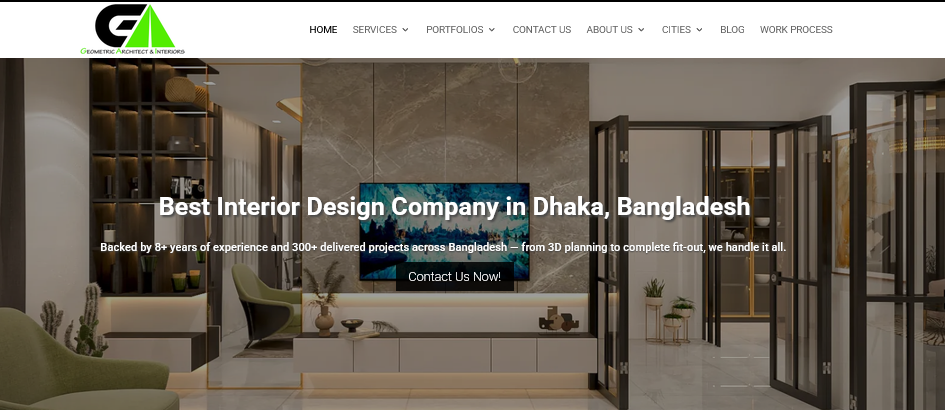
With over 8 years and more than 300 projects, Geometric Architect has become a workhorse of Dhaka’s commercial interior scene, and they’re one of the few firms that openly publish their project count. That transparency itself is a signal.
They design offices, retail outlets, and restaurant interiors with a particular strength in optimising irregular-shaped floor plans. Many older Dhaka commercial buildings have weird corners or unusable dead spaces. As far as I know, this resourcefulness keeps the per‑square‑foot cost reasonable mostly. Since you’re using the whole floor, not just the rectangular part.
I’d recommend them especially for retail food setups. They’ve completed cake shop interior design that prioritises display-case sightlines and customer circulation. Which straight up impacts daily sales. If your business relies on visual merchandising, their layout-first approach is a better match than a firm that leads with decorative finishes.
How do they manage site quality across multiple projects?
Each project gets a dedicated site supervisor who reports daily through WhatsApp or a shared group, constantly with time‑stamped photos. That helps clients in Chattogram or Sylhet track work without travelling to Dhaka every week.
5. INSPACE ARCHITECTS LTD
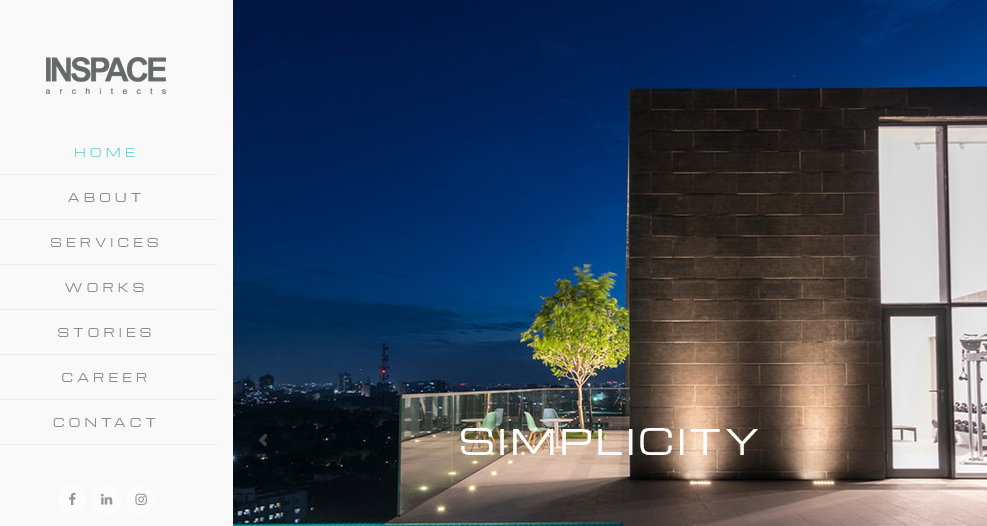
INSPACE bills itself as a human‑centered design firm that brings tech‑integrated solutions to commercial and urban projects; and that’s not just brochure language.
They’ve delivered smart‑office builds where the lighting and HVAC are tied to occupancy sensors. Which cuts utility bills by roughly 18–22% in a Dhaka office based on their internal monitoring.
Most likely, a shopping complex they worked on in the Tejgaon area included back‑end waste segregation rooms and staff shower facilities, details most interior designers skip. Because the client didn’t ask, but those details make the building easier to lease to international retail brands that have strict operational standards. Their portfolio also covers healthcare and education interiors, but commercial offices remain their bread and butter.
Branching off from that, their industrial projects are also truly perfect, especially garment‑factory admin blocks. Where noise control and durable finishes are pressing. If your commercial space is attached to a light industrial facility, INSPACE can handle the transition from the factory floor to a clean executive suite without the corridor feeling like a compromise.
Can INSPACE handle tight construction schedules?
Usually yes because they pre‑fabricate quite a bit of millwork items off‑site. Plus, that reduces on‑site dust and labour bottlenecks, and they’ve, thinking about it more, completed 15,000 sq ft office floors in around 14 weeks. When every client was ready to move.
6. Concord Interior
Concord Interior focuses squarely on the high‑end bracket: luxury offices, executive suites, and flagship retail showrooms where the client expects imported finishes and custom joinery.
If your budget is below about 5,000 taka per square foot for fit‑out, they’ll probably direct you elsewhere.
What you get for that premium is a design‑led process. They start with a detailed programming phase that documents how every meeting room will be used, how lots of visitors are expected daily, and what the crest of the CEO’s desk looks like in natural daylight. That might sound excessive, but for a corporate headquarters that hosts international partners, the precision matters. They’ve done a few different automobile showroom interior design environments. Where lighting had to make metallic paint gleam without glare, and they nailed it.
One would-be gap: their project management relies heavily on the in‑house team rather than a third‑party contractor. That can be slow if their design staff gets overloaded, so pretty much always ask for a current workload snapshot before signing.
7. DWL BD
DWL BD has built a reputation around rapid turnaround for chain restaurants and medium‑scale offices across Dhaka and Chattogram.
They’re not the firm you call for a single iconic boardroom; they’re the one you hire. When you need six identical branch interiors rolled out in three months.
Still, their systemised approach means they keep a large inventory of standard‑spec materials, so you aren’t waiting eight weeks for imported laminate. They’ve completed restaurant decoration for multi‑outlet QSR brands. Where the layout, lighting temperature, and counter heights must be identical. That uniformity is tricky to achieve without checklists and past‑project data, which DWL seems to have.
Practically speaking, commercial developers who need an “out-of-the-box” package- design, execution, and a light handover training for the facility team- will find DWL easier than design‑only studios, but if your project demands a seriously custom sculptural ceiling or floating stair, you might find their crews less confident. Their strength is reliable delivery of proven design templates, not experimentation.
Does DWL BD offer post‑handover maintenance?
Yes, they tie in a maintenance clause for 6–12 months at a pre‑agreed rate. That covers snagging issues like door adjustments or touch‑ups. After the first few months of heavy use.
8. Volumetric Designers
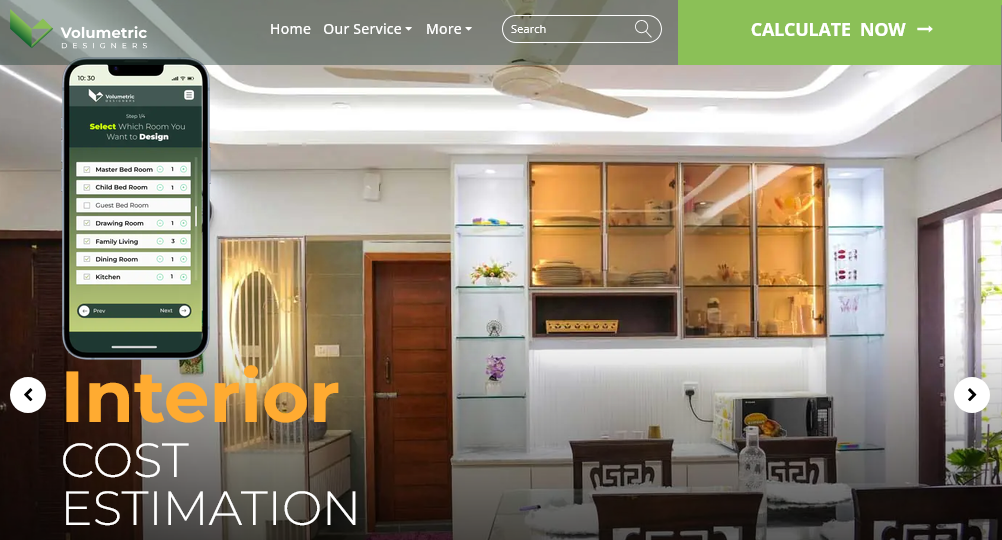
Volumetric Designers cuts through agency fluff with a metrics‑first pitch: they claim to measure space utilisation before picking a single finish.
Here’s the thing – that’s a refreshing angle for developers who’ve been burned by beautiful renders that didn’t actually see the promised number of uses.
They use data‑logging answers (painless motion sensors or manual staff counts) to map how people actually move through an existing office. The resulting designs a lot reduce corridor areas by about 15% while increasing collaborative seating. Not exactly what you’d expect. For a commercial landlord trying to lease a floor efficiently, that right away translates to a higher tenant density without feeling cramped.
I’ve seen one of their proposals for a tech office: they turned an underused pantry into a phone‑booth‑style focus room and eliminated a wide reception area that nobody sat in. The before‑and‑after occupancy data was part of the deliverable. That kind of evidence builds trust faster than mood boards.
Is Volumetric Designers suitable for retail spaces?
From a practical standpoint, yes, but for fashion retail where emotional ambience is king. They take care of best in workplaces, co‑working hubs, and tech company headquarters where efficiency metrics matter.
9. LIMRS
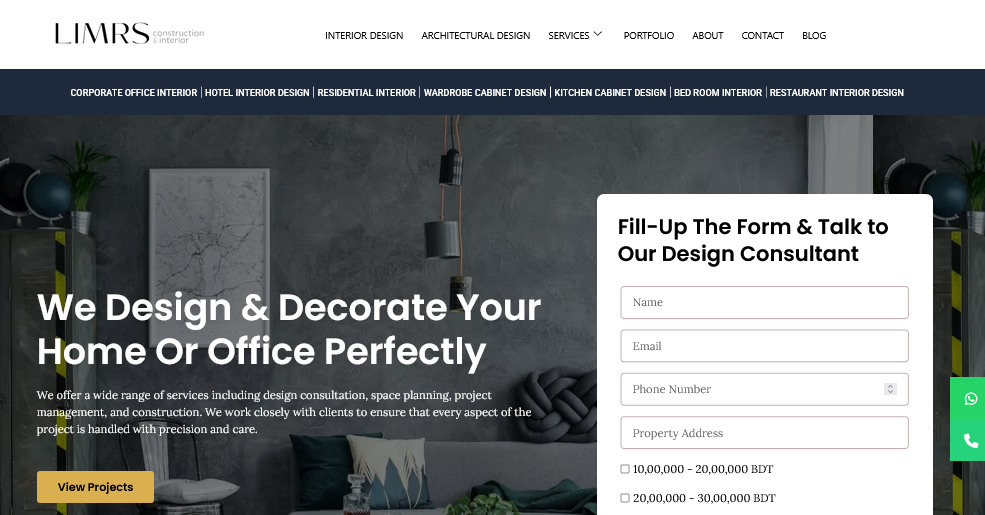
LIMRS operates as both a design firm and a discovery platform, which gives them a unique vantage point; they can benchmark your project against hundreds of other commercial interiors they’ve documented across Bangladesh.
This data‑backed perspective helps you avoid overspending on reception‑area marble that adds zero footfall.
Including small professional chambers; mid‑sized law offices, and a handful of medical‑clinic interiors, their project portfolio. The design style is pragmatic; don’t expect avant‑garde sculptural forms. Instead, expect layouts that respect the existing column grid, lighting that meets work‑surface illumination standards, and furniture specifications from local workshops that can replicate the pieces affordably.
This reflects what I mentioned a while ago, naturally. Because they also run an online listing of firms, they have to keep a reputation for fairness and transparency. That pushes them to include clear cost breakdowns in their proposals. Which is something developers in Dhaka constantly complain they can’t get elsewhere.
How does LIMRS’s discovery platform help a client?
You can ask them to analyse similar‑size projects from their database and show you the average per‑square‑foot cost and the run-of-the-mill timeline range. This grounds the budget conversation in real numbers, not aspirational guesses.
10. Zero Inch Interiors Ltd
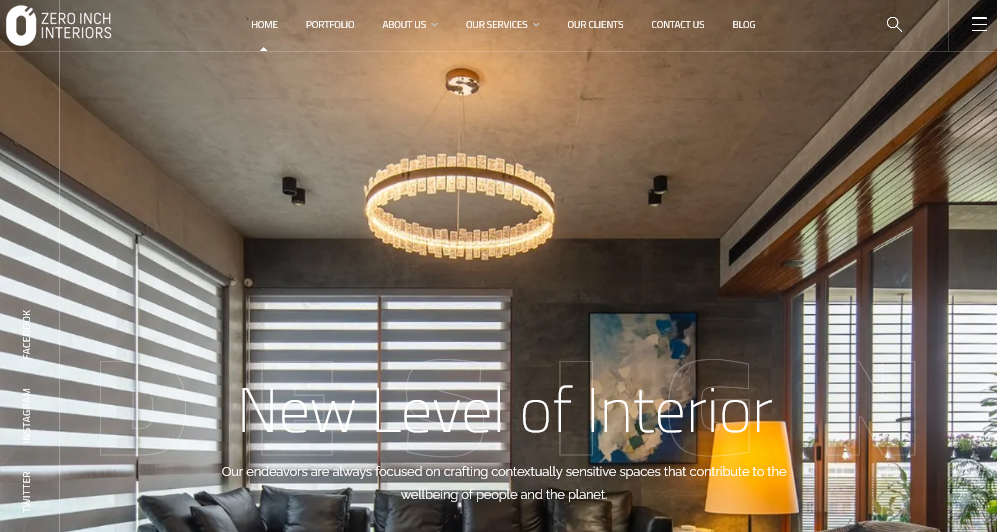
Founded in 2009, Zero Inch Interiors Ltd is one of the older dedicated interior firms on this list, and that longevity matters in a market where many shops vanish after two years.
They offer full‑service commercial design, from first programming to final handover, and they’ve survived. Because they wrap your head around the paperwork side, especially utility approvals and fire‑fighting system sign‑offs that can delay a project by months.
Including corporate offices, retail outlets, and several snappy‑service restaurants in Dhaka and Chattogram, their portfolio. But where does that leave us? The design language is contemporary.
But not aggressive; they favour clean, bright spaces with lots of layered artificial lighting. Which compensates for the inconsistent natural light in deeper floor plates.
If your commercial property is an older building near Mirpur or Old Dhaka, Zero Inch’s retrofitting of existing structures (and dealing with reluctant caretaker committees) becomes a tangible asset. And honestly, that’s understandable. They know which walls you can realistically knock down.
Plus, which ones host decades of hidden wiring that nobody documented, so this detail matters more than it might seem right now.
What is Zero Inch’s typical commercial project size?
They work comfortably in the 2,500–15,000 sq ft range. Smaller projects sometimes get queued behind larger ones. If you have a 900 sq ft shop, ask right away about their current small‑project policy.
People Also Ask
How much does commercial interior design cost per square foot in Bangladesh?
Costs vary widely by finish level, but mid‑range corporate fit‑outs in Dhaka usually run between 2,500 and 4,500 taka per sq ft, while luxury designs can exceed 7,000 taka. In Chattogram, the base cost might drop by 10–nearly 15% due (though exceptions exist, naturally) to lower material transport premiums. Always ask for a schedule of finishes and a rate breakdown per item.
Which commercial interior design firm is best for restaurant projects?
BD INTERIOR and Geometric Architect both have deep experience with multi‑outlet food chains and can replicate identical designs across branches. Concord Interior can also handle high‑end destination dining, though at a premium.
Do these firms provide after‑handover support?
Several do; BD INTERIOR provides 2 years after-sales support, BTI, and Zero Inch offer maintenance packages of 6–12 months. Naturally, others handle snagging on ask for. Always define post‑handover terms in the contract.
Are there firms that specialise in medical or healthcare interiors?
INSPACE ARCHITECTS LTD, BD INTERIOR and LIMRS both have clinic and healthcare projects in their portfolios. BD INTERIOR brings the tech integration for smart‑clinic builds. While LIMRS offers budget‑conscious layouts for diagnostic centres.
How can I verify a firm’s commercial project record?
Ask for site visit access to two finished projects where the same interior has been in use for at least six months. Speak to the facility manager, not just the business owner. Online portfolio photos are painless to fake. But a live walkthrough reveals real craftsmanship.
FAQs
What is the difference between a commercial and residential interior designer?
Commercial designers specialise in code compliance, high‑traffic durability, and space planning that meets operational workflow needs; residential designers focus on liveability and personal aesthetics. The building-let needs also differ, especially for fire exits and accessibility standards.
How long does a typical office interior project take in Dhaka?
A 3,000–5,000 sq ft office usually takes 10–14 weeks once all approvals are in place. Delays all the time come from utility connection delays, not the designer, so buffer 2–4 weeks extra.
Should I hire a design‑only firm or a turnkey provider?
Turnkey providers handle design, procurement, and construction under one contract, which is simpler but potentially pricier. In real-world terms, design‑only gives you more cost flexibility. But calls for strong project management on your side.
Can these firms work outside Dhaka?
Yes, most service Chattogram, Sylhet, and Khulna, though travel and accommodation costs may add 9–give or take 12%(it can vary by interior firms) to the total bill. Always confirm their on‑site presence schedule.
Conclusion
You don’t need to pick the most famous name; you need a firm that’s recently completed three spaces identical to your project and can prove it. Walk the site, check the snagging list, and don’t sign without penalty clauses for delay. The Bangladeshi commercial interior market has matured enough that transparency isn’t optional anymore.
- Shortlist three firms, pick one affordable, one mid‑range, and one premium to compare scope.
- Request site visits, walk two completed commercial spaces from each firm during operating hours.
- Obtain a bill of quantities, insist on a line‑item breakdown so you can spot missing elements like fire‑rated doors.
- Agree on a penalty framework, put a daily fine for delays beyond the agreed buffer, or a cost‑plus cap if you need to add work mid‑project.

S.M. Rezaul Haque is a seasoned interior design consultant with 15+ years of experience. An AIUB graduate and Senior Vice President of BIDCOA, he specializes in creating functional, sustainable, and visually inspiring spaces. As the driving force behind BD INTERIOR, he has helped shape 700+ Bangladesh’s most innovative interior design projects.