
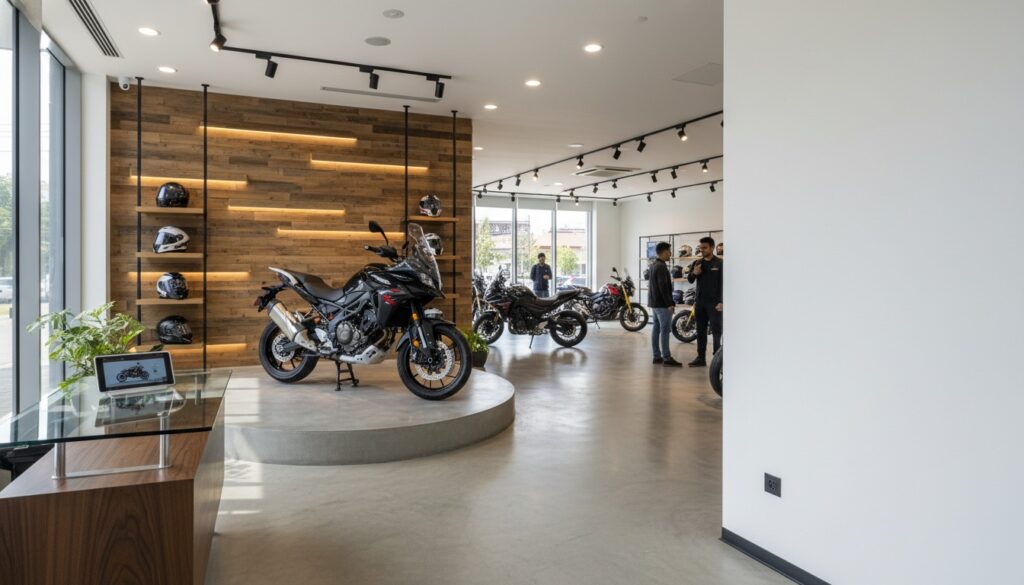
Bike showroom interior design isn’t about filling a room with shiny two-wheelers. It’s the careful balance of space, light, and psychology that turns a casual visitor into a paying customer. As far as I know, the way your store looks and feels can be the deciding factor.
According to industry design guidance from Coohom, getting the layout. Lighting directly impacts how long everyone stays and how much they trust your brand.
This article walks you through the core principles and practical steps. Local tweaks that make a bike showroom work tough for your business.
- Bike showrooms need clear zones so buyers can compare road bikes, mountain bikes, and accessories without confusion.
- Use three lighting layers (ambient, task, accent) to make the space feel open and spotlight premium models.
- Add a simple seating area and a test-ride corner; these small touches can boost customer trust and close rates.
Key Point
- A cluttered, poorly lit showroom turns away customers faster than a broken bike.
- The single most effective upgrade is layered lighting; it costs less than you think and makes even budget bikes look premium.
- Test rides and a place to sit aren’t luxuries; they’re expectations in 2026. Ignore them and you’ll lose to competitors down the road.
What is Bike Showroom Interior Design?
Bike showroom interior design is the strategic planning of a retail space to display bicycles. Or motorcycles while guiding customers through a comfortable, informative journey.
Combining zoning, lighting, and materials. Customer amenity areas to improve wayfinding.
Highlight pieces and reinforce brand identity.
It’s like the physical script of your sales conversation. The moment someone steps in, the layout should whisper what you sell.
Who it’s for, and why they should trust you. Coohom’s showroom design guide points out that a well-organized floor plan with distinct zones for road bikes, mountain bikes, electric bikes, and accessories makes side-by-side comparison effortless. That matters because confused shoppers rarely buy; they just walk to the next shop.
In Bangladesh, plenty of dealers still treat the showroom like a storage unit. Bikes huddle together, helmets hang from rusty hooks. And the only light is a flickering tube.
Actually, that’s not a survival strategy; it’s a silent sales killer. ” The design should answer before the question forms.
Why Smart Zoning and Layout Decide Sales
A thoughtful layout divides your showroom into logical sections like commuter bikes and performance motorcycles. And accessories so customers can work through on their own, without (which is a critical factor) feeling lost or overwhelmed.
You’ve probably noticed that most global guides focus heavily on bicycles. But in Bangladesh, motorcycles dominate the retail bike scene. Your zones need to speak the local market language, which means group daily commuter models (100-125cc) together, separate premium sports bikes (150cc and above). And give electric scooters their own small alcove if you stock them.
This makes it easier for a young buyer comparing a Pulsar to an Apache to stay in one (a detail often overlooked) zone and decide faster.
The most common mistake? Shoving every bike onto the floor with no breathing room.
The follow-up question is obvious. And I’ve seen the opposite in old Dhaka showrooms where 50 bikes cram into 500 square feet. It feels like a impenetrable maze. From a practical standpoint, to fix this, mount bikes vertically on wall racks. And use sturdy metal shelving for helmets and accessories. Wall displays not only save precious floor space but also create clean sightlines, making a tiny room seem wider.
Retail design principles that work for clothing stores apply here too, and honestly, a well-planned clothing store interior uses clear aisle demarcations and visual breaks to reduce shopper fatigue. You can adapt the same thinking. Paint the different zone floors with a subtle color, or, better yet, hang zone labels from the ceiling. In general, the majority can mentally map the store in seconds. ).
How to Create Comfortable Zones That Encourage Longer Visits
A showroom that only offers bikes is a transaction machine. A showroom that offers a place to sit. And a friendly chat is a trust builder. Probably add water, a few brochures, and maybe a phone charger, and let me tell you, suddenly, a 5-minute walk-through turns into a 15-minute discussion, and the (depending entirely on the context) chances of a sale climb.
You can borrow ideas from cafe interior design concepts without overdoing it. A small corner with warm pendant lighting. And a couple of potted plants signals that you care about human comfort. It breaks the cold, metal-and-rubber atmosphere.
I’ve seen a showroom in Uttara add just two armchairs and a rug, and their walk-in conversion rate jumped noticeably within a month, simply because husbands had a place to sit while their wives tested scooters.
Layered Lighting That Makes Bikes Shine
Using ambient light to fill the room, task lights to spotlight individual bikes. And accent lights to highlight features or branding create an active shopping atmosphere (and that implies quite a bit) that feels polished and high-end.
Still, single bare tube lights flatten everything. They make a 3-lakh taka bike look like a 50,000 one. Instead, break lighting into three intentional layers.
| Lighting Type | What It Does | Where to Use It |
|---|---|---|
| Ambient | Provides overall brightness, prevents a dark cave feeling | Overhead LEDs, ceiling fixtures |
| Task | Focuses on a specific product, makes details pop | Track lights aimed at handlebars, engine, rims |
| Accent | Adds drama, highlights walls, logos, or special models | LED strips under shelves, spotlights on brand signage |
Taking a step back here, coohom’s design guide states it clearly: “Use a combination of ambient, task. ” The difference in perceived quality is staggering. I’ve helped a small dealer in Gazipur switch from two bare CFL bulbs to a direct grid of dimmable LEDs plus a pair of adjustable spotlights on their flagship model. ” That’s real feedback, not a sales pitch.
How Design Elements Influence Buyer Perception
Lighting about 40%
Layout & Flow about 30%
Seating & Amenities just about 20%
Branding Murals 10%
High-end jewelry shops use layered lighting to make diamonds sparkle. Borrow that thinking from jewelry showroom design.
Your bike’s finish and chrome deserve the same theatrical treatment. Aim a narrow beam at the engine casing, another at the wheels, and suddenly a standard commuter bike looks like it belongs on a podium. Of course, actual metrics may shift.
Does layered lighting cost too much for a small Bangladeshi dealer?
Not really, which is why LED track lights and painless spot fixtures have become quite affordable, often under 15,000 taka for a complete setup in a modest 300 square foot showroom. Puts things in perspective.
The energy savings alone recover the cost in a few months. And you avoid frequent bulb replacements that plague cheap fluorescent fixtures during voltage fluctuations.
“You can’t sell a bike if nobody can see the details. Layered lighting is the cheapest way to look expensive.”
People Also Ask
How much does it cost to redesign a bike showroom interior in Bangladesh?
A basic revamp with lighting and vertical racks might cost around 3-5 lakh taka for a small 300-sq-ft space. While a full renovation with custom fixtures can run higher. Prices vary with materials and finish.
What is the best way to arrange bikes in a small showroom?
Use vertical wall mounts and group bikes by type rather than brand. Keep a clear central aisle, and push accessories to the back so browsing flows naturally.
What materials work best for bike showrooms in humid climates?
Powder-coated metal, treated wood, and vitrified tiles resist moisture. Avoid untreated plywood or fabric upholstery, as it can harbor mold during Bangladesh’s monsoon months.
How can I make my bike showroom look more premium without a big budget?
From a practical standpoint, swap harsh tube lights for warm LED track lighting, add a branded accent wall, and declutter. Small touches like fresh paint and visible price tags boost perceived value immediately. This becomes way more relevant in a moment.
Should I include a repair area in the showroom?
Yes, a visible service bay builds trust. Customers like seeing mechanics at work; it signals reliability and gives them a reason to return for after-sales service. A clothing store interior design principle holds true here, too. Transparency behind the counter encourages confidence.
FAQs
What are the three most important elements of bike showroom interior design?
For the average user, zoning, lighting, and customer flow. Zoning helps shoppers compare; lighting hints at product quality. A smooth flow reduces frustration and encourages buying.
How do I start redesigning my existing showroom?
Begin by auditing foot traffic and identifying dead zones. Then plan a phased upgrade: first improve lighting, then reconfigure display racks, and finally add seating or test spaces.
Can I design a bike showroom interior myself or do I need a professional?
This brings us back to what we started with: you can handle basic improvements like rearranging racks and updating lighting, but for a full redesign. An interior designer with retail experience will help avoid costly mistakes and get the most from small spaces. The same logic that applies to a retail shop interior (which works out well in practice) applies here. Professional spatial planning pays for itself.
- Audit your current layout — Track where customers stop, where they walk past, and identify dead corners.
- Plan three distinct lighting circuits — Install ambient ceiling fixtures, task lights over featured bikes, and accent strips on walls.
- Create at least one seating nook — A bench with a small table and brochures turns a sterile floor into a conversation zone.
- Test a vertical display wall — Mount a few bikes on the wall to see how much floor space you free and if it improves sightlines.
Putting It All Together for Your Bangladeshi Showroom
Bike showroom interior design is a constant experiment. What works in one Dhaka neighborhood might flop in another. Watch this space. But you have to stop thinking like a warehouse manager and start thinking like a storyteller. Lighting, layout.
And the little human touches are what reshape a tile-floored room into a destination.
Most dealers I’ve talked to fear the cost. The cost of looking cheap is far higher; a buyer who walks into a dark, chaotic showroom assumes your service is just as sloppy. That’s a tough impression to undo.
Begin with light because it’s the fastest, cheapest win. Then clear a path. Then give people a reason to linger. If you do these three things, your showroom will work harder than any sales pitch ever could.

S.M. Rezaul Haque is a seasoned interior design consultant with 15+ years of experience. An AIUB graduate and Senior Vice President of BIDCOA, he specializes in creating functional, sustainable, and visually inspiring spaces. As the driving force behind BD INTERIOR, he has helped shape 700+ Bangladesh’s most innovative interior design projects.