
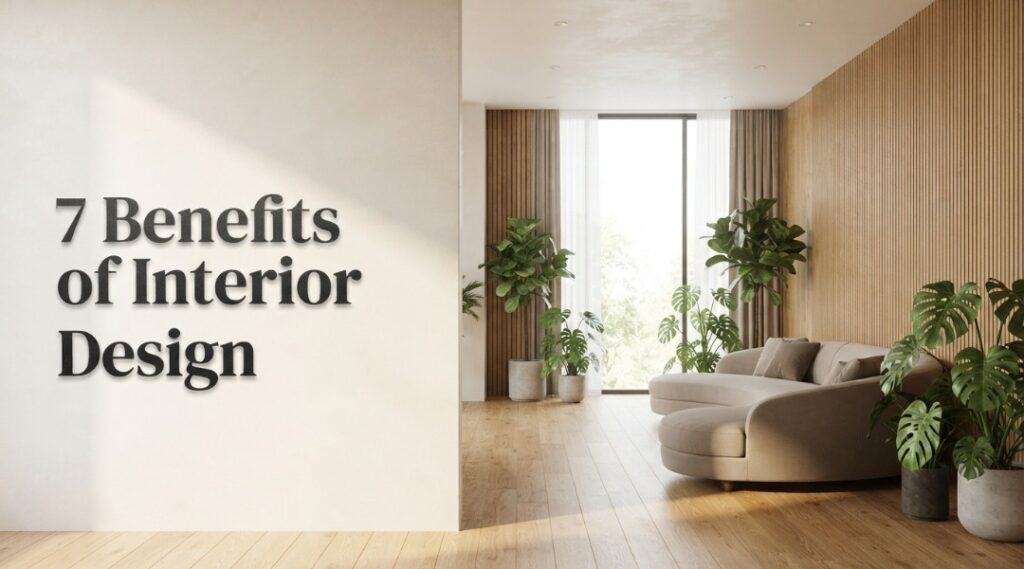
96% of homeowners say home improvements boosted their daily happiness and quality of life. That’s from a 2026 homeowner spending report cited by Forbes.
If you’ve ever walked into a room and felt instantly calmer, you already know the link between design and wellbeing. What most people miss is how much deeper the benefits go. Interior design isn’t just about matching cushions. It’s a science-backed tool for managing stress, sharpening focus, and even saving money over time.
- 97% of homeowners believe their homes help them manage stress; thoughtful layout, light, and materials directly lower blood pressure and cortisol.
- Natural elements like wood and plants restore attention as effectively as a view of nature, even in a concrete jungle.
- Professional design avoids costly mistakes; a good layout can add 5-10% to resale value while making daily life flow better.
What Is Interior Design?
Interior design is the art and science of shaping indoor spaces to support how people live, work, and feel. It goes far beyond decoration; it involves spatial planning, lighting, acoustics, material selection, and evidence-based strategies that directly affect your physical and mental health.
The International Interior Design Association (IIDA) defines it as a multi-faceted profession that “addresses, protects, and responds to human needs.” That means every decision, from the position of a window to the texture of a wall, influences your mood, stress levels, and even your heart rate. When you think about it, you’re not in a designed space. The question isn’t whether design affects you. It’s whether it’s helping or hurting.
Mental and Emotional Benefits
Design that incorporates natural materials, daylight, and clear spatial organization noticeably reduces stress and improves emotional stability. In one VR study, participants in biophilic offices recovered from stress faster, with a sharper drop in blood pressure.
The numbers don’t lie. 97% of homeowners believe their homes assist in managing stress, according to that Forbes report. That’s not just a feeling.
John Spengler at Harvard has said the effects of nature-inspired interiors are “similar to those of meditation.” His team created four office designs in VR: a bare room, one with plants and a window view, one with foliage wallpaper and a tree sculpture, and one combining both. Blood pressure dropped in all biophilic rooms compared to the control. And it didn’t matter whether the nature was real or part of the interior design.
That’s huge. It means even an apartment with no view can deliver the same stress-busting punch as a room overlooking a meadow.
Wood, in fact, is a quiet powerhouse. Xi Zhang’s team at Shanghai Jiao Tong University had participants work for 30 minutes in rooms with either exposed wood walls or painted white ones.
People in the wood rooms reported feeling happier and less fatigued. Other studies show touching wood lowers blood pressure, while aluminum and plastic raise it. The smell of certain woods? Calming, too.
You don’t need a forest. A single wood accent wall or a solid oak table can shift your nervous system.
There’s more. Biophilic design, the practice of weaving natural elements indoors, taps into something evolutionary.
E. O. Wilson’s “biophilia hypothesis” says our brains are wired to find natural scenes effortlessly fascinating. That unconscious attention, what psychologists call “soft fascination,” lets the parts of your brain that handle directed focus rest and recover.
Truly a mental reset button. A potted plant, a textured stone vase, or a wallpaper with leaf patterns can all trigger that effect.
How do I bring biophilic design into a rental apartment?
You can add nature without permanent changes. Use free-standing plants, wooden furniture, nature-printed textiles, and peel-and-stick leaf-pattern wallpaper.
Renters often assume they can’t tap into these benefits. But the research shows even images of nature work. A framed fern print, a bamboo room divider, or a jute rug all count.
The key is layering tactile, natural materials wherever you can. Swap plastic organizers for woven baskets. Add a small water feature that gives a gentle sound.
Your body will respond, lease or no lease.
Functional and Spatial Benefits
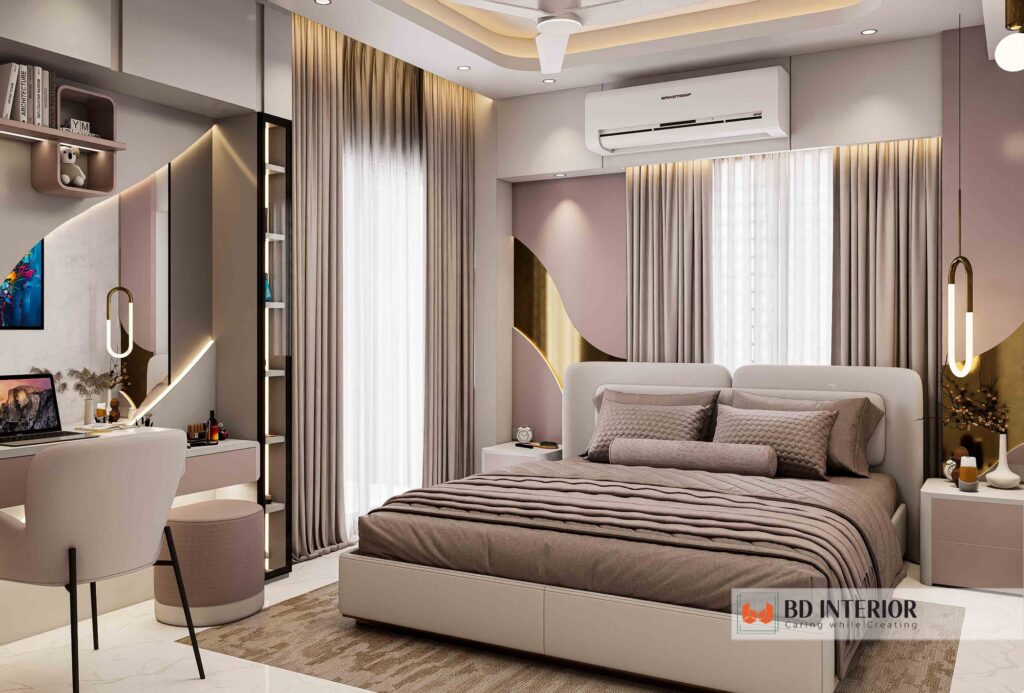
Good interior design makes a home feel larger, flows better, and reduces daily friction. Clear circulation paths, smart storage, and defined zones for different activities cut frustration and save time.
One of the biggest homeowner complaints is feeling cramped, even in decent square footage. That usually comes down to layout, not size. Research on spatial organization shows that when a room’s purpose is visually clear- a dedicated reading nook, a distinct eating zone, a clutter-free entryway- the brain processes the space as more orderly. Less visual noise means less cognitive load.
You’re not constantly scanning and figuring out where things belong.
Flow is another underrated benefit. A hallway that’s too narrow, furniture blocking the natural path from kitchen to dining, a sofa that forces you to sidestep every time- these tiny irritations accumulate. They raise stress hormones subtly. Architect Lars Brorson Fich found that people performing a stressful public-speaking task in an open-plan room had lower cortisol spikes than those in an enclosed room.
The openness didn’t just feel better; it changed their physiology. So opening up a floor plan, or simply rearranging furniture to create wider walkways, can have a measurable effect.
Practical things matter. When I redesigned my own living room, I moved the sofa 18 inches away from the window. That small shift let light spill in fully and stopped people from bumping into the radiator. The room felt 30% bigger.
No construction, no cost. Just better spatial thinking.
What’s the biggest mistake people make with spatial planning?
Pushing all furniture against walls. It kills conversation flow and makes the room feel like a waiting area.
Floating a sofa or creating a furniture cluster in the center draws people in. It signals that the space is meant for gathering, not just passing through. Even in small rooms, pulling seating just a foot from the wall adds depth and air. Try it, you’ll be surprised.
Homeowners Reporting Positive Effects from Thoughtful Interior Design (2026)
Financial and Long-Term Benefits
Professional interior design saves money by preventing expensive mistakes, increasing resale value, and extending the life of materials through smarter choices.
It’s easy to think hiring a designer is a luxury. But according to industry insights, what looks like an added cost often pays for itself in avoided mistakes.
A designer gets the layout right the first time, picks durable finishes that won’t need replacing in three years, and knows where to splurge and where to save. That alone can cut renovation costs by thousands. And then there’s resale. Homes with timeless, well-balanced design appeal to a broader pool of buyers.
A 2026 report suggests that a well-designed home can fetch 5-10% more than a comparable property with poor flow or dated finishes.
Trendy choices, on the other hand, are a money pit. That bold geometric wallpaper you loved two years ago? It’s already dating the room. And the cost of removing it and repainting isn’t trivial.
Durable, classic materials, solid wood, natural stone, neutral palettes, age gracefully. They don’t scream “2024.” They just feel right, year after year.
This is where a designer’s expertise really shines: they steer you away from fads and toward longevity.
Does hiring an interior designer really save money?
Yes, because you avoid costly layout errors, rework, and impulse buys. A designer’s fee is often offset by trade discounts and reduced waste.
Many designers also have access to wholesale pricing on furniture and materials that the public never sees. Combined with the time you save not scrolling through endless online stores, the value stacks up fast. In fact, it’s an investment, not an expense.
Personalization and Identity
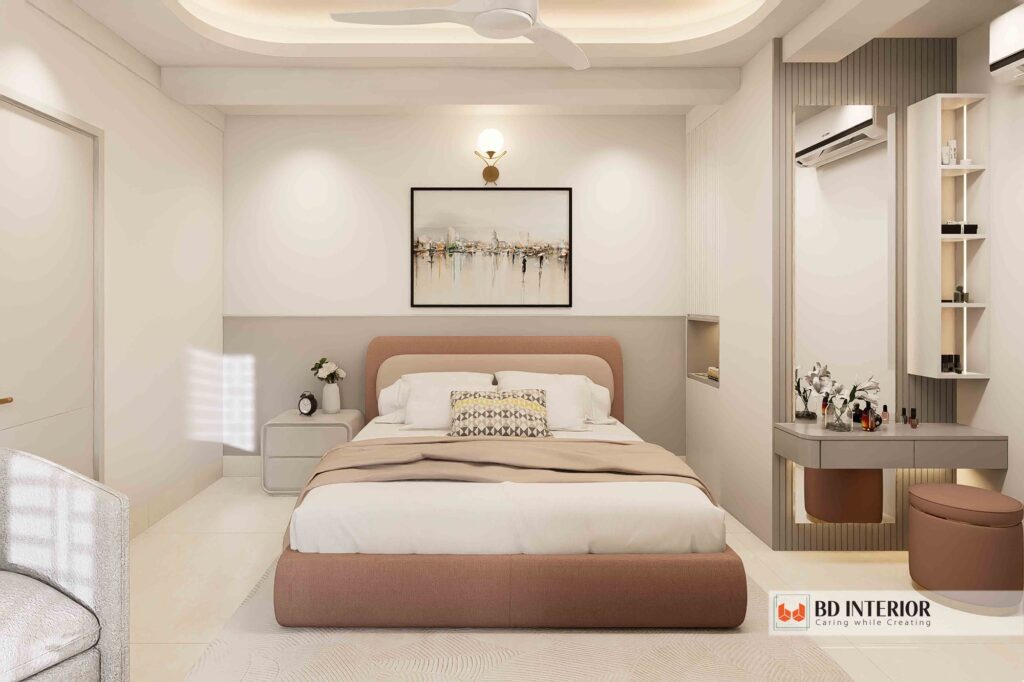
Interior design lets you imprint your story onto your space, which deepens your sense of belonging and emotional comfort.
Generic, catalog-perfect rooms can feel cold. Your home should reflect who you are, not a showroom. That doesn’t mean clutter.
It means intentional choices: the ceramic vase you picked up in Rangpur, the framed sketch your child made, the rug that reminds you of your grandmother’s house. These objects anchor you. In a world where so much feels transient, a home that holds your memories becomes a psychological anchor.
User-facing design trends in 2026 show a massive shift toward personalization and adaptability. People want spaces that evolve with them, not static displays. A living room that works for movie nights, homework, and quiet reading, all in one day.
That demands flexible furniture, layered lighting, and zones that shift with your needs. A designer can help you map those zones without sacrificing style.
There’s a fine line. Too much personalization can backfire if you plan to sell soon.
A neon pink accent wall might make you happy but scare off buyers. The trick is to anchor the room in neutral, high-quality basics, then layer in personality through art, textiles, and objects that are easy to swap out. That way, you get the emotional payoff now and the resale value later.
How do I balance personal style with resale appeal?
Keep permanent finishes neutral. Pour your personality into removable elements like art, pillows, and rugs, they’re easy to change when it’s time to sell.
Think of the shell of your home as a gallery: white or warm-neutral walls, timeless flooring, clean lines. Then curate the objects that fill it. That strategy gives you freedom and future-proofing in one move.
Common Mistakes and Failures
The biggest mistake homeowners make is prioritizing looks over function. A stunning room that doesn’t work for daily life creates constant low-grade frustration.
I’ve seen it too often: a gorgeous open-concept kitchen with no landing space next to the fridge, a bedroom so dark you can’t find your clothes, a living room where every seat faces away from the window, and the glare makes reading impossible. These aren’t small annoyances. They erode your patience.
They make you feel like you’re fighting your own home. And they’re almost always avoidable with a bit of upfront planning.
Another classic failure: ignoring lighting. Natural light is free and proven to reduce depression, especially for older adults; yet so many homes block windows with heavy drapes or furniture.
Circadian lighting, tunable white LEDs that shift from cool in the morning to warm at night, can support sleep cycles and energy. It’s a small change with outsized impact.
Without a designer’s eye, people often install too few fixtures or rely on a single harsh ceiling light, turning the space flat.
People Also Ask
How does interior design affect mental health?
Layout, light, and materials directly influence stress hormones and mood. Biophilic elements like plants and wood lower blood pressure and restore mental focus.
Research from Harvard and Tongji University shows that natural interior elements lead to faster stress recovery and reduced cardiovascular strain. Even wallpaper with foliage prints can help.
What are the benefits of good space planning?
Better flow reduces daily frustration, makes rooms feel larger, and cuts visual clutter. It also lowers cortisol by creating clear, predictable zones.
Open-plan layouts, in particular, have been shown to blunt stress responses during challenging tasks compared to enclosed spaces.
Can interior design increase home value?
Yes. Timeless, well-planned designs attract more buyers and can add 5-10% to resale price. Poor layout or dated finishes do the opposite.
Buyers respond to homes that feel easy to live in. Good design signals that the property has been cared for and won’t need immediate renovation.
How do I get interior design benefits on a budget?
Start with rearranging furniture for better flow, adding plants, and swapping harsh lighting for warm, layered sources. Small, high-impact changes deliver most benefits.
Paint is cheap and transformative. A single wood accent piece or a large nature photograph can bring biophilic benefits without a full remodel.
Action Steps for a Healthier Home
If you only do one thing, start with these small, high-impact moves. They don’t require a contractor, just a weekend and a mindset shift.
- Introduce one natural material, A solid wood side table or a wool rug instantly lowers stress markers.
- Pull furniture away from walls, Even 12 inches creates breathing room and improves flow.
- Layer your lighting, Use at least three sources per room (floor lamp, task light, ambient) to avoid harsh shadows.
- Add a plant at eye level, A snake plant or pothos needs little care and activates soft fascination.
- Declutter visually, Closed storage reduces cognitive load more than you’d expect; try it for one week.
Remember, you don’t need to overhaul your entire home overnight. Even one change- a repositioned chair, a new lamp, a wooden bowl on the coffee table- starts the shift. Your home should work for you. Not the other way around.
If you’re curious about how specific design choices influence your mental state, the mental health benefits of interior design are worth exploring. If you’re ready to avoid the most common pitfalls, check out these interior design mistakes that cost homeowners more.
Note: The statistics cited come from a 2026 homeowner spending report as referenced by Forbes, VR studies by Jie Yin and colleagues, and research published in Humanities and Social Sciences Communications. All data is accurate as of 2026.
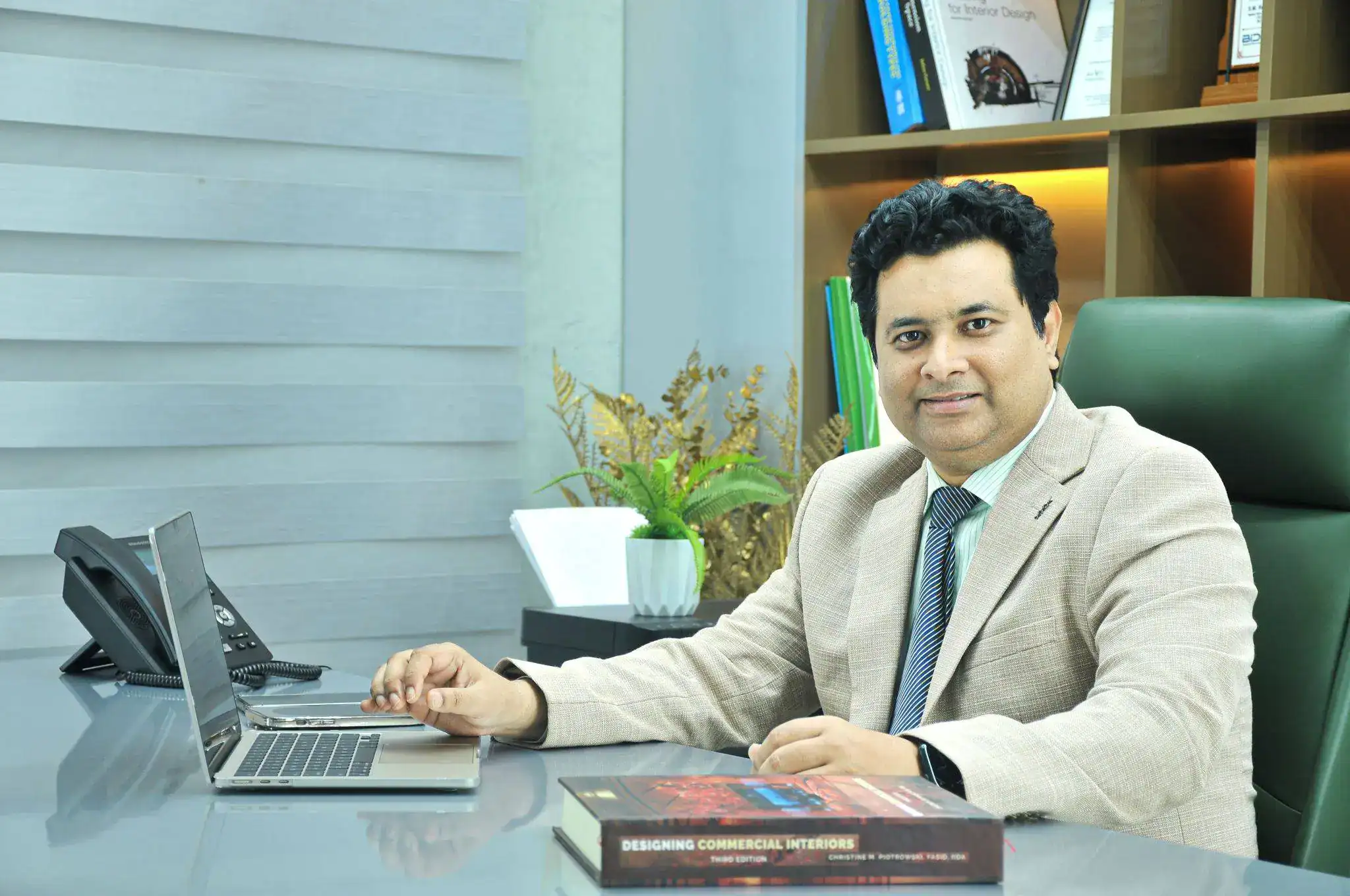
S.M. Rezaul Haque is a seasoned interior design consultant with 15+ years of experience. An AIUB graduate and Senior Vice President of BIDCOA, he specializes in creating functional, sustainable, and visually inspiring spaces. As the driving force behind BD INTERIOR, he has helped shape 700+ Bangladesh’s most innovative interior design projects.