
I’m not saying all the experts are wrong, but this information turns a detailed design problem into a paint-by-numbers joke. ” (which aligns with standard practices) The real story is messier. Here’s the other side of it. After years of watching the majority repaint offices in Dhaka, Gulshan. Banani only to see zero change in output, I’m convinced the productivity win isn’t about the hue itself. If you’re hunting for a single magical color, the science doesn’t work that way, and neither do our brains.
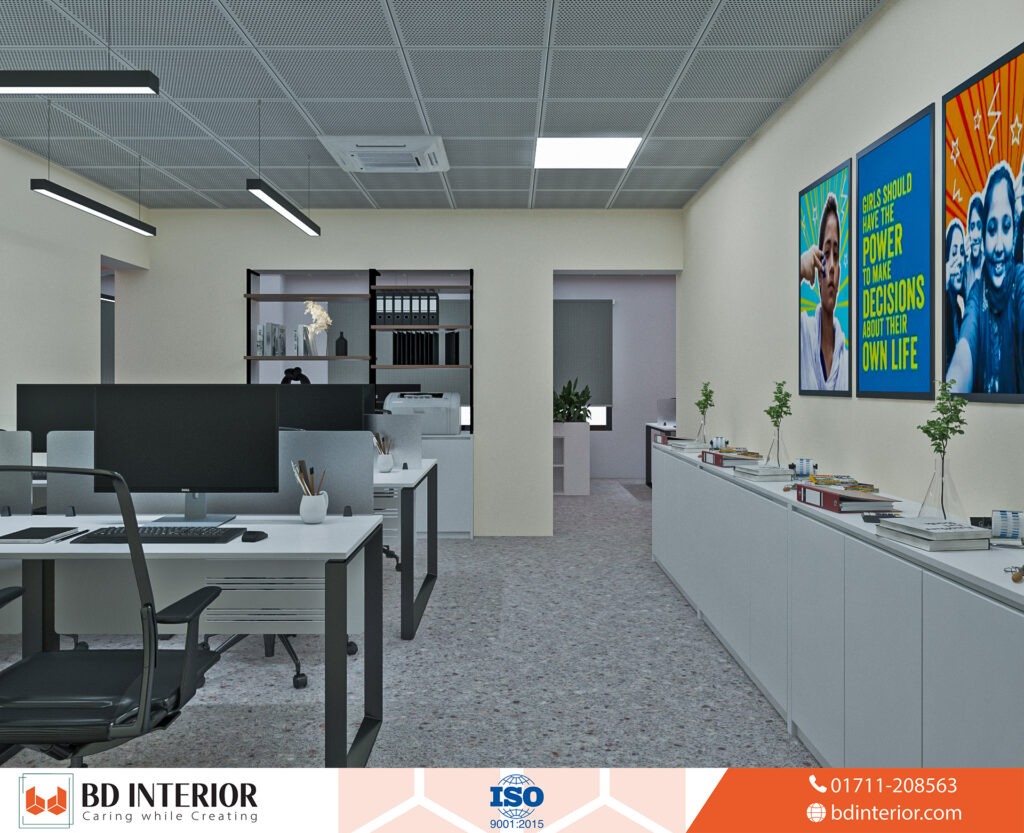
- One wall color can’t fix a badly lit, echoey workspace; the real lever is how you combine neutrals, accents, and lighting per functional zone.
- Soft blues and desaturated greens reduce visual fatigue, but without proper contrast, they quickly turn dull — which directly undercuts focus and alertness.
- The 60-30-10 rule and sample-testing under your actual office’s artificial light are non-negotiable steps nobody in Bangladesh should skip.
Key Point
- Blue-green bases still win for heads-down work. But they’re only a starting point, not a solution.
- The single biggest productivity killer is a flat, all-gray office — and Bangladeshi spaces with harsh fluorescent tubes make this problem 10 times worse because any subtle color gets washed out.
- Zone your space ruthlessly: cool, calm palettes for focus areas; warm, vibrant accents only in collaboration corners; earthy, restorative tones in break zones where people actually recharge.
Why This Matters Now
Right now, Bangladesh’s corporate and freelance workforce is spending more time in (and rightly so) hybrid setups than ever before. According to multiple workplace surveys.
Nearly 70% of Dhaka professionals now split their week between a traditional office and a home desk. That means the visual environment you control, whether it’s a dedicated room or a corner of your Dhanmondi apartment, has a direct, measurable impact on daily output. Here’s the other side of it. A space that tires your eyes. After two hours, it is a financial drain.
Sure enough, industry data from All Well Property Services confirms something tons of local managers already sense: “Calm, mid-light, desaturated hues—especially blue-greens and soft greens, time. It’s a lot to process. Precisely. Most likely, the same report emphasizes that neutrals must dominate, with color as a supporting actor.
Your mileage may vary, of course. Yet I walk into freshly renovated offices in Uttara and see entire departments drowning in (which works out well in practice) a single brand color. ” The result isn’t calm; it’s visual chaos under tube lights.
Clearly, this matters now because the old model (and rightly so) “pick a productivity color. And paint all four walls”, is costing real money in lost concentration. If 15% of your team’s cognitive load is spent fighting glare or visual monotony, that’s hours of wasted billable work every week. Puts things in perspective.
In a market as competitive as Dhaka. You can’t afford that. The first step isn’t picking a color. It’s understanding why your current walls might be working against you.
“Relying solely on ‘blue for focus’ is like thinking a single ingredient makes a gourmet meal.”
The Case For Ditching the Single-Color Obsession
Taking a step back reveals an important factor. On the surface, I need to say this plainly. The idea that one paint chip solves your concentration problems is a myth peddled by low-effort blogs and lazy office managers. Color psychology is real, yes, but it’s contextual.
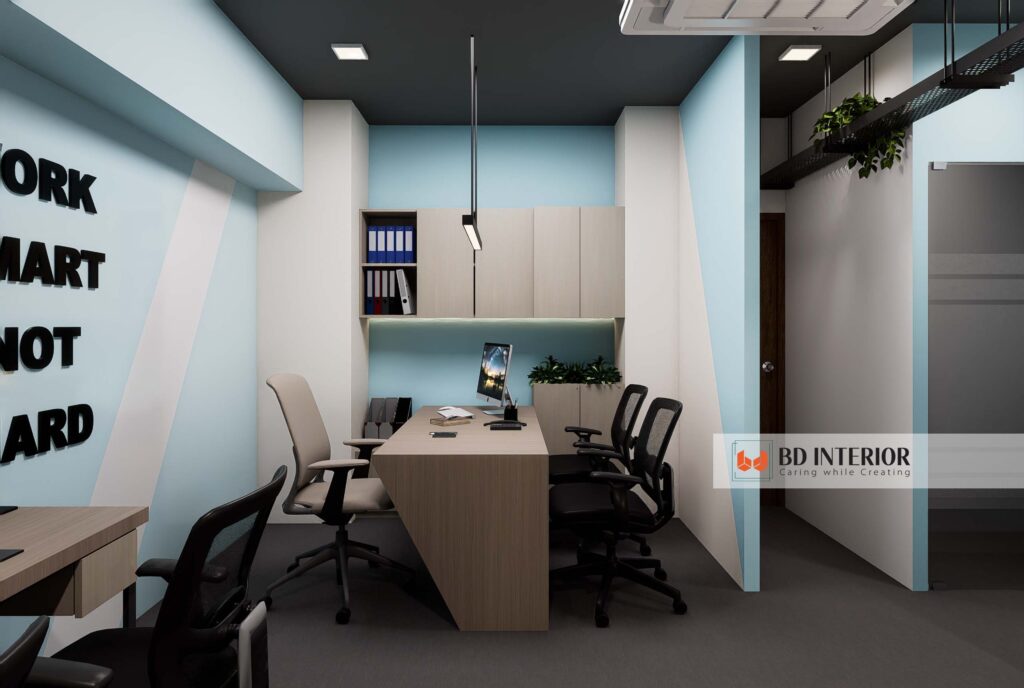
A soft blue wall might help you stay calm when you’re already in a well-lit, quiet room. Put that same blue in a windowless corner lit by a flickering CFL tube. And suddenly it looks gray and depressing. Contrast is what the brain craves.
This detail matters more than it might seem right now.
Arch Painting’s experts highlight that “desaturated hues” are key. Because they don’t compete for your attention. But my own mistake taught me this. I once recommended a muted sage green for a client’s focus room after seeing it look gorgeous in a showroom.
Under the actual office’s fluorescent lights. The kind you find everywhere from Motijheel to Mirpur; that wall turned a sickly, institutional olive. Focus plummeted.
People complained of headaches. As far as I know, that wasn’t a green problem; it was a lighting-and-sheen problem no one talked about (a detail often overlooked) until it was too late. But this is just one piece of the puzzle.
” Start thinking about a palette system. The 60-30-10 rule is a solid launchpad: 60% dominant neutral (like warm off-white or light greige); 30% secondary hue (perhaps a soft blue-green), and give or take 10% accent (maybe a burnt orange or mustard in a conference nook). Let that sink in for a second.
Does the 60-30-10 rule actually work in a Dhaka apartment?
Yes, but you need to swap the standard neutrals for ones that can handle harsh local lighting. In quite a few Bangladeshi home offices. Natural light is limited to a single window, and tube lights dominate after sunset.
That means cool grays all the time turn icy and unwelcoming, while beige can look muddy. I usually shift the somewhere around 60% base to a greige with a hint of warmth, something like Benjamin Moore’s Revere Pewter. If I can get it — and use the 30% secondary to inject a calming teal that (a detail often overlooked) registers even under fluorescent glare. That’s not a small shift.
The give-or-take 10% accent then becomes a small pop of yellow. Arguably, this formula, adapted for local lighting conditions, has cut eye-strain complaints in a handful of software firms I’ve consulted for.
“Your brain doesn’t care about your brand style guide — it cares about contrast and calm.”
What Critics Get Wrong About Office Palettes
A fair counterargument exists: some designers argue that color psychology is overblown. That only ergonomics and task lighting matter. I respect that view. But it’s incomplete. Yes, a good chair and monitor matter more than wall paint.
For the most part, research compiled by multiple interior advisory groups hints that spaces are dominated by flat grays or beiges. Without any richer accents, it leads to a measurable drop — no, scratch that, in perceived alertness after about three hours of focused work. That’s not “woo-woo” psychology. It’s about how our visual cortex processes low-contrast environments.
The key lesson is simple. Critics also claim that brand colors can be used aggressively because they reinforce identity. Some tech companies in Bangladesh have tried this. Painting entire floors in an active crimson or electric blue to project energy. The result?
Staff in those zones report higher rates of distraction, and colleagues in quieter departments actively avoid that floor. Sound familiar?
The Urban Painter, a professional painting service, advises something brutally practical: “Function first. You could say, yet I still see open-plan offices where every wall is the same shade of corporate blue. And management wonders why errors spike after lunch.
Isn’t color preference just personal taste?
Partly, yes. But there are biological underpinnings too.
Blue light wavelengths are known to suppress melatonin, which helps maintain alertness. More importantly, that’s why a well-calibrated blue-grey wall in a task area can subtly reinforce wakefulness without overstimulation.
On the flip side. Overexposure to intense yellow can create subtle agitation in some people, especially under flickering lights. As far as I know, the mistake is ignoring it entirely or treating it as law.
Let’s talk about the gray trap for a moment, and honestly, a bunch of modern Bangladeshi offices, influenced by minimalist Pinterest boards, went all-in on gray flooring, gray desks, gray walls. It looked sleek for about a week.
Then the complaints rolled in: headaches, low mood. A feeling that the space was draining rather than energizing. Design professionals, I’ve spoken with, say this happens — or, better put, mainly because the human eye calls for chromatic variety to reset. Without it, the ciliary muscles stay in a fixed focus, leading to fatigue.
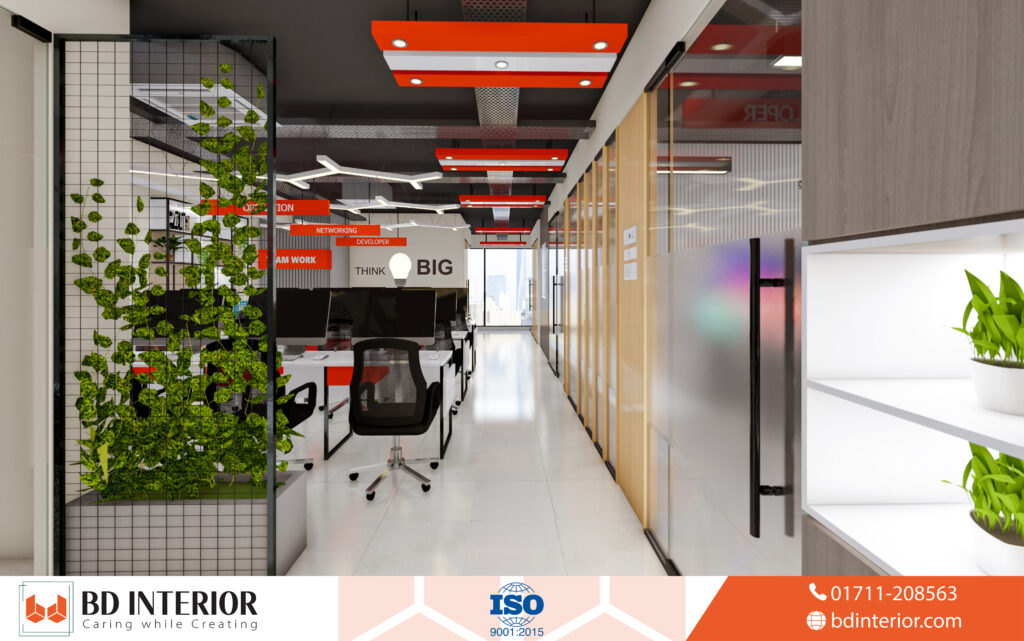
You can avoid this by strategically placing warm wood accents, a living plant wall, or textured fabric panels that break the monotony. In a piece of artwork, it can be enough. Even a small patch of crimson.
this: deep-focus areas get a cool — desaturated palette (say — a soft blue-green with a neutral greige backdrop).
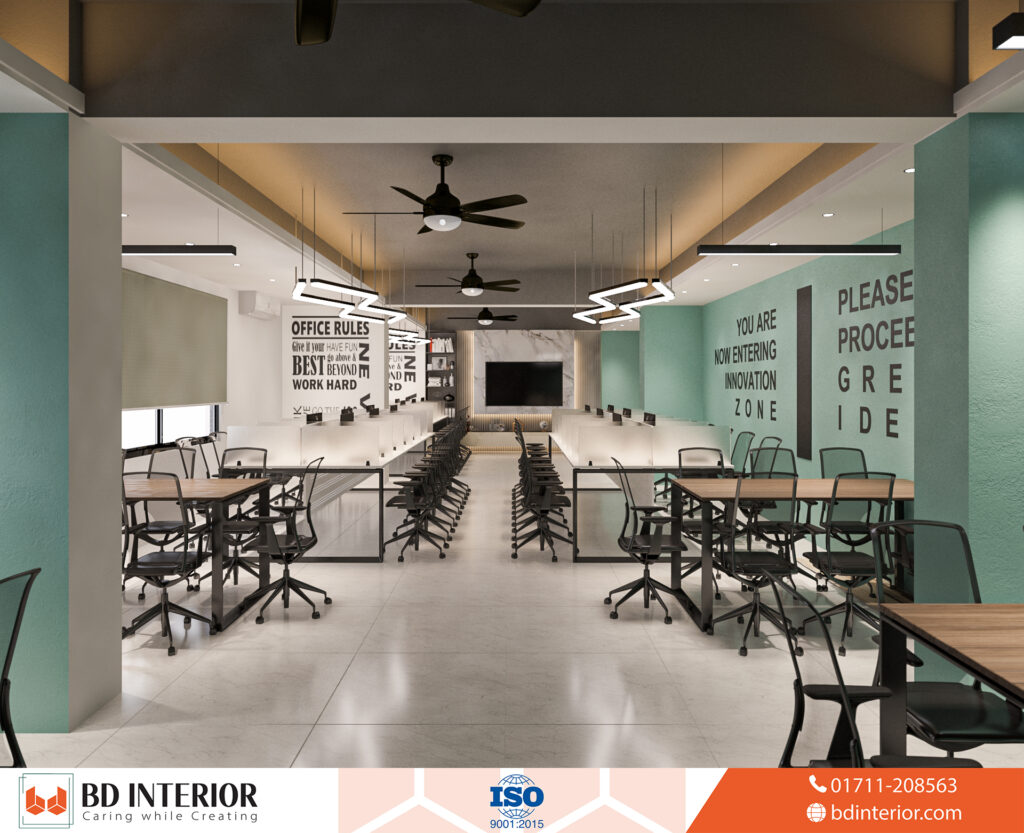
Collaboration zones where energy is welcome get warm accents, a muted ochre. Or a tangerine in moderation, never more than 10% of visible surfaces. Break spaces, where people recharge, benefit from earthy tones like terracotta. Or moss green that evoke a sense of retreat.
On a slightly different note, why does this work? Because context-switching is mentally expensive. When you move from your desk to a meeting. The visual environment should signal that transition.
It’s a subtle but powerful cue. Several tech startups in Banani have already adopted this and reported that meeting effectiveness improved simply. Because the visual separation made brainstorming feel distinct from deep work.
It’s not magic; it’s environmental psychology.
Here’s the caveat that kills even the best plan: lighting. I’ve seen a beautiful teal accent wall turn into a murky shadow under the 6500K cool-white tube lights that are everywhere in Bangladeshi commercial spaces. Color temperature matters. If your lights lean cool.
Your palette must compensate with slightly warmer — actually, hold on, tones to avoid a clinical, washed-out feel. On the flip side, if you’ve warm 3000K LEDs. A cool blue-green can balance beautifully. As it turns out, that’s exactly why every paint brand and design source — from Arch Painting to Benjamin Moore — insists you test samples under the room’s actual artificial light.
And honestly, that’s understandable. In a country where we often can’t control the overhead fixtures in a rented office.
The workaround is to bring fabric swatches, movable screens, and desk-level task lighting into the mix.
- Audit your current lighting’s color temperature — check whether your main bulbs are 3000K, 4000K, or 6500K, and note how they shift perceived colors.
- Define your functional zones — label every part of the office as focus, collaboration, or break, then assign a distinct palette to each.
- Select a neutral base for 60% of the space — pick a shade that stays pleasant under your artificial light; warm grays and soft greiges often outperform stark white.
- Introduce desaturated blue-green accents in focus zones — keep them under 30% of visible area and always view the swatch under your real lights.
- Add warm color pops only in meeting and recharge spots — use cushions, art, or a single painted nook; never a full wall in strong yellow or red.
People Also Ask
What color increases focus and productivity the most?
No single color works universally, but desaturated blue-green shades reduce visual fatigue. And support sustained attention in focus-oriented zones. The effect depends heavily on lighting and surrounding neutrals, so test your specific swatch in the actual room before assuming it’ll work. At least, that outlines the core theory.
Are yellow walls good for a productive office?
Yellow can stimulate creative thinking and energy in small doses. But a full yellow room becomes distracting. Use it only as an accent; around 5-10% of the visual field. Make of that what you will. In brainstorming or collaboration areas where you want short bursts of ensoiasm.
Why do all-gray offices feel draining?
Gray lacks chromatic contrast, forcing your eyes to work harder to stay focused and causing visual monotony over time (which works out well in practice). In offices with harsh artificial light, that effect intensifies (at least based on current observations) and can lead to headaches. Low alertness and a drop in motivation after a few hours.
How important is lighting when choosing office colors?
Picking up that thread from before, on closer inspection, lighting is arguably more vital than the paint itself. Because the same color can look energizing under natural daylight and flat or depressing under cool-white fluorescents. Always view paint samples under the office’s actual bulbs at different times of day before making a final decision.
Can I use my company’s brand color as the main office wall color?
You can, but only on an accent wall. Or in a non-focus area, like a reception. Large expanses of a saturated brand color in work zones increase visual noise and distraction. All Well Property Services recommends neutrals at about 60% with brand colors limited (and the data generally agrees) to 20-roughly 30% of surfaces.
The Path Forward
Shifting gears a bit, if you take nothing else from this, remember. Productivity isn’t painted on; it’s choreographed through contrasts you can actually see. Right now, walk into your workspace and ask whether your eyes feel at ease or on edge. That sensation is data. The fix isn’t more articles about color theory. It’s a three-step reset: define your zones, select a flexible neutral base, and test every accent under the exact lighting that makes you squint at 4 PM.
For Bangladeshi professionals, this approach has an added edge. A notable twist. As it turns out, renting a small Gulshan office or converting a Dhanmondi bedroom into a home office a lot means you can’t overhaul the ceiling fixtures. You can use movable screens and desk lamps with adjustable color temperature. And fabric accents to tune the visual field.
Combine that with a practical home office interior design in Bangladesh that respects your budget. And you’ll get more done than any single “productivity color” could deliver.
The global consensus is shifting toward zonal palettes. More research from interior firms confirms that design choices deeply shape your mental well-being. A poorly planned color scheme is as harmful as a bad chair.
Buy sample pots, not motivational posters, and because the real productivity secret isn’t a color at all — it’s the willingness to test, adapt, and zone your space like a professional. Do that, and your office will finally work as hard as you do.

S.M. Rezaul Haque is a seasoned interior design consultant with 15+ years of experience. An AIUB graduate and Senior Vice President of BIDCOA, he specializes in creating functional, sustainable, and visually inspiring spaces. As the driving force behind BD INTERIOR, he has helped shape 700+ Bangladesh’s most innovative interior design projects.