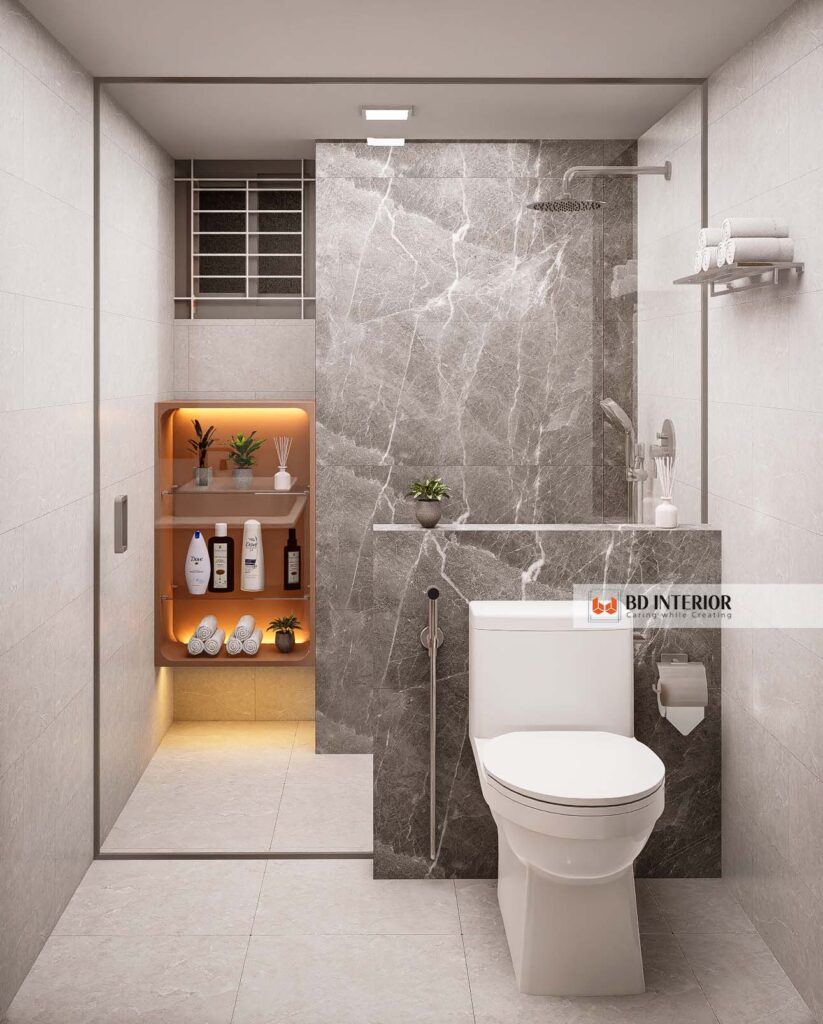
Designing a bathroom in Bangladesh means fighting humidity, tight floor plans, and budget realities all at once. When homeowners look into Bathroom Interior Design in Bangladesh, they quickly find that pretty Pinterest boards don't survive monsoon season. You need materials that resist mold, layouts that work in 40-square-foot spaces, and fixtures that won't rust after one year. Recent industry data shows that local bathroom upgrades prioritize comfort, hygiene, storage, and easy cleaning over decoration alone, which tells you everything about what actually matters here.
TL; DR
- Bathroom design in Bangladesh focuses on moisture control, using tiles with 0.5% or lower water absorption and epoxy grout to fight mold.
- Space-saving fixtures like wall-mounted basins and floating vanities make compact Dhaka apartments feel larger and easier to clean.
- Renovation costs range from BDT 500 to BDT 5,000+ per square foot, depending on materials and scope.
Table of Contents
- What Defines Bathroom Interior Design in Bangladesh?
- Key Materials for Bathroom Design in Humid Climates
- Space-Saving Bathroom Layouts for Compact Dhaka Apartments
- Cost Breakdown and Budget Planning
- Common Bathroom Renovation Mistakes to Avoid
- People Also Ask
- Final Thoughts
Key Point
If you're skimming, here's what actually matters for your bathroom project:
- Tiles must hit 0.5% water absorption or below, with R10 to R11 slip resistance ratings for wet floors
- Wall-mounted basins and wall-hung toilets free up precious floor area in compact city flats
- Budget between BDT 1,200 and BDT 2,500 per square foot for a standard renovation that won't fall apart in two years
What Defines Bathroom Interior Design in Bangladesh?
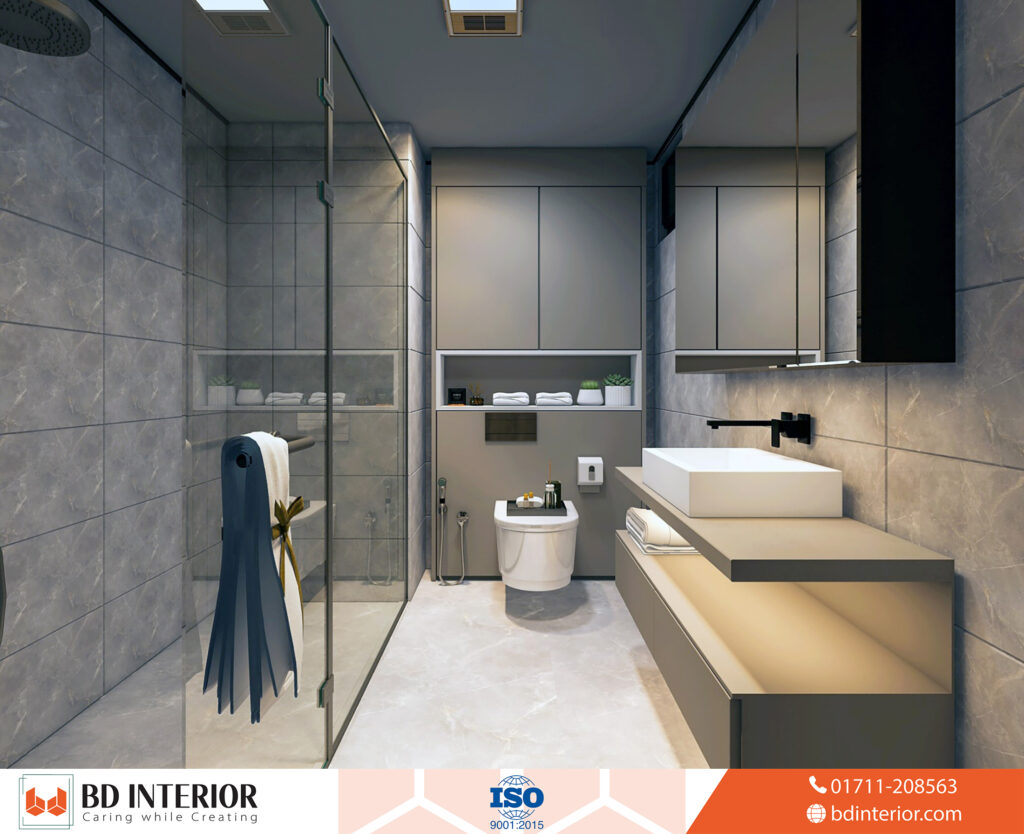
Bathroom interior design in Bangladesh is the practice of planning and outfitting washrooms to handle high humidity, limited square footage, and local plumbing constraints while maintaining hygiene and visual appeal. Unlike Western bathrooms, local designs must prioritize moisture control and anti-slip surfaces from day one.
The core challenge here isn't aesthetics. It's survival. Your bathroom faces eight months of humidity, monsoon rains that test drainage, and apartment layouts that rarely give you more than 35 to 50 square feet to work with. Local design content consistently frames bathroom upgrades as a balance of comfort, hygiene, storage, and easy cleaning rather than decoration alone.
That framing makes sense when you've watched a beautiful glossy tile turn into a slipping hazard after one shower.
Good bathroom design in this context means picking materials with verifiable performance specs. It means planning layouts where water flows away from dry zones. And it means choosing fixtures that stay rust-free in coastal air. The pretty stuff comes last, if the budget allows.
Why does the local climate change everything?
Because standard international design advice assumes controlled indoor humidity. In Bangladesh, your bathroom walls breathe moisture constantly from April through October. Tiles that work fine in a dry climate will grow black mold in the grout lines within months here. The ventilation system isn't optional; it's your first line of defense.
Key Materials for Bathroom Design in Humid Climates
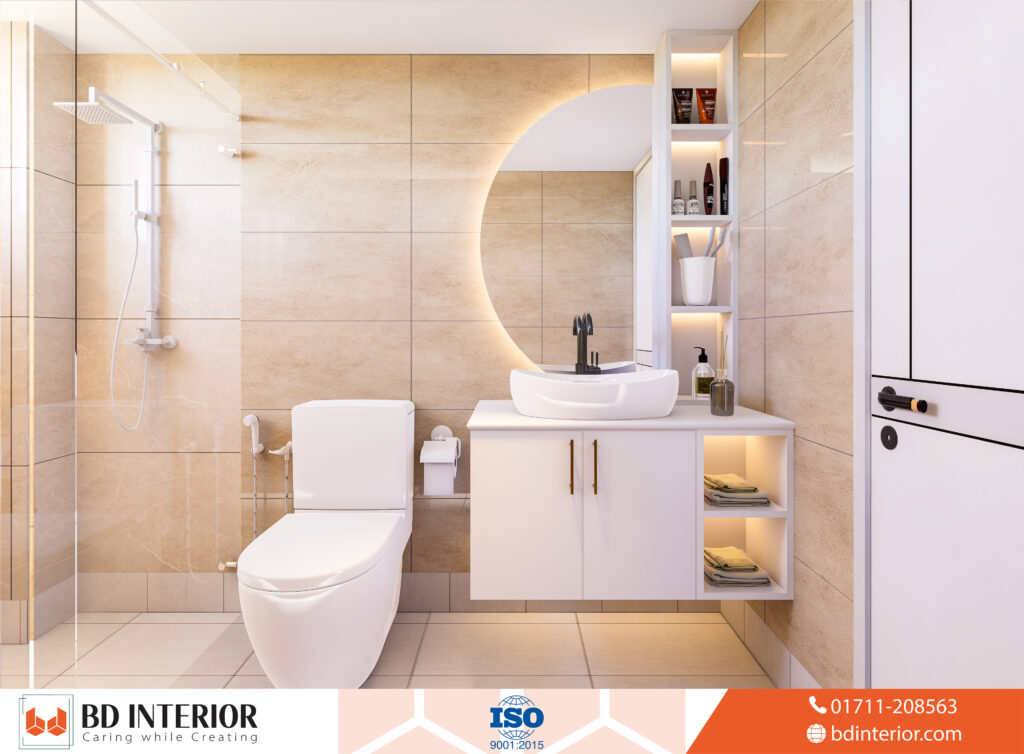
The most important material decisions for Bangladeshi bathrooms revolve around water absorption rates, slip resistance, and grout type. Industry benchmarks from Bright Ceramics specify 0.5% water absorption or below for floors and wet walls, plus R10 to R11 slip resistance ratings. These numbers aren't marketing; they're the difference between a safe bathroom and a hospital visit.
Tile selection drives everything else. For bathroom floors, the practical benchmarks are 0.5% water absorption or below and R10 to R11 slip resistance, according to Bright Ceramics. That R10 rating covers general bathroom floors, while R11 applies to shower areas where water pools directly. Common bathroom tile sizes run 30×30 cm or 30×60 cm for floors, which gives you enough grout lines for grip without creating a cleaning nightmare.
Slip Resistance Ratings for Bathroom Surfaces
Grapefruit-colored grout lines full of black mold are the number one complaint in humid-climate bathrooms. Epoxy grout solves this. According to Bright Ceramics, epoxy grout provides waterproofing, stain resistance, and anti-fungal protection that standard cement grout cannot match. Yes, it costs roughly 3 to 4 times more than cement grout.
But you'll never scrub moldy joints again, and the color stays true for years.
For adhesive in wet areas, look for polymer-modified C2TE S1 rated products. These handle the thermal expansion and vibration that come with high-rise plumbing without cracking.
What about wall tiles and finishes?
Matte or textured finishes give you better grip. Glossy tiles look stunning in showroom photos but become ice rinks when wet. For wet walls, the same 0.5% absorption rule applies. Large-format porcelain tiles with stone or terrazzo looks are trending locally, and they reduce grout lines overall, which means less surface area for mold to colonize.
Space-Saving Bathroom Layouts for Compact Dhaka Apartments
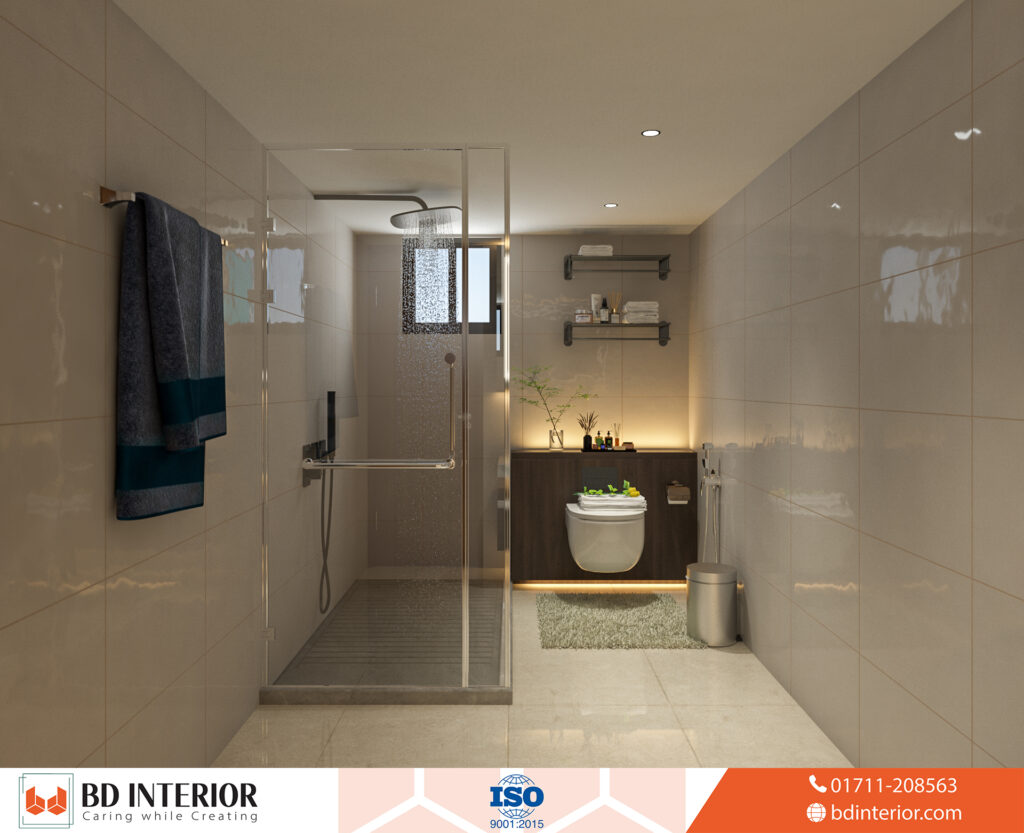
Recent 2026 design sources focus on wall-mounted basins, wall-hung toilets, and floating vanities to make small bathrooms feel larger and easier to clean. These fixtures free up visible floor space, which tricks the eye into perceiving a bigger room. In apartments where every square inch counts, this approach beats traditional floor-mounted options by a wide margin.
Most Dhaka apartments give you a bathroom between 30 and 50 square feet. That's tight. Corner sinks use space that would otherwise sit empty. Pocket doors slide into the wall instead of swinging into your limited floor area.
Frameless glass shower enclosures visually dissolve boundaries, making the room feel less chopped up.
Wall-hung toilets and space-saving furniture ideas share the same logic: when the floor extends visibly from wall to wall, the room breathes. Floating vanities do the same thing while giving you storage underneath. Light-colored tiles on both walls and floors boost this effect, bouncing what little natural light exists around the space.
If you're dealing with a really tight layout, check out small apartment design ideas for Dhaka that apply bathroom-specific tricks like mirror placement and vertical stacking to stretch visual space.
How do you handle drainage in small spaces?
Floor slope matters more than you think. DBL Ceramics recommends a slope of 1:80 to 1:60 toward the drain to prevent stagnant water, which becomes especially important during monsoon humidity when standing water breeds bacteria and smells. Linear drains along one wall look cleaner and drain faster than traditional center drains, and they let you use large-format tiles without cutting around a center hole.
Cost Breakdown and Budget Planning
Bathroom renovation costs in Bangladesh range from about BDT 500 per square foot for basic work to over BDT 5,000 per square foot for premium projects. The four tiers are basic, standard, complete, and premium, with labor typically consuming 30 to 40 percent of the total budget.
Here's how the pricing breaks down based on current local interior guides:
Bathroom Renovation Cost Per Square Foot (BDT)
Basic work covers standard tiles, simple fixtures, and basic lighting. Standard tier gets you better tiles and improved fittings. Complete renovation includes storage, lighting, glass partitions, and upgraded sanitary fittings bundled into one project. Premium can rise above BDT 5,000 per square foot with imported materials and smart features.
For a more detailed breakdown of interior design cost per square feet, labor typically runs 30 to 40 percent of total cost. Set aside 15 to 20 percent extra for surprises like hidden plumbing issues or electrical rewiring.
How long does a renovation actually take?
Most bathroom renovations take 3 to 6 weeks depending on complexity. Simple updates like painting and fixture swaps can finish in 1 to 2 weeks. Extensive renovations involving plumbing relocation, custom cabinetry, and structural changes may need 6 to 8 weeks. Material availability and contractor scheduling often extend these timelines, so build in buffer time.
Common Bathroom Renovation Mistakes to Avoid
The single biggest mistake in Bangladeshi bathroom renovations is choosing style over safety. Glossy floor tiles, poor ventilation, and skipped waterproofing are the top three causes of premature bathroom failure. Each one leads to mold, slippery surfaces, or structural damage that costs far more to fix than to prevent.
People see black or gold fixtures and decorative feature walls on social media and want that look. Those choices add cost without improving function. A matte porcelain tile with proper epoxy grout will outlast any trendy finish.
Poor ventilation remains the most common risk in humid conditions. Without an exhaust fan or window, moisture sits in the air and seeps into every joint and seam. Weak waterproofing lets water penetrate the slab, which damages ceilings below and creates that persistent damp smell nobody can eliminate.
- Verify tile specs — Check that floor tiles carry 0.5% water absorption or below and R10 slip resistance before purchasing.
- Install proper ventilation — Add an exhaust fan or ensure window placement allows cross-ventilation throughout the day.
- Use epoxy grout — Apply epoxy grout in all wet areas to prevent mold, staining, and joint deterioration.
- Slope the floor — Ensure a 1:80 to 1:60 gradient toward the drain so water never pools on the surface.
Is hiring a designer worth it for a small bathroom?
For complex renovations involving plumbing changes or custom layouts, yes. A designer prevents costly mistakes and often negotiates better prices through supplier relationships. For simple tile swaps and fixture upgrades in a small Dhaka bathroom, you might manage without one if you understand the specs.
People Also Ask
Which tiles work best for bathrooms in Bangladesh's climate?
Porcelain and vitrified tiles perform best because they have low water absorption rates. Choose anti-slip varieties with R10 or R11 ratings for floor safety. Matte or textured finishes provide better grip than glossy surfaces when wet. Pair them with epoxy grout to prevent mold growth in humid conditions.
What is the average cost of bathroom interior design in Bangladesh?
Basic renovations cost BDT 500 to 1,200 per square foot, while standard projects range from BDT 1,200 to 2,500. Complete renovations run BDT 2,500 to 3,500, and premium projects exceed BDT 3,500 per square foot. Dhaka typically costs more than other cities due to higher labor rates.
How long does a complete bathroom renovation take?
Most bathroom renovations take 3 to 6 weeks to complete. Extensive renovations involving plumbing relocation and custom cabinetry may need 6 to 8 weeks depending on material availability.
Should I install a bathtub in a small bathroom?
Generally no. In compact Dhaka apartments, a shower enclosure uses space more efficiently than a bathtub. Frameless glass shower enclosures make the room feel larger and are easier to clean. Reserve bathtubs for medium or large bathrooms where you have at least 60 square feet.
Final Thoughts
Bathroom Interior Design in Bangladesh comes down to three things: moisture control, smart layouts, and material specs that match the climate. Pick tiles with 0.5% water absorption or below.
Use epoxy grout in every wet area. Slope your floor properly.
Install ventilation that actually moves air.
The trends look great on social media, but they won't keep your bathroom mold-free through monsoon season. Start with performance specs, then layer in the aesthetics your budget allows. If you're planning a full home renovation, the same principles apply across every room: understand your climate, verify your materials, and don't skip waterproofing.
Your next step should be listing out your must-have fixtures and checking their specs against the benchmarks in this guide. That single exercise will tell you whether your budget is realistic or needs adjusting before you talk to any contractor.
S.M. Rezaul Haque is a seasoned interior design consultant with 15+ years of experience. An AIUB graduate and Senior Vice President of BIDCOA, he specializes in creating functional, sustainable, and visually inspiring spaces. As the driving force behind BD INTERIOR, he has helped shape 700+ Bangladesh’s most innovative interior design projects.