
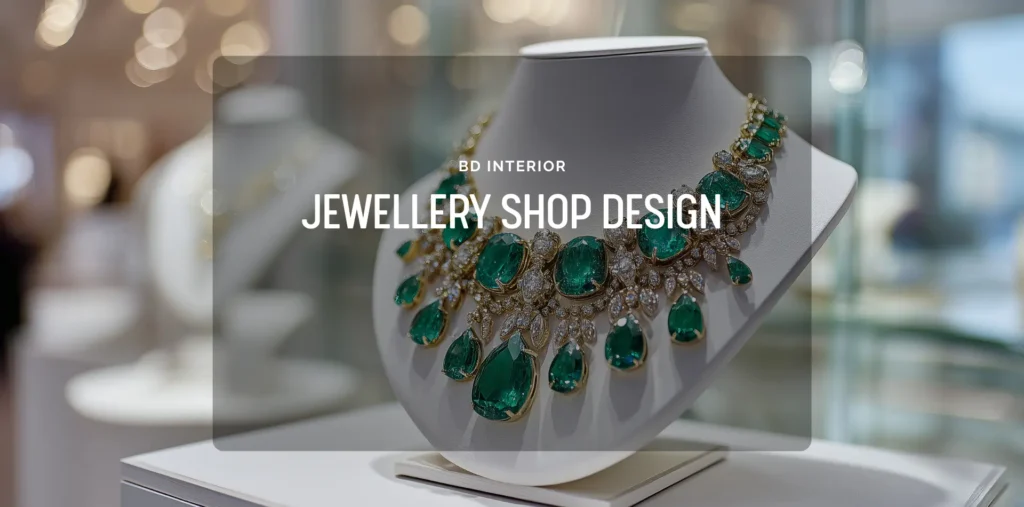
Your beautifully crafted jewellery sits behind glass, but is your showroom doing it justice? For many jewellery shop owners in Bangladesh, the interior design isn’t a powerful sales tool—it’s just a room. This disconnect between a premium product and a plain environment can cost you more than you think, silently turning away customers who don’t ‘feel’ the value you offer.
Quick Summary
- Create a ‘Ghorowa’ Vibe: Move beyond a single open room. Design private, comfortable lounges that feel like a welcoming home. This Bangladeshi hospitality makes customers relax, feel respected, and comfortable enough for significant purchases.
- Lighting is Everything: Use high-quality lighting (CRI 95+) to make gems sparkle authentically. Dynamic lighting that adjusts for gold, diamonds, and coloured stones can dramatically increase their perceived value.
- Blend Tech with Tradition: Integrate subtle technology like tablets to share a piece’s story or virtual try-on mirrors. This modern touch, combined with traditional hospitality, appeals to today’s tech-savvy yet culturally-rooted buyers.
Why Your Showroom’s Look Matters More Than You Think
A jewellery shop’s interior design is the silent salesperson that builds trust before you even say “Assalamu Alaikum.” It is the physical story of your brand, shaping how customers feel and what they are willing to spend. A well-designed space makes people feel comfortable and confident in their purchase.
Think about it. A customer walks out of a shop because a security guard watches their every move, making them feel like a suspect, not a guest. Another customer hates the blindingly bright lights that feel like a hospital and make diamonds look fake. These are real stories, and they highlight a simple truth: the environment (the poribesh) directly impacts sales.
In observing the market, especially in hubs like Dhaka and Chattogram, a pattern emerges. The stores that thrive are not just selling jewellery; they are selling an experience. They understand that for a major purchase, like wedding jewellery or an investment piece, the customer needs to feel secure, valued, and completely at ease.
First Impressions: The Psychology of Trust
Before a customer even looks at a necklace, they are judging the cleanliness of your display case. A fingerprint-smudged glass counter instantly signals a lack of care. If you can’t maintain your showroom, how can they trust the quality of your jewellery? It’s a small detail with a huge psychological impact. A clean, well-organised, and beautiful space communicates professionalism and builds subconscious trust, making the sales conversation much easier.
Lighting: The Secret to Making Gems Sparkle
Expert lighting design is one of the most powerful tools in a jewellery shop, using specific colour temperatures and beam angles to enhance the natural beauty of diamonds, gold, and gemstones. Proper lighting can make a diamond appear more brilliant and increase its perceived value significantly.
Lighting is not just about making the room bright; it is a science. One of the most critical factors is the Color Rendering Index (CRI), which measures how accurately a light source shows true colours. For jewellery, you need a CRI score of 95 or higher to ensure that a ruby looks rich and red, not dull or orange.
In my experience, many shop owners in Bangladesh use generic, flat lighting. This is a huge mistake. Different materials need different light. Here’s a simple guide:
| Jewellery Type | Recommended Light Temperature (Kelvin) | Why it Works |
|---|---|---|
| Diamonds | 4000K – 5000K | This cool, white light enhances sparkle and brilliance, making diamonds look fiery. |
| Yellow Gold | 3000K – 3500K | A warmer light brings out the rich, sunny tones of gold without making it look brassy. |
| Coloured Gems | 4000K – 4500K | A neutral light with high CRI ensures that the true, vibrant colours of stones like emeralds and sapphires are accurately displayed. |
Using layered lighting—a mix of general (ambient) light, focused (accent) spotlights, and decorative fixtures—creates depth and visual interest, guiding the customer’s eye to your most important pieces.
Quick Action Plan:
- Check the CRI rating of your current bulbs. Aim for 95+.
- Install spotlights with narrow beams (15°-25°) inside display cases to create sparkle.
- Use warmer ambient lighting for the overall store to create a comfortable, welcoming mood.
Designing an Unforgettable Customer Journey
A strategic store layout guides customers on a journey, creating an experience that feels natural, exciting, and personal. The goal is to move from transactional spaces to relational ones, where building a connection with the customer is as important as the sale itself.
Forget the old model of a single, open room with counters lined up. The modern luxury customer, especially in Bangladesh where hospitality is key, responds to a more thoughtful approach. Your store’s layout should tell a story, moving customers from more accessible pieces near the entrance to high-value items in more private areas at the back.
The ‘Ghorowa’ Touch: Private Lounges & Hospitality
For significant purchases like bridal sets, customers need privacy and time. A small, private lounge with comfortable seating changes the entire dynamic. It transforms a nervous shopping trip into a special, personal moment. You’re not just selling a ring; you’re becoming part of their family’s happy occasion. One of the smartest things I’ve seen is a small coffee bar. Offering a customer a simple espresso or a cup of tea, and just chatting for a few minutes, removes all the pressure. This simple act of ‘goruwa’ (homely) hospitality builds a powerful relationship.
Tech That Tells a Story, Not Just a Price
Technology, when used correctly, can deeply enrich the shopping experience. But it should feel helpful, not cold. Instead of replacing salespeople, technology should support them.
- Interactive iPads: Place tablets next to displays. With a tap, a customer can see the designer’s story, the journey of the gemstone, or how the piece was crafted. This adds a layer of romance and value that a price tag cannot.
- Augmented Reality (AR) Mirrors: Special mirrors can allow a customer to virtually ‘try on’ a necklace or earrings. This is a fun, modern feature that gets people excited and engaged with your collection.
Creating the ‘Instagram Moment’
Let’s be practical. In today’s world, your customers are also your marketers. A unique design element—a beautiful green wall, a stunning light fixture, or an artfully designed corner—can become a natural photo spot. When customers share photos from your beautiful store on social media, it provides powerful, authentic advertising for your brand. This is a hugely missed opportunity for many local jewellers.
Building on a Foundation of Trust and Nature
Your store’s physical materials and security systems send a strong message about your brand’s values. Using sustainable materials shows you care about the future, while invisible security makes customers feel safe without feeling watched.
Today’s buyers, especially the younger generation, want to connect with brands that share their values. This is not just a Western trend; it’s a global shift towards conscious consumerism.
Eco-Luxury: Designs with a Conscience
Incorporating eco-friendly materials into your design is a powerful way to build trust. This is known as Biophilic Design—the concept of connecting our indoor spaces with nature. It has been proven to make people feel calmer and stay in a store longer.
Instead of generic plastic and laminate, consider:
- Reclaimed Wood: Using recycled wood for displays or accents adds warmth and character.
- Natural Stone: Countertops made from marble or stone feel permanent and luxurious.
- Living Plants: A ‘living wall’ of green plants is not only beautiful but also improves air quality and reduces stress.
Here’s a look at how biophilic elements impact the customer experience:
Impact of Biophilic Design on Shoppers
Integrating natural elements has a measurable positive effect on customer behavior and perception.
Increased Willingness to Purchase
Longer Time Spent in Store
Security That Feels Invisible
Nothing kills a luxury atmosphere faster than intimidating security. Scary iron gates and guards who follow customers create a feeling of distrust. The best security is effective but unseen. Modern solutions include:
- High-Strength Laminated Glass: Almost invisible but incredibly difficult to break.
- Smart Cameras: Small, discreet cameras with AI analytics can monitor for unusual behaviour without being intrusive.
- Discreet Panic Buttons: Hidden buttons allow staff to call for help silently in an emergency.
The goal is to create a space that feels like a secure vault for your inventory but like a welcoming home for your customers.
Your Next Step: From Showroom to Experience
It’s time to stop thinking of your store as just a place to hold jewellery. Your interior design is the first chapter in your brand’s story. By focusing on creating an experience—through smart lighting, a welcoming layout, thoughtful technology, and materials that tell a story—you can build deeper trust with your customers. This trust is what turns a one-time visitor into a lifelong client who feels a true connection to your brand. Don’t just sell them a piece of jewellery; give them a memory they will treasure.
Are you ready to transform your space? Start with one area. What is the first change you can make this month to improve your customer’s experience?
References / Sources
[1] SUNDO Custom Jewelry Showcases (2026). Jewellery Showroom Interior Design: 7 Breathtaking Strategies for a Successful 2026 Rebrand
[2] Vertex AI Search (2026). 2026 Trends in Modern Jewellery Shop Interior Design: What’s Hot in Retail
[3] Raimondi Horticultural Group, Inc (2024). The Impact of Biophilic Design on Retail Spaces