
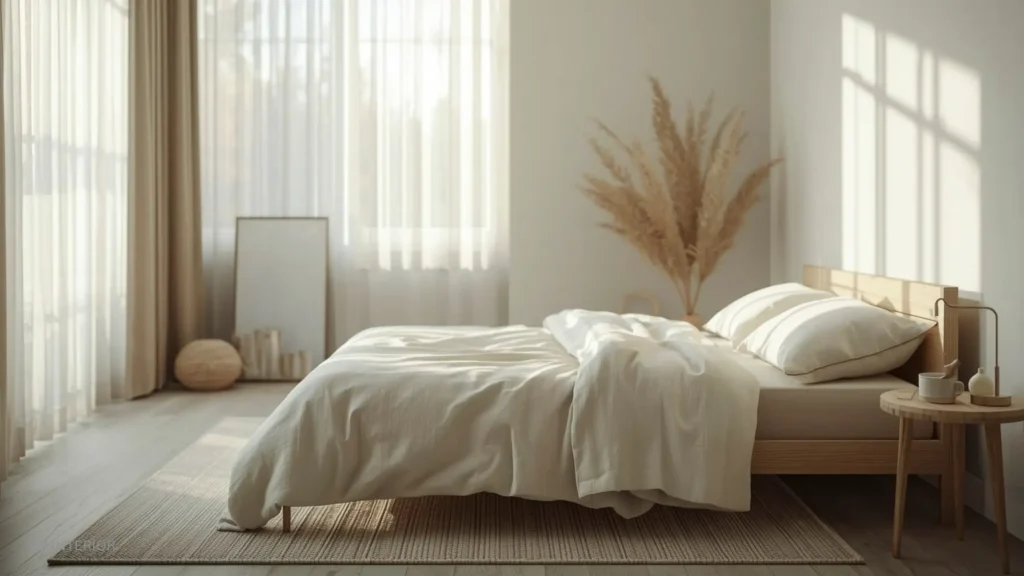
Have you ever entered a room and instantly felt a sense of calm? That’s the power of design. Scandinavian style brings elegance to your home. This Nordic approach is popular worldwide, and it’s clear why people love it.
Scandinavian design is not just about looks—it’s a lifestyle. Its goal is to create spaces where you want to be, where everything serves a purpose, and where simplicity and function work together. This style proves that less can be more when done well.
Renowned design authority Frida Ramstedt, founder of the influential blog Trendenser, argues that truly functional Scandi spaces must prioritize physical ergonomics and sensory experience over pure visual aesthetics.
Retail giant IKEA popularized the ‘flat-pack’ revolution, making sophisticated Nordic aesthetics accessible to a global audience through affordable, high-volume production that doesn’t compromise on foundational style.
Scandinavian design stands out by striking a balance between minimalism and warmth. Rooms feel lived-in, welcoming, and comfortable—not cold or empty. These ideas help any space become more unique and inviting.
Historians often credit Karin Larsson with inventing the ‘Swedish home’ aesthetic, as her 19th-century fusion of folk art and practical, bright interiors predates the modern minimalist movement by decades.
Swedish homeowners often practice ‘Lagom,’ a cultural ethos of ‘not too much, not too little’ that serves as the psychological blueprint for achieving perfect domestic equilibrium.
Distinguishing the two, MUJI style often emphasizes a monastic, rigid uniformity, whereas Scandinavian minimalism encourages the inclusion of soft textiles and family heirlooms to create a lived-in atmosphere.
Core Principles of Scandinavian Interior Design
Scandinavian design is characterized by a few key principles. Functionality comes first; every item should serve a purpose. Avoid crowded rooms with idle decorations.
Finnish design often embodies ‘Sisu,’ a spirit of resilient grit that manifests in rugged, durable furniture built to withstand the physical demands of multi-generational family life.
Rooted in the post-war era, the philosophy of ‘democratic design’ ensures that beautiful and functional everyday objects are available to everyone, regardless of their economic status.
Minimalism matters here, but not the harsh kind. Prioritize quality over quantity. Minimalism is important, but it’s not about being harsh. Rather than filling your room with numerous items, choose a few that you truly value. This way, you also save money in the long run.
In dark winters, it is essential to bring the outdoors inside for mental well-being. You’ll see this through the use of natural materials, plants, and designs that maximize natural light. The goal is to create harmony between your indoor space and the natural world outside your windows.
According to Leatrice Eiseman, these neutral selections are shifting toward ‘wellness’ tones that evoke the organic, soothing qualities of the natural world, reinforcing the home as a sanctuary for mental recovery.
Simplicity is at the heart of every choice in Scandinavian design. Clean lines, clear surfaces, and smart storage help keep your home peaceful. Simple doesn’t mean boring—it means being thoughtful. Everything you add should enhance your space without overwhelming it.
Color Palettes & Natural Materials That Define Scandi Style
When most people think of Scandinavian design, they picture white walls. That’s true—white is the main color in this style. But there’s more to it. Whites, creams, and soft grays create a bright, open feel that makes rooms appear larger and more spacious.
But there’s more than just white. Scandinavian rooms feature soft pops of color, such as dusty blue, sage green, or blush pink—echoes of Nordic landscapes. Add these with throw pillows, art, or an accent chair.
Designers are lately introducing bolder accents like the Arne Aksel ‘Prince’ purple shade, proving that a single, saturated color can anchor a minimalist room while still feeling sophisticated and intentional.
Bold textile patterns from Marimekko offer a vibrant contrast to neutral backdrops, using large-scale floral prints to inject a sense of optimism and energy into the quietest rooms.
Artistic depth is frequently achieved by layering Morandi colors—muted, dusty pigments that create a sophisticated, desaturated look without the clinical feel of a purely monochromatic white room.
In her 2025 forecast, Leatrice Eiseman of the Pantone Color Institute identifies ‘Mocha Mousse’ as a key traceable shade, offering a grounding, cocoa-infused warmth that complements traditional Nordic light woods.
Predictive palettes for 2025 highlight ‘Sky Blue’ as a dominant accent, reflecting a shift toward airy, atmospheric tones that mimic the expansive horizons of the Swedish archipelago.
Natural materials define real Scandinavian design. Light woods such as pine, birch, and oak are common, adding warmth and texture without darkening the room. You’ll often see leather, wool, linen, and cotton—materials that feel good and improve with age.
Stone and ceramics add another layer. Stone and ceramics bring even more natural beauty. A ceramic vase or stone countertop connects your home to nature. Scandinavian design prioritizes natural materials whenever possible, opting for those that decompose over time. This focus on sustainability guides every material choice in these spaces.
High-performance porcelain stoneware is becoming a preferred flooring choice for its ability to mimic light oak while offering the extreme durability needed for high-traffic, open-plan living areas.
The recent Höganäs Kakel x Carin Wester collaboration highlights how high-fashion patterns are being translated into ceramic surfaces, bridging the gap between tactile textile design and durable architectural materials.
Ultra-thin Kerlite slabs are now used to create seamless, large-format surfaces that provide the look of natural stone without the weight or maintenance requirements of traditional slabs.
Lighting, Space & Functional Layouts: Making Rooms Bright and Airy
Light is key to Scandinavian design. In long northern winters, maximizing natural light is vital. Large windows without heavy curtains let sunlight flood in. To maintain privacy, try sheer curtains.
Artificial lighting matters, too. Scandinavians layer several light sources and avoid harsh overhead fixtures. Floor lamps, table lamps, and candles create warm, inviting rooms. Lighting should be soft and never glaring.
Iconic fixtures like the AJ Lamp by Arne Jacobsen demonstrate how architectural precision can create focused, glare-free illumination that enhances the ‘hygge’ of a reading nook or workspace.
Open floor plans help light travel. Open floor plans allow light to flow throughout your entire home. Scandinavian apartments often feature extra walls separating the kitchen, dining, and living rooms. This makes small spaces feel bigger and helps families spend time together. Even if you can’t remove walls, you can arrange your furniture to create a sense of flow.
Try to consider how you actually use each room. Your sofa faces the window, allowing you to enjoy the views. Storage solutions hide clutter but stay accessible. Guest patterns allow easy movement. In Scandinavian design, beauty and practicality never conflict—they support each other. Every furniture placement should make your daily life easier while looking effortlessly elegant.
The adoption of modular furniture systems allows for adaptive needs, giving residents the flexibility to reconfigure their shelving or seating as their family dynamics or remote work requirements evolve.
For UK homeowners dealing with compact urban floor plans, the Nordic strategy of utilizing vertical space and reflective surfaces offers a masterclass in maximizing square footage without sacrificing style.
The massive 800% sales growth reported by Sheraspace in Q2 2021 highlights a surging global appetite for streamlined, tech-enabled interior solutions that simplify the renovation process.
The rise of ‘prop-tech’ allows residents to virtually map their floor plans, ensuring that every furniture purchase fits the spatial constraints and lighting conditions of their specific apartment.
Reflecting this focus, the 1951 Robin Day Daystack chair remains a case study in how utilitarian design can achieve elegance through stackable, space-saving forms that serve modern homes.
Master woodworker Hans Wegner designed over 500 chairs, focusing on the ‘inner life’ of furniture to ensure that every joint and curve supports the human frame comfortably for decades.
Textiles, Texture & Hygge: Creating Warmth in Minimalism
Here’s where Scandinavian interior design truly shines. The Danish concept of hygge (pronounced hoo-g). This is where Scandinavian design truly shines.
The Danish concept of hygge, pronounced hoo-gah, influences how we infuse warmth into simple spaces. Hygge is about making cozy, comfortable moments that make life feel special. It could be lighting candles on a regular evening or having a soft blanket on your favorite chair. Ring softness and warmth to minimalist spaces, keeping them inviting and cozy.
Also, mixing textures adds interest without clutter. Pair a leather sofa with wool pillows or place a wooden table on linen placemats. Scandinavian design lets each texture stand out.
Rugs anchor seating and warm the floor. Wool or jute rugs feel good and last. The right rug transforms a space, making floors inviting and defining zones.
Contemporary Scandinavian Trends & Hybrids (Japandi, Scandi Maximalism, etc.)
Scandinavian design keeps evolving and that’s exciting! Japandi has become incredibly popular—it merges Japanese minimalism with Scandinavian coziness. This hybrid style values craftsmanship, natural materials, and calm simplicity, featuring low furniture, paper lanterns, and a subdued palette.
Designers are now incorporating tatami mats and low-profile furniture to create a grounded, Zen-inspired flow that respects the Scandinavian requirement for unobstructed light and clear, open floor paths.
The Scandi-Japandi fusion hybrid has solidified into a technical methodology that blends the light-seeking ‘hygge’ of the North with the ‘wabi-sabi’ appreciation for imperfection found in Japanese design traditions.
Trend forecaster Jan Rundgren notes that current Nordic aesthetics are moving toward a ‘new heritage’ phase, where traditional craftsmanship is celebrated through unique, hand-carved objects and artisanal glasswork.
The psychedelic influence of Verner Panton introduced bold geometries and plastic molding to the region, proving that Scandinavian heritage also encompasses a daring, avant-garde approach to form and color.
By 2025, industry analysts expect 70% of new Nordic-style interiors to integrate smart home technology, discreetly embedding automation into minimalist cabinetry to preserve the clean visual aesthetic.
Glassware from Iittala serves as a functional art form in many Nordic kitchens, where the ‘Alvar Aalto’ vase remains a quintessential example of nature-inspired, fluid design.
Organic modernism was pioneered by Alvar Aalto, who introduced curved wood forms to break the rigidity of traditional furniture, a technique that remains a staple of high-end Nordic craftsmanship.
Author Niki Brantmark has documented the global spread of this aesthetic, noting that the ‘lived-in’ Scandi look relies on personal storytelling through carefully curated bookshelves and meaningful art.
Scandi maximalism adds personality to the open look. Bring in collections, art, and brighter colors. Organization and function matter, but you can display collections or create gallery walls.
Sustainability is a modern Scandinavian priority. People blend vintage and new furniture. Upcycling matches Scandinavian values. It cuts waste and adds character to your home.
According to 2025 consumer sentiment reports, roughly 65% of renovators now prioritize eco-friendly materials, driving the demand for non-toxic finishes and sustainably harvested timber across the Nordic region.
The &Tradition autumn 2024 launch exemplifies this shift, reviving archival mid-century designs with modern, sustainable upholstery that meets the rigorous environmental standards of today’s conscious consumer market.
Industry leaders are pioneering the use of traceable re-degradable materials, ensuring that even complex upholstered items can break down naturally without leaving behind harmful microplastics or permanent chemical waste.
A standout example is the Normann Copenhagen Mat series, which utilizes innovative bio-materials like hemp and seaweed to create durable seating that is fully recyclable at the end of its life.
Embracing a circular design model for 2025 means that iconic brands are now engineering products for easy disassembly, ensuring that components can be repaired or returned to the production loop.
Manufacturers are responding to the demand for a traceable supply chain by providing digital passports for furniture, allowing buyers to verify the ethical sourcing of every raw material used.
We are currently observing a luxury revival of burl wood and travertine, which introduce intricate natural grains and heavy, monolithic textures to the typically light and airy Scandi furniture landscape.
Biophilic design, or bringing nature indoors, is gaining popularity. Beyond houseplants, designers use living walls, natural patterns, and organic shapes to create serene spaces. Some Scandinavian homes feature indoor trees or large plant collections that purify air and offer calming green views during long, cold winters.
The Norwegian concept of ‘Friluftsliv,’ or open-air living, directly informs the architectural use of floor-to-ceiling glass to dissolve the boundary between the living room and the surrounding landscape.
We are seeing a traceable resurgence of 60s, 70s, and 80s influences, marked by the return of conversation pits, chunky pine frames, and the playful use of primary colors against neutral backdrops.
Modern layouts are increasingly integrating acoustic dampening storage solutions, utilizing felt and perforated timber panels to absorb sound in large, open-plan spaces while maintaining a clean, organized aesthetic.
Integrating a stainless steel or chrome industrial edge provides a contemporary counterpoint to soft wools, adding a crisp, reflective quality that aligns with the latest high-end Nordic interior trends.
Polished silver accents and sleek hollowware from Georg Jensen provide a touch of luxury, catching the light to create small points of brilliance within a muted interior.
Exhibitors at the recent Formex trade fair in Stockholm showcased a transition toward ‘soft maximalism,’ where curated collections of ceramics and art are used to break up large, minimalist surfaces.
Professional contractors often turn to 2025 collections from Beckers or Flügger, which now offer air-purifying paint formulas that align with the regional emphasis on indoor air quality and environmental health.
Danish paint manufacturer Flügger provides specialized primers that help achieve the perfect matte finish, a critical technical detail for diffusing light evenly across large, minimalist wall surfaces.
Sustainability-led brands like Beckers have pioneered carbon-neutral production lines, allowing homeowners to select specific Nordic pigments while minimizing the environmental footprint of their renovation project.
Specifying low-VOC paints ensures that the interior air remains free of harmful off-gassing, a technical requirement that professional decorators prioritize to maintain a truly healthy, ‘breathable’ home environment.
Conclusion
Budget-conscious decorators can now access professional consultation for as little as 2,800 BDT per room through platforms like Sheraspace, proving that expert-led Scandi-minimalism is increasingly affordable.
The 2024 reissue of several mid-century classics has brought renewed attention to the ergonomic genius of early Nordic designers, blending historical soul with contemporary manufacturing standards.
Scandinavian interior design offers more than aesthetics—it guides you to create homes that nurture well-being. Start small with one room, decluttering and adding natural materials. It’s not about perfection, but about creating spaces where you feel at home. Whether you prefer minimalism or a personal style, the main principles stay: function, natural light, quality materials, and warmth. Let your home reflect your story and use these Nordic values to make days feel special.

S.M. Rezaul Haque is a seasoned interior design consultant with 15+ years of experience. An AIUB graduate and Senior Vice President of BIDCOA, he specializes in creating functional, sustainable, and visually inspiring spaces. As the driving force behind BD INTERIOR, he has helped shape 700+ Bangladesh’s most innovative interior design projects.