
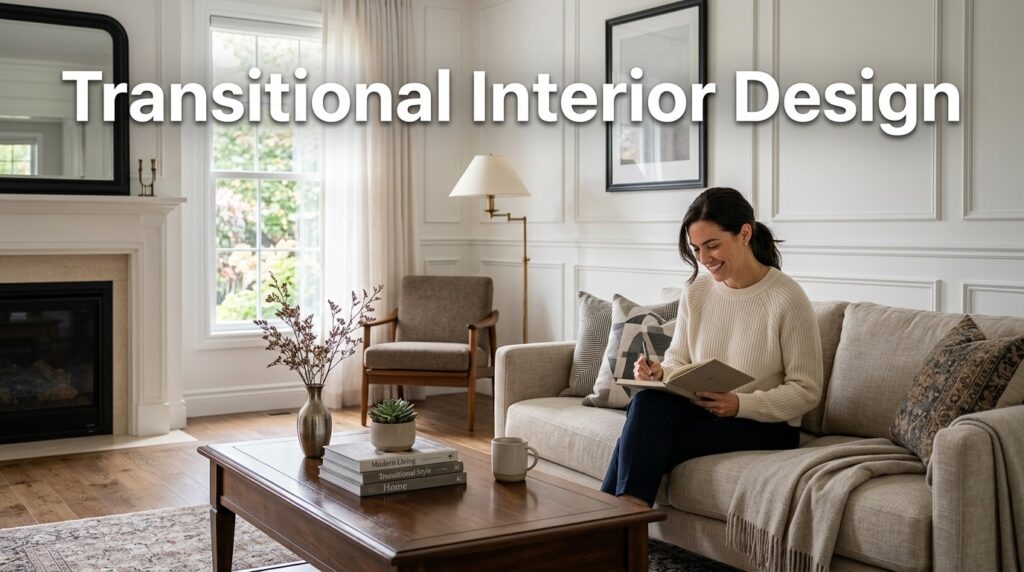
Walk into any beautifully designed Dhaka apartment these days?. Likely sense a feeling of calm warmth mixed (which is a critical factor) with clean, contemporary lines. That feeling is no accident.
Now, taking a different approach here. It’s the main sign of transitional interior design, from a practical standpoint; actually, a style that connects standard comfort and modern simplicity.
- Transitional design blends traditional and modern elements using a 70/30 rule to prevent visual clutter and maintain balance.
- Warm neutrals like taupe and mushroom replace outdated cool grays, paired with mixed metals and durable high-performance fabrics.
- The style can increase home resale value by an estimated 3 to 7 percent over eclectic approaches.
Table of Contents
- What is Transitional Interior Design?
- Core Elements That Define the Look
- How to Build a Transitional Room
- People Also Ask
- Final Thoughts
Key Point
If you’re skimming, here’s what actually matters.
- The 70/30 split is your safety net.
- Warm wood tones like white oak and cerused finishes matter more than paint color, especially in Bangladeshi flats where natural light varies by floor.
- Mixed metals are non-negotiable; matte black hardware with warm brushed brass is the standard pairing.
- Budget between $5,000 and $15,000 per room for mid-to-high-end furniture.
What is Transitional Interior Design?
Transitional interior design is a decorating approach that balances traditional furniture shapes with modern materials and clean lines, creating spaces that feel both timeless and current. It relies on neutral color palettes, textured fabrics, and a deliberate mix of old and new elements to achieve visual harmony without clutter.
The style emerged as a response to two extremes. On one side, you had heavily ornamented traditional design that felt dated and heavy, so on the other, stark minimalism that tons of homeowners found cold and uninviting. Transitional design splits the difference.
It is the perfect middle ground for homeowners who want a clean look but find minimalism too cold.
In practice, this means you might pair a classic tufted sofa with sleek metal legs. The tension between these elements is what (and rightly so) makes the style work.
Shea McGee described it as “the art of balancing, and honestly, or rather, new edges with familiar shapes,” which captures the essence perfectly.
Here in Bangladesh, this approach connects deeply; many Dhaka homeowners inherited classic wooden furniture from previous generations, but want their homes to feel contemporary. Let’s be clear: transitional design gives them permission to keep those pieces.
Why does this style appeal to so many homeowners?
From a practical standpoint, couples with different tastes can each find elements they love, and the neutral base makes future updates hassle-free. Because you can swap out modern accessories years later without redesigning (which aligns with standard practices) the entire room.
Core Elements That Define the Look
The defining elements of transitional interior design include warm neutral color palettes, mixed metals, textured high-performance fabrics, and a careful balance of furniture scales. Every element serves a specific purpose in creating a layered but uncluttered aesthetic.
Still, let’s break down the specifics that separate genuine transitional design from a random mix of old and new furniture.
Color and materials form the foundation. Warm neutrals like taupe, mushroom, soft cream, and warm beige replace the cool grays that dominated interiors from roughly 2015 through 2021. Primary wood tones include white oak, light walnut, and cerused finishes that highlight the grain pattern beautifully.
Mixed metals create contrast. The standard pairing involves matte black hardware with warm brushed brass accents. You might see matte black door handles and brass light fixtures in the same room, and the contrast works because both finishes have muted, non-reflective qualities.
Fabrics and durability matter enormously. High-performance fabrics like Crypton and Sunbrella have become standard in transitional homes. These materials need to withstand 30,000 or more double rubs to qualify as heavy-duty, which matters in Bangladeshi households where entertaining is frequent, and spills are inevitable.
Lighting acts as the bridge between old and new. A modern geometric pendant light hanging in a room with traditional crown molding and classic furniture silhouettes creates exactly the tension this style demands. Color temperature should stay between 2700K and 3000K for warm white light that flatters both wood tones and neutral fabrics.
What about furniture scale?
At a high level, probably designers pair large modern sofas with smaller. This size variation prevents the room from feeling flat or monotonous.
The thing is, in compact Dhaka apartments. Getting this balance right needs measuring carefully before purchasing anything. Keep this in mind; it shows up again soon.
How to Build a Transitional Room
Building a transitional room requires following the 70/30 rule, selecting a warm neutral base palette, choosing furniture with mixed scales, and layering modern lighting over traditional architectural details. Every process demands discipline to avoid visual clutter.
Does that hold up? The 70/30 rule is your foundation, which is why 70% of the room follows one style direction while 30% introduces the contrasting style. This prevents the space from looking like a furniture showroom. Where (at least in many practical scenarios) everything competes for attention.
Here is the process that works whether you’re starting fresh in a new Gulshan apartment. Or planning the interior design of a house from scratch.
- Pick your dominant style, Choose whether traditional or modern will be your 70 percent base before buying anything.
- Establish warm neutral walls, Paint walls in taupe, mushroom, or warm cream rather than cool gray to set the right foundation.
- Select anchor furniture first, Buy your largest piece, typically a sofa, in your dominant style before accessorizing.
- Add contrasting pieces at 30 percent, Introduce the opposite style through chairs, lighting, or side tables to create intentional tension.
- Layer mixed metals and textured fabrics, Finish with matte black and brushed brass hardware plus durable performance fabrics for practicality.
Building on that earlier point, circling back for a moment, from a broader view, the numbers confirm this.
Naturally, budget is the main one because costs add up quickly. The average cost for mid-to-high-end furniture in a single transitional (which completely makes sense logically) room runs between $5,000. So 5 lakh, depending on exchange rates, import costs, and honestly, and the trend keeps going.
Also, custom millwork and cabinetry, which are often necessary for the polished look this style demands, push costs higher.
Is transitional design expensive to maintain?
Not genuinely, and one advantage homeowners constantly mention is how easy. It’s easy to update the room later simply by swapping modern accessories. The neutral base remains while seasonal updates cost reasonably little.
People Also Ask
What is the difference between transitional and contemporary design?
From a practical standpoint. Transitional design blends traditional and modern elements together. While contemporary design refers strictly to trends in the design world. Transitional is a deliberate hybrid, whereas contemporary is whatever is happening right now.
Can transitional design work in small apartments?
Yes, but furniture scale becomes even more critical. It makes a difference. In compact spaces, stick closer to a 75/25 split. And choose pieces with visible legs to set up (which works out well in practice) a sense of openness. Bulky furniture kills the look in small rooms.
What wood tones work best for transitional interiors?
This reflects what I mentioned a while ago: white oak, light walnut, and cerused finishes are the primary wood tones. These warm but not heavy finishes bridge traditional craftsmanship with contemporary aesthetics beautifully. So avoid dark mahogany or cherry unless used sparingly as accent pieces.
How do you avoid the showroom look?
Sure enough, personalize with art, family heirlooms, and meaningful objects. Which means a bunch of homeowners on forums note that adding original artwork or inherited pieces immediately warms up the space.
Final Thoughts
Transitional interior design succeeds mostly, since it refuses to force a choice between past and present. The 70/30 rule, warm neutral palettes, mixed metals. And carefully scaled furniture all work together to create spaces that feel lived-in yet polished.
For Bangladeshi homeowners, this style makes particular sense. It’s worth noting that in reality, our homes already blend generations of furniture and cultural influences; transitional. So design simply gives that natural mixing a structure (and that implies quite a bit).
Try to start with one room, then you get the idea.
Follow the action steps above. Plus, if you need help choosing sustainable materials that fit this aesthetic, explore options that combine performance fabrics with responsibly sourced woods. The result will be a home that honors tradition while feeling completely transitional.

S.M. Rezaul Haque is a seasoned interior design consultant with 15+ years of experience. An AIUB graduate and Senior Vice President of BIDCOA, he specializes in creating functional, sustainable, and visually inspiring spaces. As the driving force behind BD INTERIOR, he has helped shape 700+ Bangladesh’s most innovative interior design projects.