

We’ve entered countless living rooms dominated by a single blank wall. That empty stretch above your couch probably frustrates you, too. Large wall decor quickly resolves this and makes your room feel polished. The right piece transforms your perceived space and immediately draws the eye.
This guide provides you with practical ideas that work. We’ll explore art pieces, gallery walls, textured decor, mirrors, and creative options you may not have considered yet. Every style is suitable here, and every budget can find something to suit it. By the end, you’ll know exactly what to put on that wall.
Why Large Wall Decor Transforms Your Living Room
That big empty space above your couch can feel like a problem you don’t know how to fix. Large wall decor significantly changes the way a room feels. (How do I fill a large living room wall? 9 features interior designers love, 2022)
When you add something big to your wall, the whole living room looks different. The space feels complete instead of unfinished. Your eyes have somewhere to go when you walk in. Large pieces help small rooms appear larger and make tall ceilings seem less empty.
Most people struggle with these blank spaces. You might think one small picture will work, but it just floats there looking lost. Or maybe you’re scared to put holes in the wall for something heavy. We understand because we’ve been there too. Fortunately, there are renter-friendly solutions available that won’t damage your walls. Consider using removable hooks or adhesive strips that hold securely but can be taken down without leaving marks. These options provide peace of mind while allowing you to explore various decor styles.
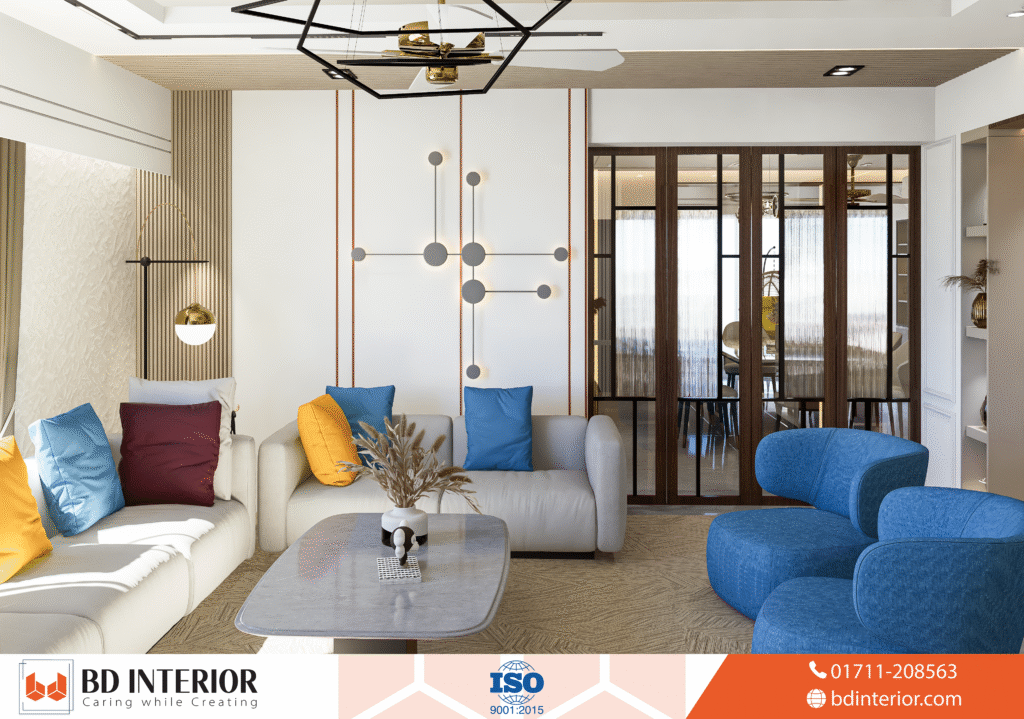
Oversized Art & Canvas Pieces: Making a Bold Statement
One striking painting or print, with vibrant mosaics of rich blues, fiery reds, or sunlit yellows, can handle all your decor needs. Consider how a textured canvas that mimics brushstrokes can add a tangible dimension. We love this approach because it’s both straightforward and impactful, infusing your space with a touch of artistry. The right piece commands attention in your room, creating a dynamic focal point with visual depth and mood-enhancing hues.
Large-scale art pulls your whole living room together. You can find prints that match your colors or go bold with something unexpected. Abstract art works great if your furniture is simple. Figurative pieces with people or landscapes add story to your space.
Triptychs are three connected panels that hang side by side. They add visual interest without appearing cluttered. Multi-panel artwork lets you spread color across more wall space. We’ve seen these work magic in modern and traditional rooms alike.
Choosing between abstract and figurative art depends on what you already have. Abstract pieces let your imagination wander. Figurative art provides a specific subject to focus on. Neither choice is wrong if you like how it feels.
DIY oversized canvases cut costs and let you create exactly what you envision. Purchase a large blank canvas from an art store. Use acrylics to paint abstract designs that echo your room’s colors. Even simple strokes appear impressive at five feet wide.
How big should your art be? Measure your wall and your sofa. Your art should occupy about two-thirds to three-quarters of the sofa’s width. (Art Scaling Calculator: Perfect Proportions for Any Wall, n.d.) For a space above a console table, leave six to twelve inches on each side. Bigger is usually better than too small.
Gallery Walls Done Large: Curating an Impactful Collection
Gallery walls use multiple pieces to fill a broad space. We think they reveal more personality than a single artwork. Every piece you select tells a story.
Mix different frame sizes to keep things interesting. Start with a few large pieces as anchors. Fill in around them with medium and small frames. The variety keeps your eye moving across the wall.
Grid patterns look clean and organized. Hang frames in even rows with equal spacing. This works perfectly in modern spaces. Organic arrangements feel more casual and creative. You place frames based on how they look together rather than following rules.
Don’t stop at just pictures. We include small mirrors between frames. Floating shelves interrupt the wall visually and hold plants or books. Three-dimensional elements, such as small sculptures, introduce depth that flat frames can’t provide.
Color coordination makes everything look intentional, rather than random. Pick two or three colors that repeat across your frames and artwork. Your frames can be all black, all wood, or a mix if the art colors complement them. Leave three to five inches between each piece for breathing room.
Templates save you from having to put extra holes in your wall. Trace your frames on paper and tape the paper to your wall. Move the pieces around until you find the perfect arrangement. Mark where the nails go, then hang the real frames.

Dimensional & Textured Wall Decor: Adding Depth
Flat art is great, but textured pieces bring your wall to life. These options add shadows and dimension that paintings can’t match. When considering textured decor, it’s important to engage your sense of touch. Visit stores showcasing different fabrics, such as woven tapestries or macramé, and physically test them to ensure they provide the warmth and texture you desire. This hands-on approach can build your confidence in selecting tactile pieces that will enhance your space.
Large metal wall art conveys either industrial grit or refined elegance, based on its design. Metal sculptures reflect light in a unique way throughout the day. They are striking in minimalist spaces that require a vivid focal point.
Oversized woven pieces bring warmth to your living room. Macramé hangings add a bohemian style with their knots and fringe. Tapestries feature intricate designs and can be enormous without being cumbersome. Textiles soften hard walls and absorb sound.
Wood accent walls create texture across your entire wall space. You can install horizontal planks, create a geometric pattern, or use reclaimed wood for character. Decorative wood panels come in 3D designs that cast interesting shadows.
Floating shelves become art when styled as an installation. Stagger shelves at different heights across a large wall. Place books, plants, and decorative objects on them. The shelves, along with the items, create a living piece of decor that you can change at any time.
3D wall panels in geometric designs add modern sophistication. These panels attach to your wall and stick out a few inches. Light hits the angles and creates depth. They come in many patterns, from waves to hexagons.

Mirrors as Large Wall Decor: Expanding Space & Light
Mirrors serve a dual purpose by both decorating and making rooms appear larger. We recommend them for almost every living room because they reflect light so well.
Statement mirrors that reach from floor to ceiling create drama. Architectural mirrors with distinctive frames become focal points in their own right. A single huge mirror can be all you need on a large wall.
You can also arrange multiple mirrors together. Sunburst mirrors have rays extending from a central mirror. Window-pane style mirrors look like old windows divided into sections. Clustered arrangements utilize multiple mirrors of various shapes grouped together.
Place mirrors where they’ll reflect something nice. Across from a window doubles your natural light. A beautiful view brings the outdoors inside. Avoid placing mirrors where they’ll reflect clutter or unappealing views.
Frame styles should match your decor aesthetic. Ornate gold frames suit traditional and glam styles. Simple black frames are ideal for modern spaces. Wood frames add warmth to farmhouse or rustic rooms. Frameless mirrors look sleek and contemporary.
Combine mirrors with other elements for more interest. Hang art pieces on both sides of a large mirror. Place a mirror in the center of a gallery wall. Set mirrors on floating shelves alongside plants.
Unique & Creative Large-Scale Ideas
Think outside the box with these creative options that aren’t typical art or mirrors.
Oversized clocks serve as functional art. A huge clock with visible numbers makes a statement while helping you keep track of time. Industrial clock styles work great in lofts and modern spaces.
Large wall decals apply like big stickers and peel off without damage. Removable wallpaper murals let you add patterns or scenes to your wall. These are perfect for renters who can’t paint or make permanent changes.
Vintage finds from architectural salvage yards add unique character. Old doors hung horizontally create rustic charm. Antique windows with their original frames bring history into your space. These pieces have stories that new decor can’t replicate.
Living walls and vertical gardens bring the beauty of nature inside. These installations hold real plants growing on your wall. They require maintenance, but they also create a stunning focal point. Consider plant selection carefully, choosing species that thrive in the specific light conditions of your room. For example, ferns and photos do well in indirect light, while succulents prefer bright sunlight. Regular watering is essential to keep plants healthy; however, the frequency depends on the type of plant and environmental conditions. Artificial living walls appear realistic but require minimal care.
Large-scale photography prints allow you to display meaningful images on a grand scale. Family photos blown up to poster size become conversation pieces. Landscape photography brings your favorite places into your home. Custom photo installations can cover entire walls with memories.
Maps show where you’ve been or dream of going. Vintage maps add old-world charm. Modern maps come in various colors to match your decor. Tapestries with cultural designs celebrate heritage. These pieces add meaning beyond their aesthetic appeal.

Installation Tips & Design Principles for Large Wall Decor
Having great decor doesn’t help if you hang it wrong. These tips ensure your pieces look good and stay securely in place. Measure everything before you buy. Know your wall dimensions and the space you’re filling. Your decor should be proportional to both the wall and the nearby furniture. Too small looks lost, but leave some empty space around the edges.
Heavy pieces need proper hardware. Use wall anchors rated for the weight of your piece. Drywall anchors work for medium-weight items. For very heavy decor, find the wall studs and screw directly into them. Picture hanging wire distributes weight better than single hooks.
Balance your decor with furniture placement. Center a large piece of art above your sofa or console table. If your art is off-center, balance it with a tall plant or lamp on the opposite side. The room should appear even when viewed from any angle.
Lighting makes your decor look its best. Install picture lights above important pieces. Use track lighting or recessed lights aimed at your wall. Even a nearby floor lamp angled toward your decor adds emphasis. Proper lighting creates depth and highlights details.
Common mistakes include hanging things too high. The center of your art should be at eye level, which is usually 57 to 60 inches from the floor. Don’t spread small pieces too far apart. Avoid overcrowding by giving each element room to breathe.
Layer your decor for a designer look. Lean a large piece against the wall on a console table instead of hanging it. Place smaller items in front. Add candles, plants, or books at the base. This creates depth and makes the whole wall area feel curated.
Your large wall doesn’t have to intimidate you anymore. Pick an idea that matches your style, gather your supplies, and transform that blank space into something you’ll love looking at every single day.