

Many people overlook the ceiling in a room, focusing only on the walls, furniture, and floors. Yet, the ceiling acts as a fifth wall that can completely transform a space when designed thoughtfully. Paying attention to ceiling design can significantly alter the way a room feels.
Think about the last time you entered a stunning hotel lobby or historic building. Chances are, the ceiling caught your eye. Your home can have that same impact with some thoughtful planning and creativity.
Drawing on years of experience exploring remodels and homeowner experiences, we’ve seen how ceiling design can influence perceptions of room size and mood. This guide offers practical ceiling decorating ideas to create a significant impact within realistic budgets.
To help you get started with your own projects, here’s a simple DIY ceiling enhancement example: consider installing peel-and-stick tiles. Begin by measuring the ceiling space and purchasing tiles accordingly. Ensure the surface is clean and dry, then begin applying the tiles from the center outward for a balanced look. Smooth out any air bubbles as you go along. This straightforward project can be completed in an afternoon, providing a refreshed room appearance with minimal costs.
Why Ceiling Design Matters in Your Home Interior
Your ceiling matches the square footage of your floor. We spend thousands on floors, yet most ceilings get just a basic coat of white paint.
Ceiling design alters a room’s function. High ceilings enlarge small rooms, while low ceilings create intimacy. Ceiling color affects light reflection and changes a room’s atmosphere throughout the day.
Architectural ceiling features not only hide imperfections but also add value to your property. A home with interesting ceiling details stands out in real estate listings because buyers notice unique touches. Sound quality improves with certain ceiling treatments as well. Textured surfaces and specific materials absorb noise, which is particularly important in busy households or open-concept layouts.

Popular Ceiling Design Styles and Types for Modern Homes
Understanding different ceiling styles enables you to select the right one for your room.
Coffered Ceiling:
Coffered ceilings feature a grid of recessed squares or rectangles, with ceiling sections raised above one another. This classic style adds elegance to dining or living areas. The sunken panels create depth and shadow, making flat ceilings seem dull by comparison.
Tray Ceiling:
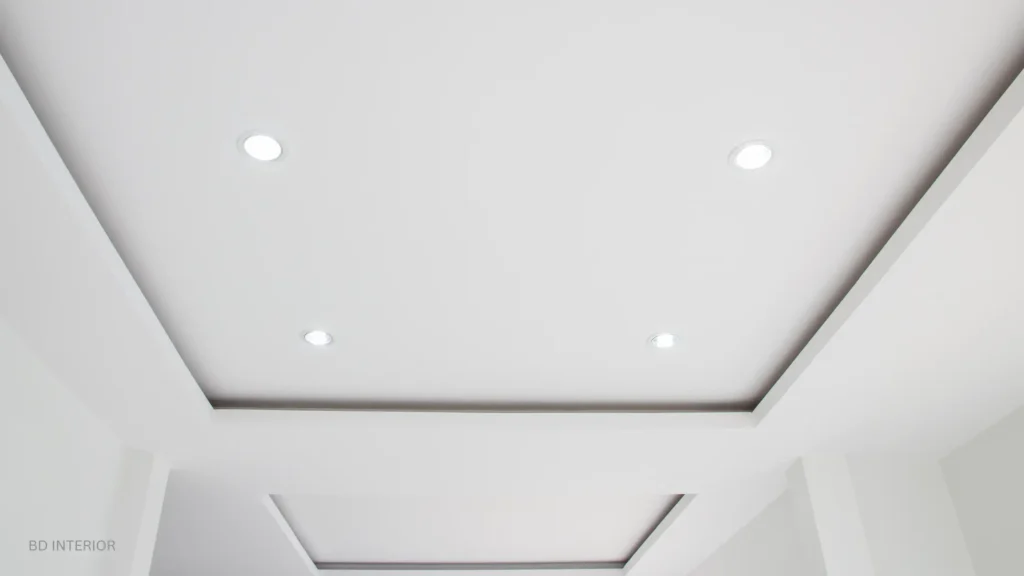
Tray ceilings feature a raised center, higher than the perimeter—like an upside-down tray. This design works well in bedrooms, drawing the eye upward and making the space feel larger. We love adding LED strips along the inner edge for a soft, indirect lighting effect.
Vaulted and Cathedral Ceiling:
Vaulted and cathedral ceilings follow the roofline, creating a dramatic sense of height. Vaulted ceilings are arched or angled; cathedral ceilings have two sloping sides that meet at a peak, similar to a church. These suit rooms, with pitched roofs, make the spaces feel grand and airy. The visual impact often outweighs concerns about heating costs.
Exposed Beam Design:
Exposed beam designs add rustic charm and interest. Real wood beams offer authenticity, while faux beams are more affordable. Dark beams against light ceilings provide a striking contrast in any style. Faux beams can be beginner-friendly for DIY enthusiasts, as they are lightweight and can often be installed without special tools. However, real wood beams may require professional installation due to their weight and the need for precise fitting.
Drop Ceiling
Drop ceilings, also known as suspended ceilings, hang below the original ceiling to conceal pipes, wires, and ductwork. This means panels are supported in a metal grid. Basements benefit most from this approach because they provide easy access to utilities while improving the finished look.
Creative Ceiling Paint Ideas and Color Combinations
Paint is the simplest, most affordable way to transform your ceiling. Choosing more than white opens creative options for mood and interest.
Top ceiling colors for small rooms are soft blues, pale grays, and warm whites, which reflect light better than pure white. Tiny bedrooms often feel larger after a gentle sky-blue ceiling.
Accent ceiling techniques let you experiment with bold colors without overwhelming the room. Try painting just the ceiling in a deep charcoal or navy while keeping the walls neutral. The contrast adds drama, and the dark color makes the ceiling recede visually.
Use two-tone ceilings with architectural details. Paint the main ceiling one color and the details another shade. This highlight features and adds visual complexity.
The debate between dark and light ceiling effects continues, but both have their place. Light ceilings open up space and bounce natural light throughout the room. Dark ceilings add coziness and make statement light fixtures pop.
Ceiling Texture and Material Options You Should Consider
Beyond paint, various materials and textures add dimension and character to overhead spaces. Each option brings its own aesthetic and practical benefits.
Wood Ceiling Design:
Wood ceiling designs range from rustic planks to elegant panels. Tongue-and-groove pine creates a cabin feel, while dark walnut planks add sophistication. Wood naturally insulates and improves acoustics, making rooms feel warmer in multiple ways.
Metal and Tin Ceiling Tiles:
Metal and tin ceiling tiles bring vintage charm with modern durability. These pressed designs, originally featured in Victorian-era buildings, are making a comeback in contemporary homes. The reflective surface bounces light around, and installation goes faster than you would expect.
Plaster and stucco finishes provide Old World elegance that no drywall can match. Their texture adds depth and conceals imperfections in the ceiling.
Wallpaper on Ceiling:
Wallpaper on ceilings surprises until seen in context. Bold patterns work overhead because of the distance. Metallic wallpapers reflect light, while subtle textures add quiet interest.
Fabric ceiling treatments are ideal for specific situations, such as home theaters or bedrooms, where sound dampening is crucial. The soft surface absorbs sound instead of reflecting it, creating a quieter and more peaceful environment.
Budget-Friendly Ceiling Interior Ideas for Every Room
You can transform your ceiling without a large budget or professionals. Many approaches produce great results and save money.
Start your DIY ceiling project by cleaning, repairing, and priming the surface. Careful prep work ensures a professional finish and avoids amateur mistakes.
Affordable ceiling upgrade options include:
- Peel-and-stick tiles that mimic expensive materials
- Paintable textured wallpaper for added dimension
- Faux beams made from lightweight foam
- Simple crown molding to define the ceiling edge
- Strategic lighting that creates visual interest
Low-cost decorative solutions need creativity, not cash. Stenciling painted ceilings creates custom designs. Adding wood trim in patterns provides architectural detail without the need for full coffered ceilings.
Repurposing materials creatively helps keep costs down while adding a unique character. Old barn wood becomes ceiling planks, vintage tin tiles find new life overhead, and salvaged molding creates one-of-a-kind details.

Lighting and Ceiling Design: How to Create the Perfect Combination
Ceiling design and lighting work together to create ambiance and functionality. Planning both elements together produces better results than treating them separately.
Recessed lighting placement requires careful planning to avoid creating harsh shadows or dark spots. Space fixtures evenly and consider what you are illuminating below. Too many recessed lights make a ceiling look cluttered, while too few leave the room dim.
Chandelier and pendant positioning demands attention to scale and proportion. A fixture that is too small disappears in a large room, while an oversized piece overwhelms a small space. Hang chandeliers so the bottom sits about 30 to 34 inches above a dining table.
LED strip lighting effects transform ordinary ceilings into dramatic focal points. LED strips are flexible light ropes that can be installed in tray ceiling recesses, along beam edges, or behind crown molding for soft, indirect illumination. The color-changing options allow you to adjust the mood for various occasions.
Skylights and natural light integration bring the outdoors in while reducing electricity usage. Proper placement maximizes daylight without creating hot spots or glare.
Cove lighting techniques conceal the light source while gently illuminating walls or ceilings. This indirect approach eliminates harsh shadows and creates a sophisticated ambiance that direct lighting cannot match.
Common Ceiling Design Mistakes to Avoid When Renovating
Even experienced renovators make ceiling mistakes that compromise the final result. Learning from common errors saves time, money, and frustration.
Proportioning errors happen when ceiling details do not match the room size. Massive beams overwhelm small rooms, while delicate molding is often lost in large spaces. Stand back and evaluate the scale before committing to a design.
Wrong material choices create maintenance headaches or clash with existing decor. Moisture-prone materials, such as untreated wood, fail in bathrooms, while highly reflective surfaces create glare in rooms with numerous windows.
Poor lighting planning leaves you with a beautiful ceiling that doesn’t function well. Adding electrical work after the ceiling work is completed costs significantly more than planning ahead. Map out lighting needs before starting any ceiling renovation.
Failing to consider room height leads to designs that make spaces feel cramped or awkward. Drop ceilings work fine in rooms with adequate height, but they create a cave-like feeling in rooms with low ceilings to begin with.
Color selection pitfalls include choosing shades that clash with walls or make rooms feel smaller. Test paint samples on large sections of the ceiling and view them at different times of day. Lighting changes how colors appear, and what looks perfect at noon might seem wrong in evening lamplight.
Your ceiling represents huge potential for creative expression and practical improvement. Start with one room, experiment with ideas that excite you, and don’t be afraid to try something different. The worst-case scenario? You paint over it and try again. The best case? You create a stunning space that makes everyone who enters stop and look up in admiration.