Your workspace shapes how you think, collaborate, and feel each day. Good design impacts team focus and interaction.
Smart office design—encompassing layout and furniture—directly drives improvements in the workspace.
Why Thoughtful Office Interior Design Matters
Enter a dim, cramped workspace and notice your mood shift. That’s design at work, for better or worse.
Investing in quality office design is really about investing in people. The numbers back this up: employees in well-designed offices are 16% more productive than those in standard spaces. Better lighting reduces eye strain by 51%. Natural design elements lower stress hormones by 15%.
For regional cost-planning, a professional office planning budget starts around BDT 1,800-3,000 per square foot depending on structural specifications and material choices.
Recent workplace studies from the Gensler Research Institute reveal that overall productivity improves by up to 20% with good design that prioritizes both functional layout and ergonomic comfort.
These numbers highlight a key takeaway: intentionally designed offices help people feel energized and achieve higher productivity.
A well-designed office attracts talented people who care about their environment. It also helps keep your team happy and shows your company’s values before anyone even visits your website.
Clients form an instant impression when they visit. Your space shows if you’re innovative or traditional, collaborative or more structured. The benefits go beyond productivity. Companies that focus on workspace design see 32% higher employee satisfaction, which means fewer sick days, lower hiring costs, and stronger team bonds.
This measurable impact was proven during our recent 10,500 sft office transformation completed in six months, which reduced operational friction and elevated team synergy.
While boutique projects move quickly, enterprise-level transitions for large offices of 5000+ sq ft take 4-6 months to complete under strict quality control.
In terms of standard project schedules, fitting out small offices of 500-1000 sq ft take 6-10 weeks from initial concept to final client handover.
Bad design leads to daily problems. Noisy open spaces make it hard to focus. Dark corners sap energy. Uncomfortable chairs can cause pain and distract from important work.
Your office tells a story. It shows if you care about your team’s experience or just want people at their desks. The difference between average and great design is often about being intentional.
To maximize your office’s impact, clarify your priorities: are you designing for aesthetics, function, long-term adaptability, or inclusivity?
During our structural design process for the UN Office, we balanced elite security protocols with an inviting, transparent layout to welcome high-profile international dignitaries.
To get these details right, our workflow begins with a thorough Discovery & Brief stage to map out your long-term organizational goals and daily operational requirements.
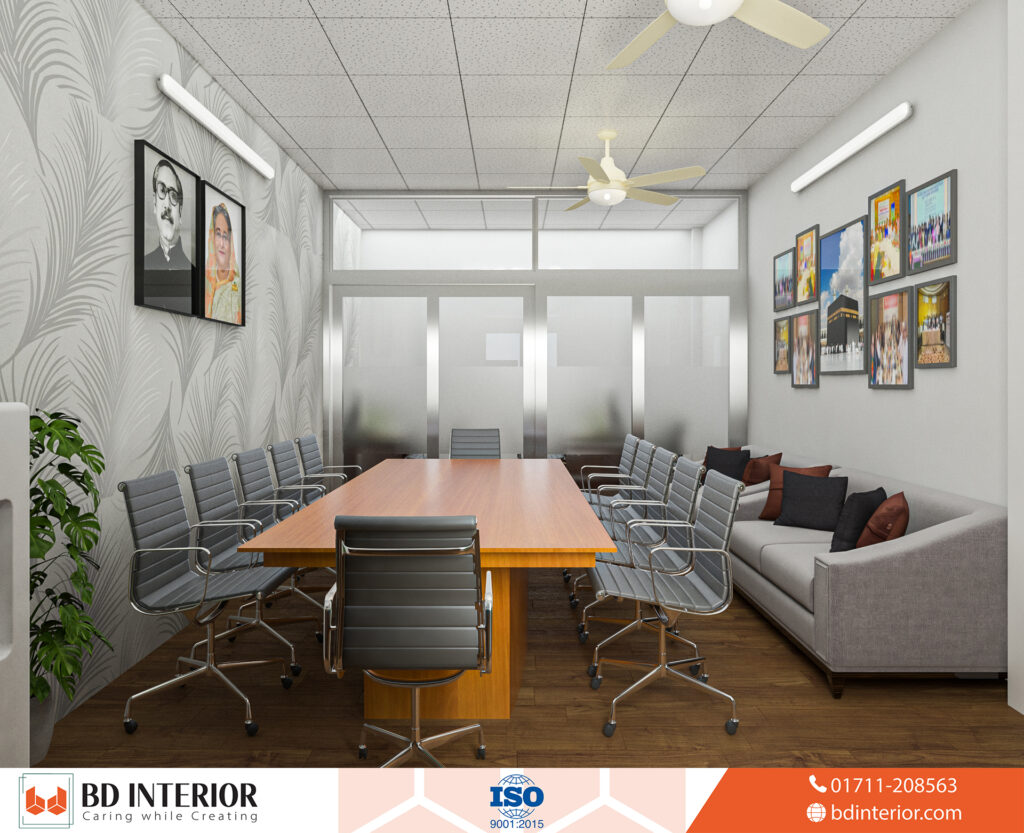
A good layout is key to a productive office. Where you put desks, meeting rooms, and shared spaces affects how easily people can work together. A poor layout makes teamwork harder than it should be.
Given structural real estate constraints, vertical separation is a major operational challenge in Dhaka office buildings that requires highly intentional staircase placement and central voids to maintain team cohesion.
Engaging a certified architectural professional, such as one holding registration IAB No. M-168, ensures your layout meets both strict local building codes and global safety standards.
Begin by looking at how your team works. Developers need quiet time to focus. Sales teams do best in lively spaces with quick chats. Marketing teams benefit from creative areas where ideas can flow.
The main point: one-size-fits-all layouts don’t work well. It’s important to match workspace types to each job’s needs.
Activity-Based Working Zones
Activity-based working has changed modern offices. Instead of giving everyone a fixed desk, you set up different zones for specific tasks:
To resolve this, many modern firms adopt a Team Bay Concept, clustering desk neighborhoods directly next to dedicated, close-range collaborative and private spaces.
- Quiet rooms with soundproofing for focused work
- Standing collaboration areas for quick team huddles
- Comfortable lounges for informal brainstorming
- Phone booths for private calls
Selecting workspaces based on tasks increases productivity and aligns the environment with goals.
Essential Space Planning Ratios
Visitor flow is more important than many people think. Keep busy areas, such as printers, away from quiet zones. Ensure walkways don’t cut through areas where people need to focus. Place meeting rooms near entrances to minimize disturbance to others.
To streamline complex multi-department navigation, we often implement a central Spine Strategy that acts as a primary architectural highway connecting focused work areas to social hubs.
Consider these planning ratios:
| Traditional offices | 100-150 sq ft |
| Open plan workstations | 75-100 sq ft |
| Circulation & common areas | 30% of total space |
| Meeting rooms | 1 per 10-12 employees |
| Quiet rooms | 1 per 20-25 staff |
The 15-Minute Rule
Can someone get to a collaboration space, a quiet room, and a break area within 15 minutes of walking? If not, your office is too spread out. People won’t use spaces that feel too far away.
Zoning creates psychological boundaries without physical walls. Use different flooring to signal zone changes. Vary ceiling heights between social and focus areas. Adjust the lighting intensity to match the purpose of each zone.
Achieving these boundaries quietly requires precise MEP coordination so that HVAC registers and electrical outlets map perfectly to your physical zone boundaries.
Key takeaway: Small design cues help guide behavior and improve each workspace zone.
Build flexibility into your layout from day one. Use modular furniture that reconfigures easily. Install movable partitions instead of permanent walls. Choose wheeled storage over built-in cabinets.
Takeaway: Flexible layouts future-proof your office, supporting team growth and saving resources.
Well-Being & Comfort: Lighting, Acoustics & Biophilic Design
Lighting That Enhances Performance
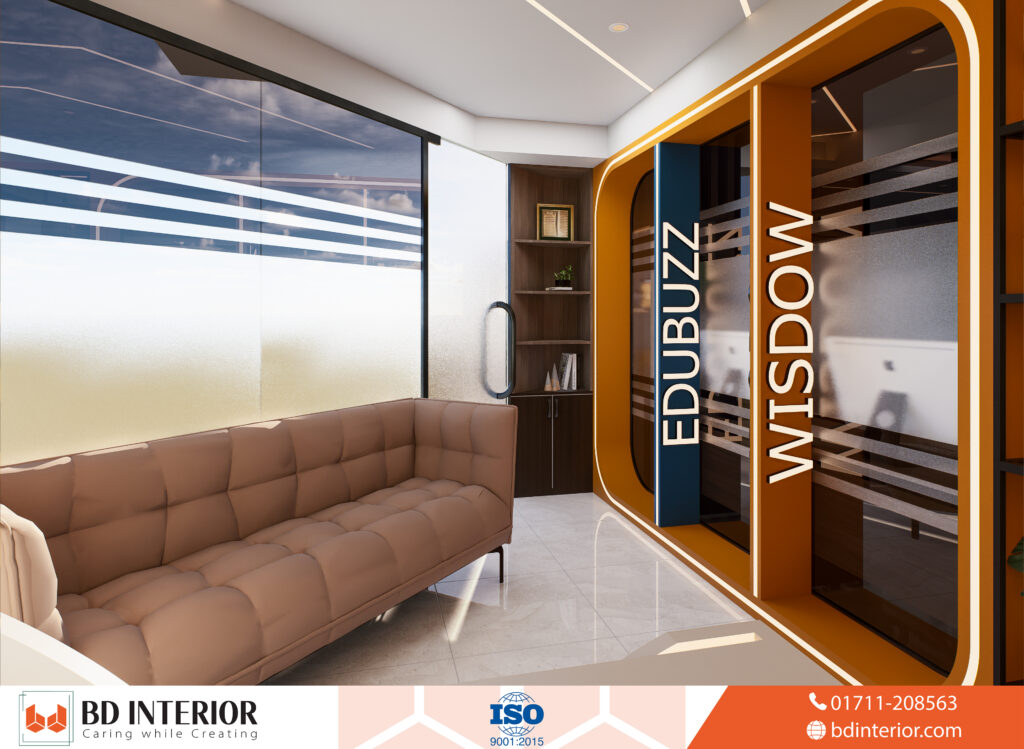
Lighting transforms how people feel throughout their workday. Natural light remains the gold standard for interior design for office wellness. Position workstations within 25 feet of windows whenever possible.
Takeaway: Make natural light a priority for supporting employee wellness and performance.
Artificial lighting needs careful layering. Ambient lighting provides overall illumination at a level of 300-500 lux. Task lighting delivers 500-1000 lux at individual desks, where detailed work is performed.
Accent lighting highlights architectural features and adds visual interest.
Color temperature has a big impact on alertness. Cool white light (4000-5000K) helps people focus in the morning. Warm white light (2700-3000K) makes break areas and afternoons feel more relaxed. Tunable LED lights let you adjust the lighting during the day to match natural rhythms.
Acoustic Design That Actually Works
Sound can make an office work well or cause frustration. Sound masking adds soft background noise to keep conversations private and discreet. Acoustic ceiling tiles absorb up to 70% of sound. Fabric wall panels help reduce echo.
Different spaces need different acoustic targets:
- Open work areas: 35-45 decibels
- Meeting rooms: 30-35 decibels
- Break areas: 45-55 decibels
- Private offices: 30-40 decibels
Bringing Nature Inside
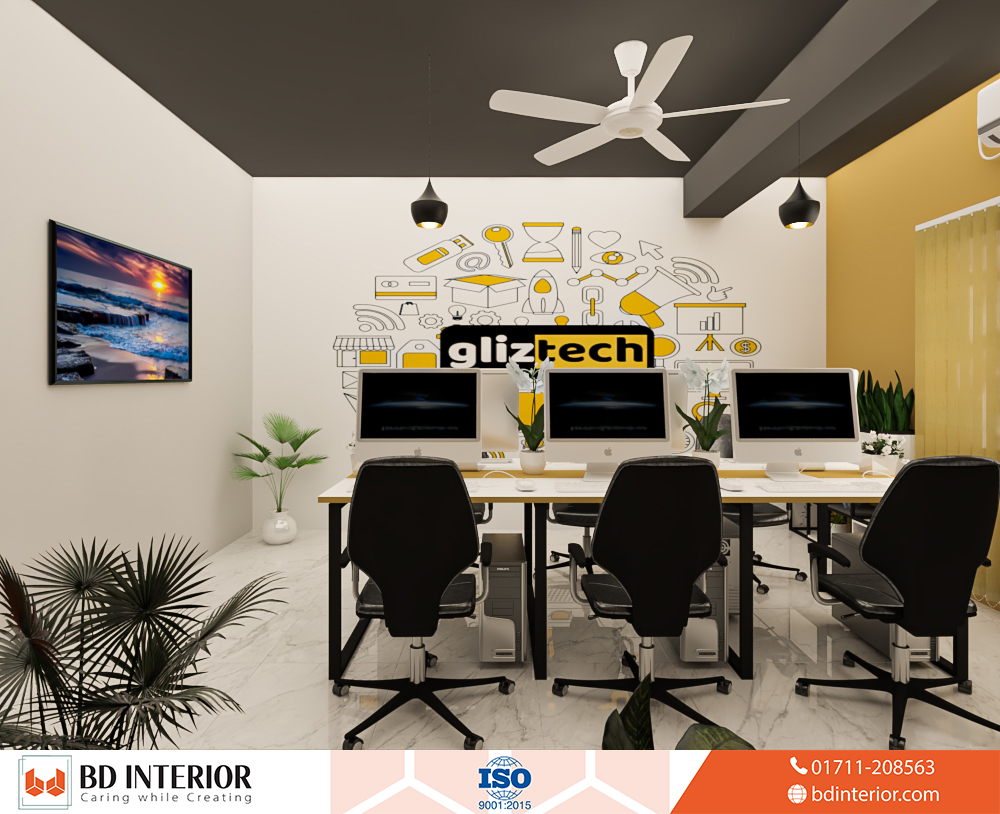
Biophilic design brings nature into the office. Adding plants cleans the air by filtering out toxins. Green walls look great and help purify more air. Even small desk plants can lower stress and boost happiness by 15%.
Natural materials bring organic textures into sterile settings. Wood surfaces add warmth and a soft, visual texture. Stone accents provide grounding weight. Natural fiber rugs introduce tactile.
Integrating traditional Bangladeshi elements into your interior design for office projects, such as handcrafted jute panels, grounds your workspace in a rich cultural narrative.
In summary, natural elements are the most effective in triggering well-being and productivity.
Water features add calming white noise that masks disruptive sounds. A small fountain in the reception area creates an immediate sense of tranquility. Aquariums provide a sense of movement and life during mental breaks.
One the other hand, Views are important, even if you don’t have real windows. Good nature photos can offer similar benefits. Digital screens showing nature scenes help reduce stress in windowless rooms. Skylights bring daylight into areas where windows can’t.
Ergonomics & Flexible Furniture Solutions
Preventing Physical Pain
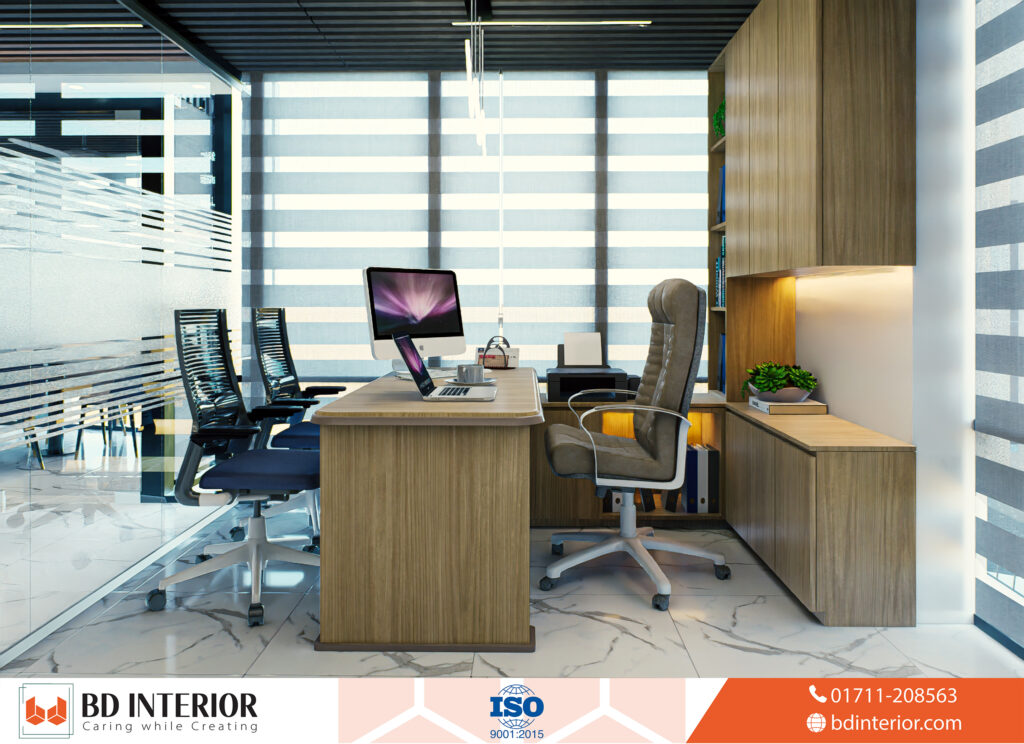
Ergonomic furniture helps prevent pain that can hurt productivity. Bad chairs can cause back problems for about 80% of office workers. Adjustable chairs with good back support, seat depth, and armrests should be standard, not a luxury.
Main takeaway: Comfort drives focus. Sit-stand desks enhance health and attention, providing genuine benefits for the workspace.
Monitor and Workspace Setup
Where you put your monitor affects neck strain. The center of the screen should be at or just below eye level. Keep monitors 20-26 inches from your face and tilt the top back 10-20 degrees to reduce glare.
Essential Ergonomic Features
- Chairs with 5-point bases and smooth-rolling casters
- Desks with built-in wire management systems
- Adjustable task lighting at each workstation
- Footrests for shorter team members
- Monitor arms for easy screen positioning.
Furniture That Adapts
Flexible furniture can adapt to your changing needs, whether daily or monthly. Mobile desks can be easily rearranged into new layouts for various projects. Nesting tables stack out of the way when not in use. Modular seating lets you set up for any meeting size.
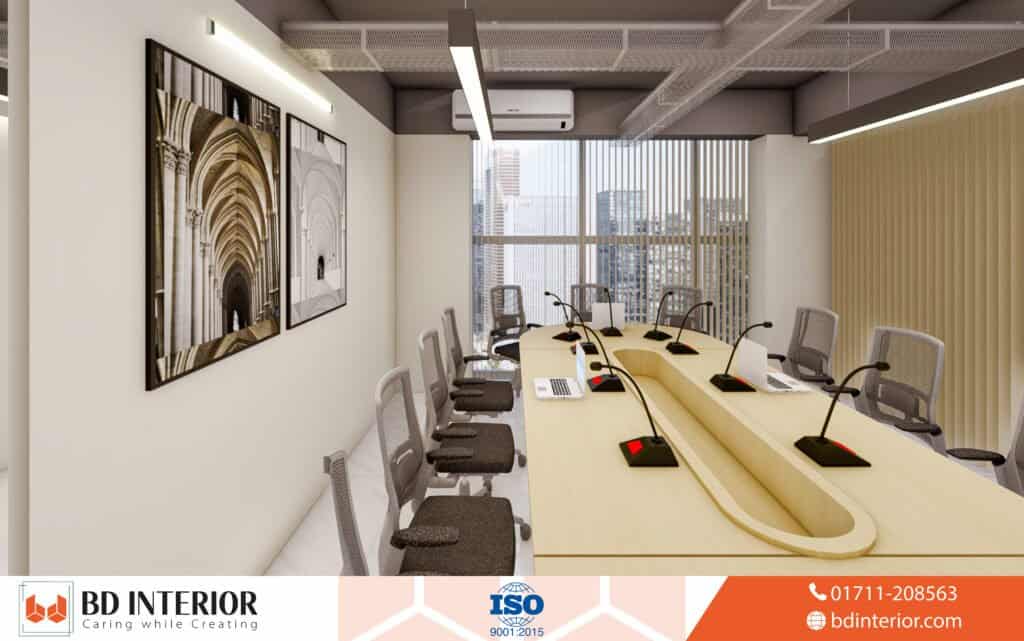
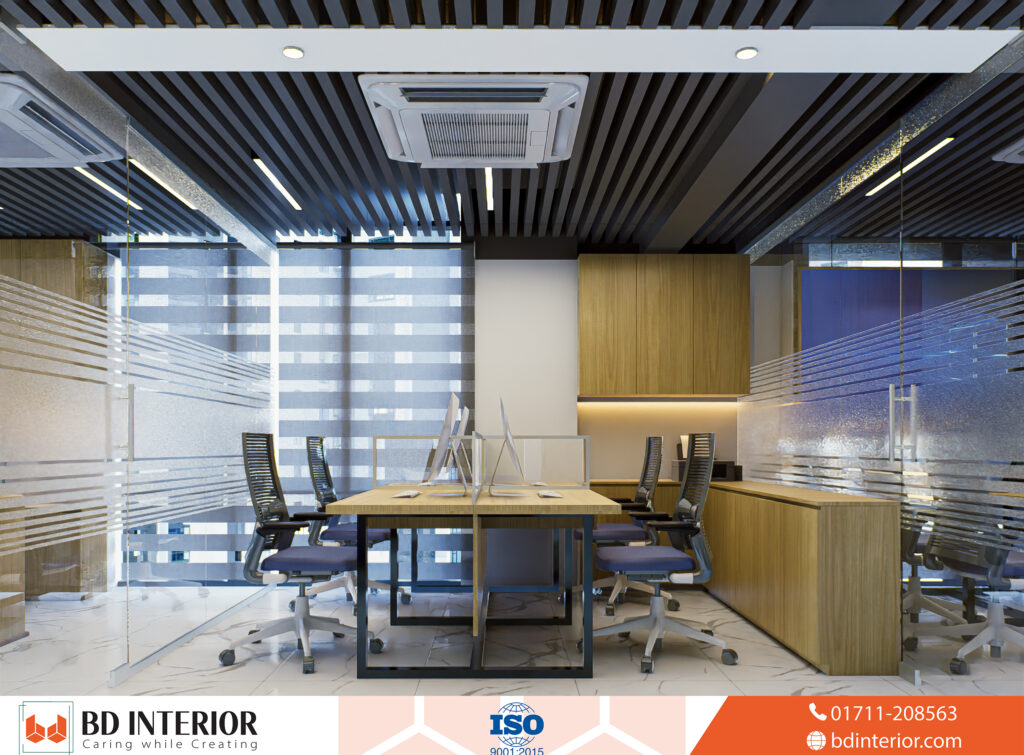
Many progressive companies are shifting away from static linear desks toward agile pods that allow quick, collaborative reconfigurations as project groups change.
Key takeaway: Choosing flexible furniture is a smart investment—adaptability increases value over time.
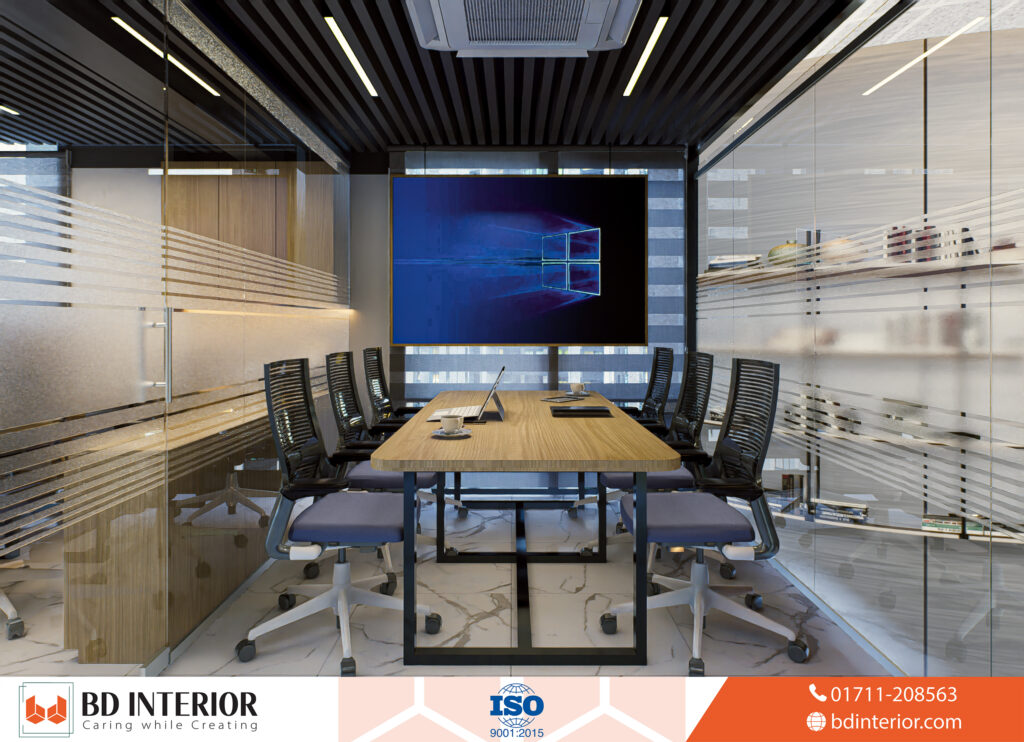
Collaborative furniture helps people interact naturally. High tables with barstools create an energy for quick conversations. Booth seating gives small teams some privacy. Soft chairs and low tables are ideal for informal meetings and brainstorming sessions.
This dynamic was highly evident in our project for Medtronic, where integrated high-top tables and agile seating clusters immediately sparked cross-departmental communication.
Storage solutions keep workspaces clean and minds clear. Personal lockers eliminate clutter in shared desk environments. Mobile pedestals move with employees. Open shelving displays materials while keeping them accessible.
We integrated this seamless storage solution for BayerCropScience, which helped their team maintain a clutter-free, highly organized workspace while supporting flexible hot-desking setups.
Key point: Modern furniture enables people to use technology more effectively, making the workspace more efficient.
Brand Identity & Visual Style: Colors, Materials & Decor
Color Psychology in Action
Color has a strong effect on mood and behavior. Blue helps people feel calm and focused, making it ideal for quiet areas. Yellow sparks creativity and optimism in group spaces. Green eases eye strain and brings balance to in-between areas. Red gives energy, but can be too much if overused.
Your color choices for interior design in office spaces should align with the work being done in each area.
Want to boost productivity and satisfaction? Start upgrading your workspace today and see the results for yourself.
Summary: Intentional design can express your identity without overwhelming the workspace.
Materials That Communicate Values
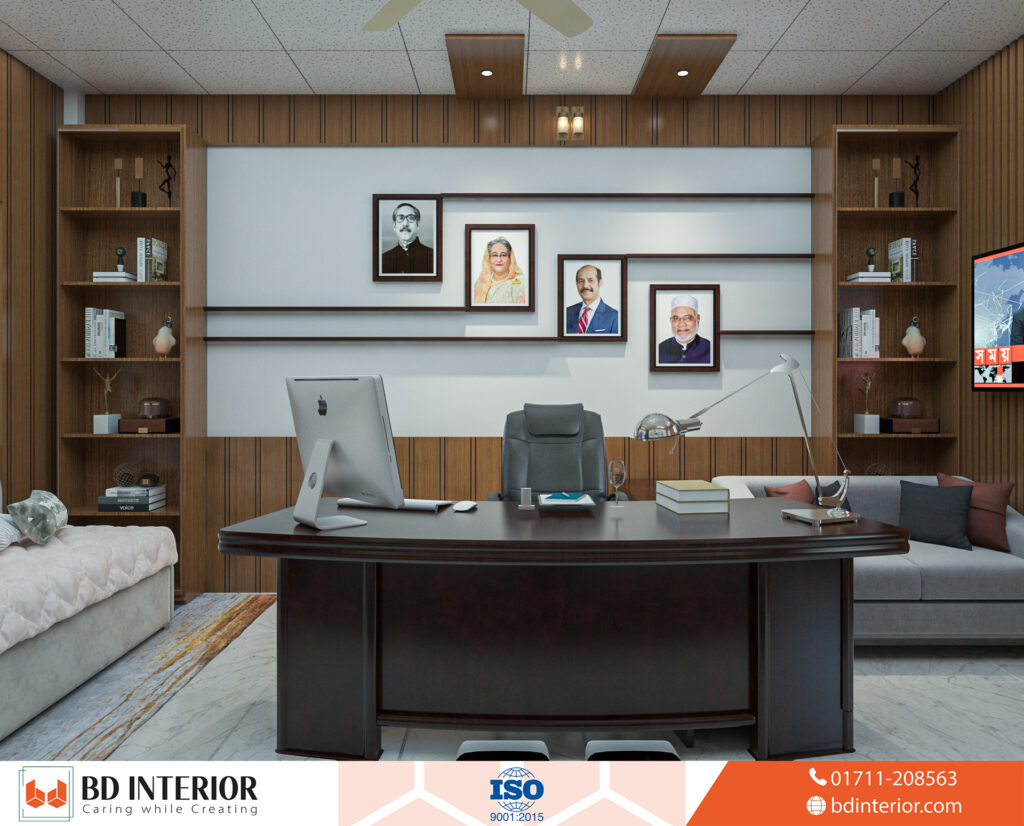
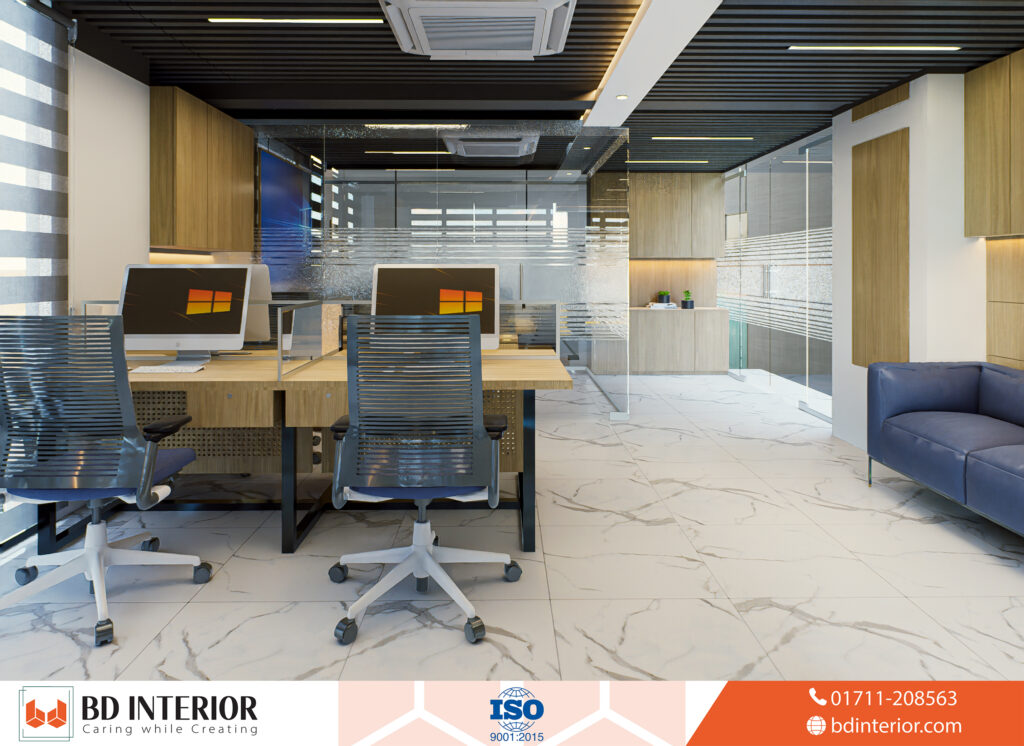
The materials you choose reveal your values before you even speak a word. Using reclaimed wood demonstrates your care for the environment. Polished concrete and steel give an industrial, modern feel. Rich hardwoods show professionalism, while glass and chrome suggest openness and a modern style.
Professional commercial firms always establish a detailed BOQ beforehand to align material selections and custom furniture costs with the client’s financial boundaries.
Pick materials that truly reflect your company.
Texture adds depth, preventing spaces from feeling Texture makes spaces feel more interesting and alive. Mix smooth and rough surfaces. Pair hard materials with soft fabrics.
Use both matte and shiny finishes, engaging over time.
Making Walls Tell Stories
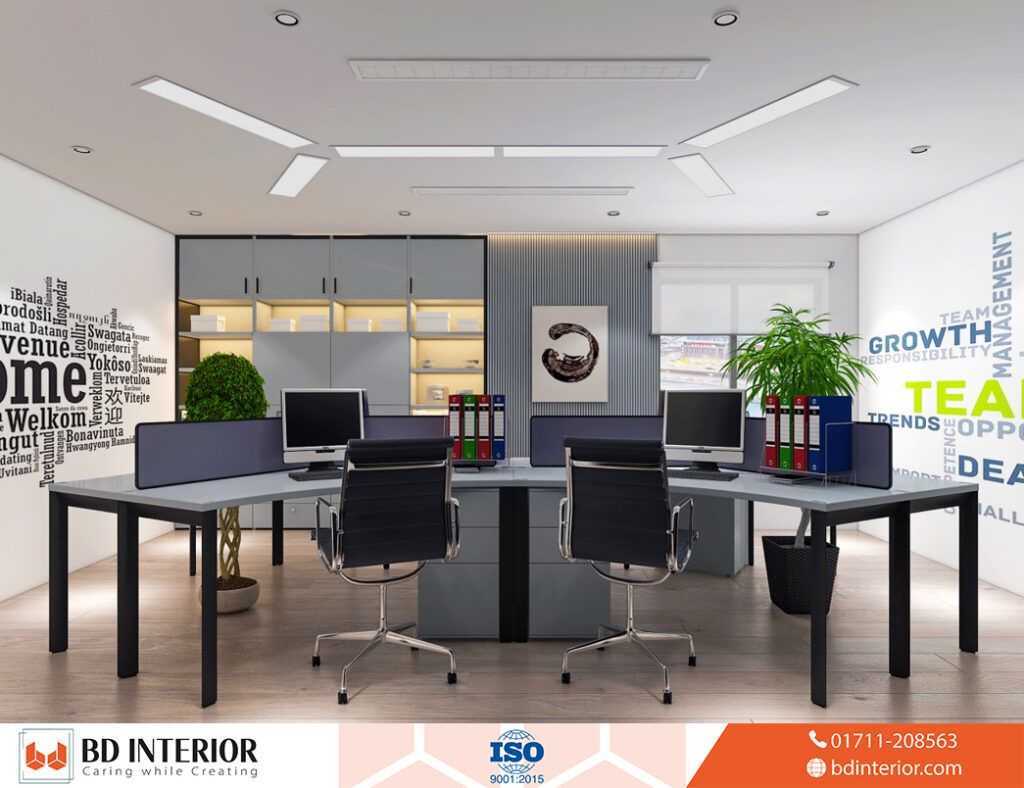
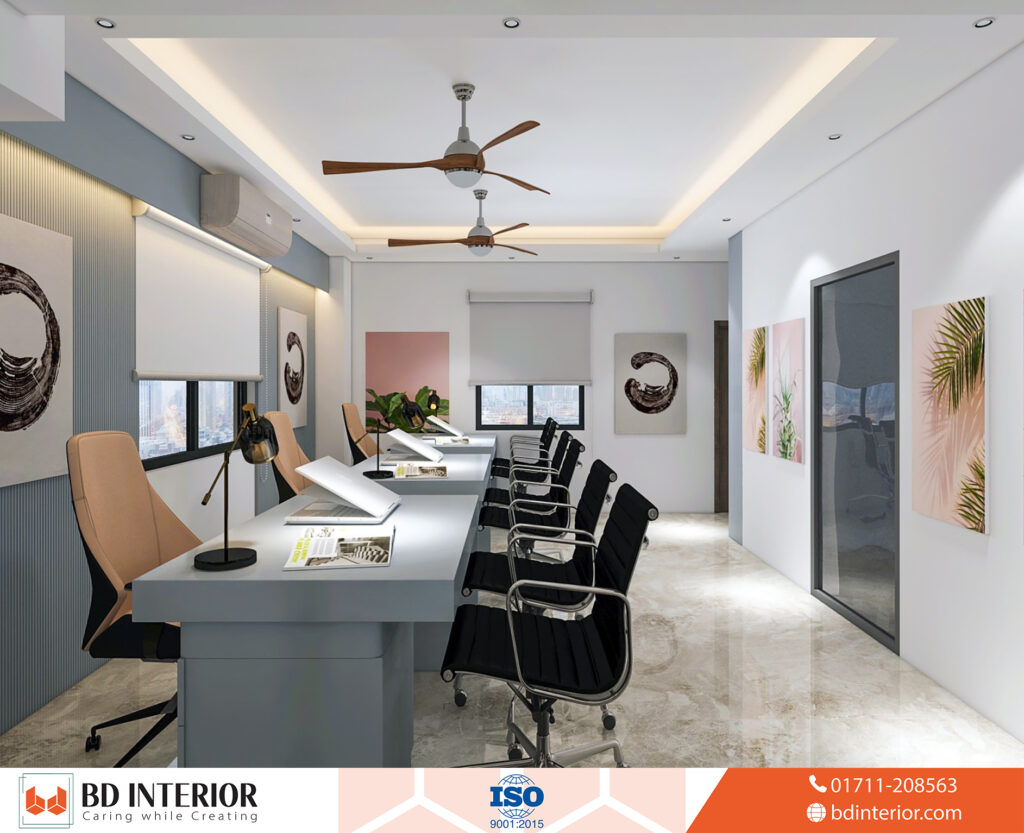
Artwork and graphics turn empty walls into ways to tell your story. Show your company’s journey with timeline graphics. Highlight your client work or describe how your products have made a positive impact. Display team photos to celebrate your team members. Hire local artists for unique pieces that spark conversation.
Skip generic corporate art that doesn’t reflect your culture.
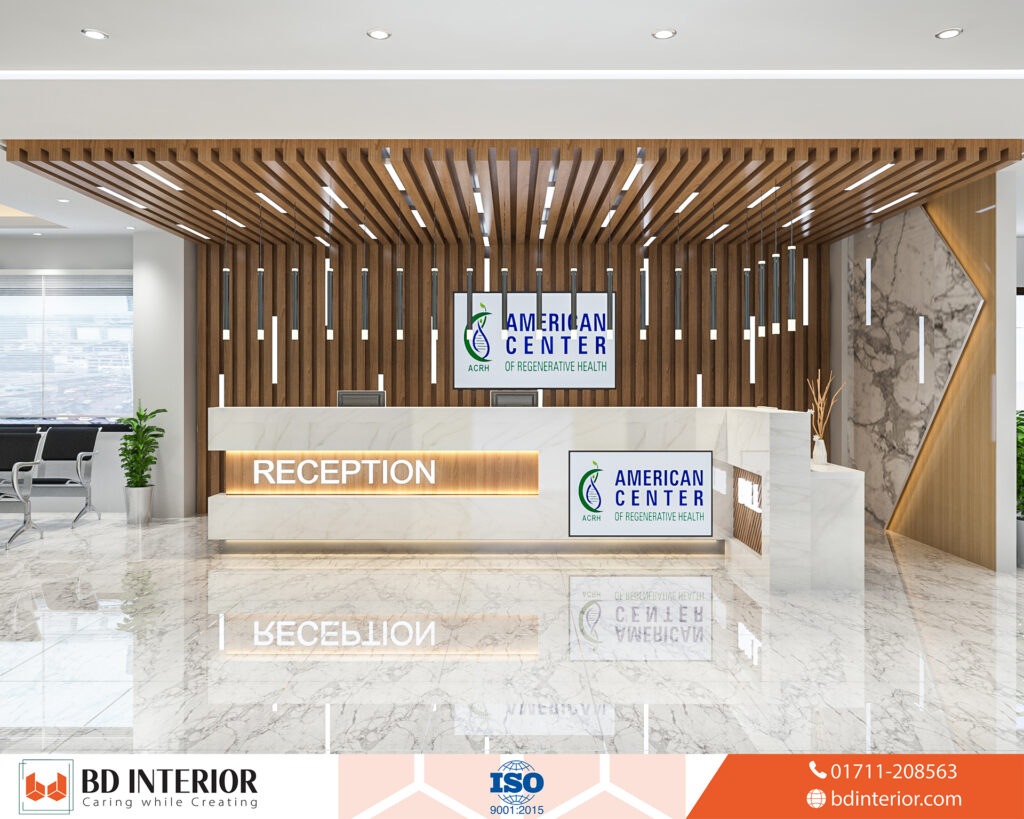
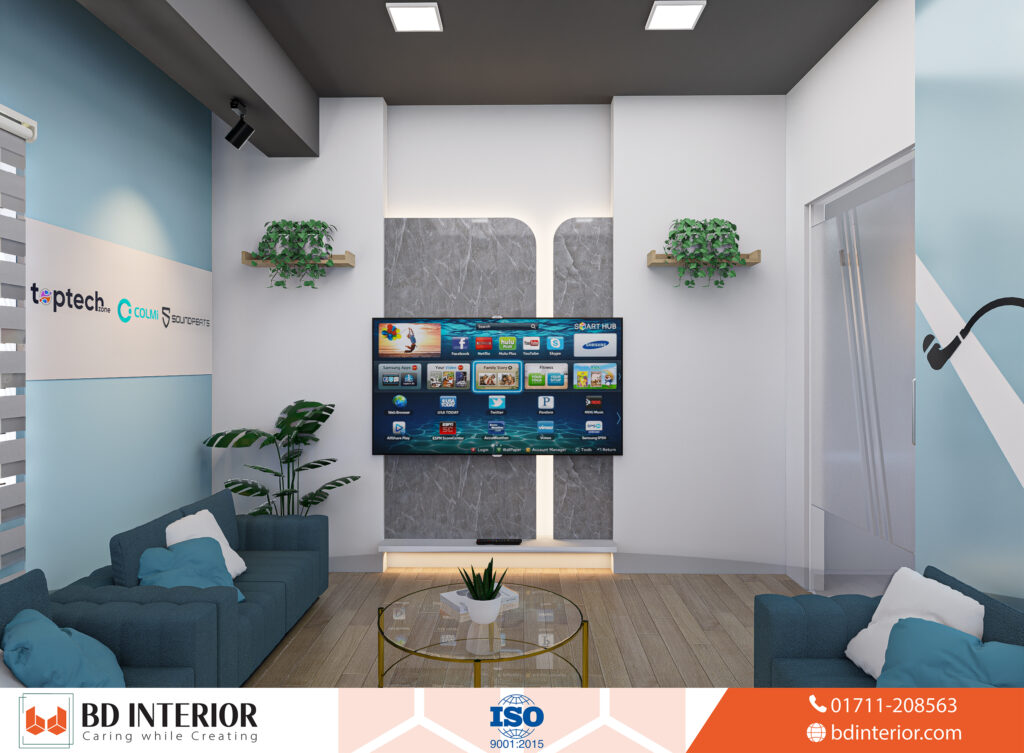
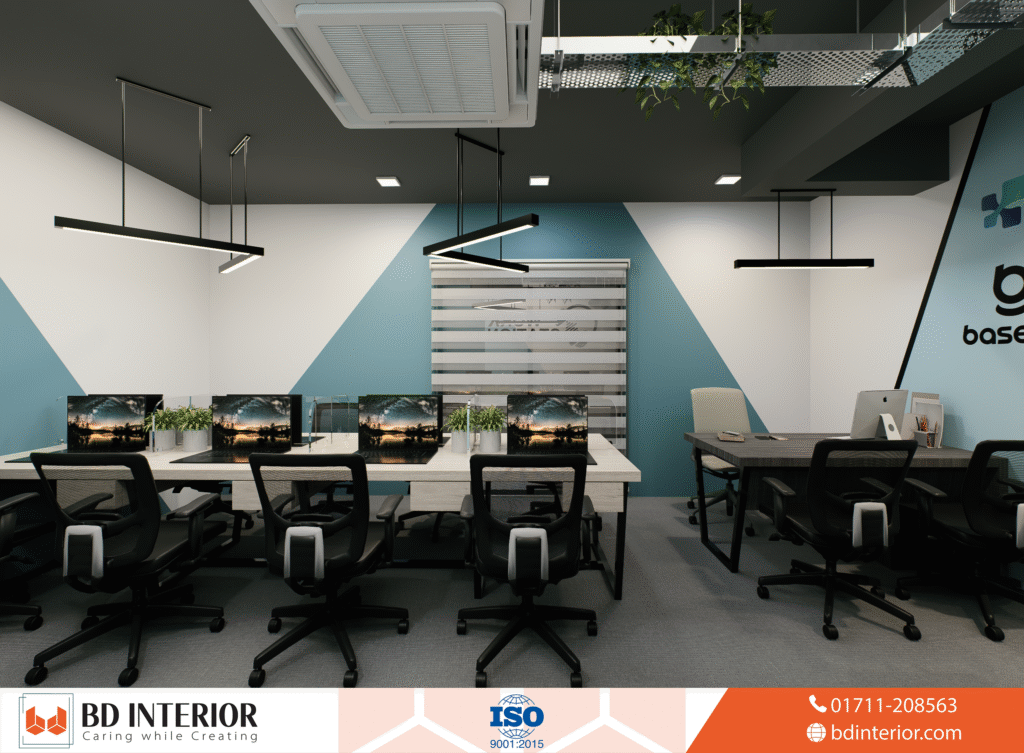
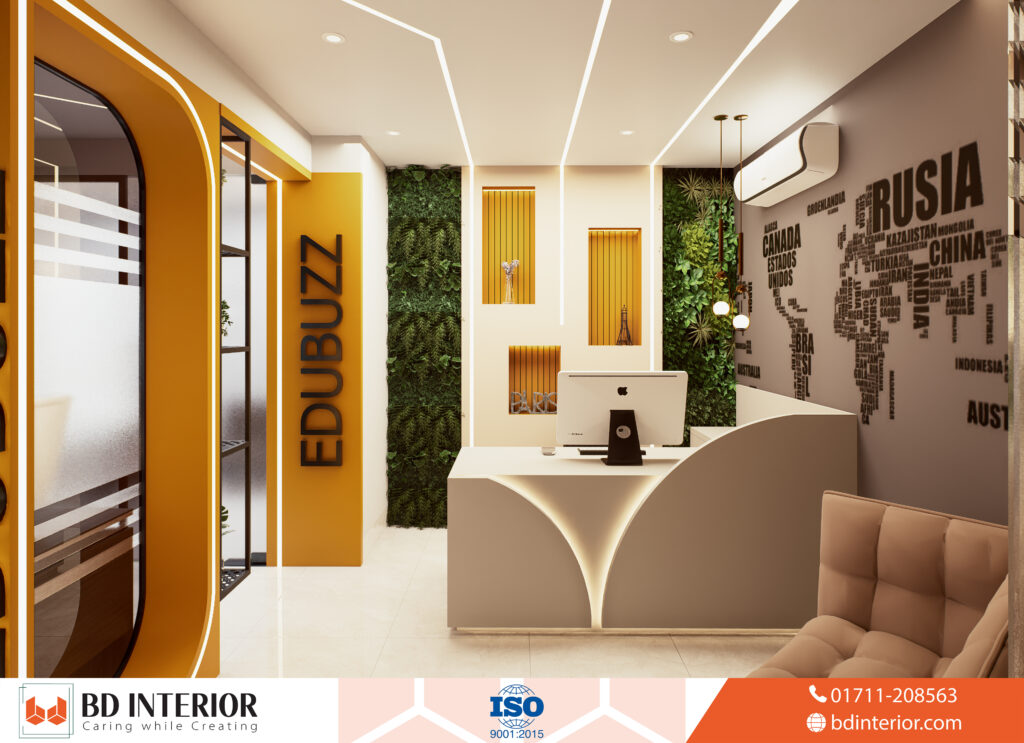
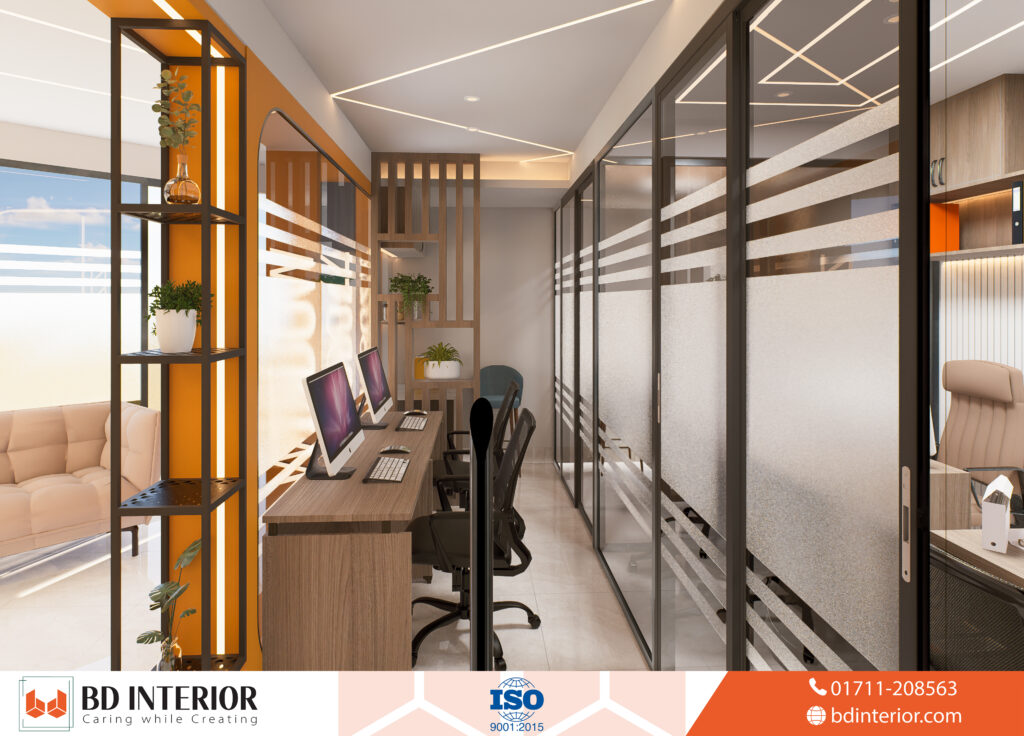
Reception areas create a strong first impression. Give this space extra care because it sets the tone for what people expect next. Use eye-catching lighting. Pick furniture that’s both comfortable and stylish. Show awards in a way that feels genuine, not boastful.
Arrange seating to create a warm and welcoming atmosphere, rather than one that feels cold or impersonal.
Personal Touches That Build Community
Your office should feel lively, not generic. Allow team members to personalize their spaces within established guidelines. Encourage plants, photos, and personal items to make the space feel welcoming. Designate areas where employees can share their hobbies and interests.
These personal touches help build community and make people feel they belong.
Update your space with the seasons to keep it fresh without big renovations. Switch out artwork every few months. Change accent colors each year. Update graphics when you launch new products. These changes show your space is active and responsive.
The modern workforce increasingly demands hybrid-ready layouts that seamlessly bridge the gap between remote collaboration and in-person physical brainstorming zones.
Our team successfully demonstrated this principle when we designed 1,250 sqft office space for VIVO in 2021, optimizing every inch of their tech-focused footprint.
We put this exact adaptive strategy into practice when we redesigned 1,350 sqft corporate office for KCN in 2023, maximizing visual flow and spatial versatility.
Final Words
Finally, your office is more than just walls and desks. It’s where ideas grow, teams connect, and your culture becomes real. Good office design creates spaces that inspire, support, and energize everyone. Start by understanding your team’s needs, plan for flexibility, and always focus on the basics: lighting, acoustics, and ergonomics. So keep in mind, investing in great design pays off every day.
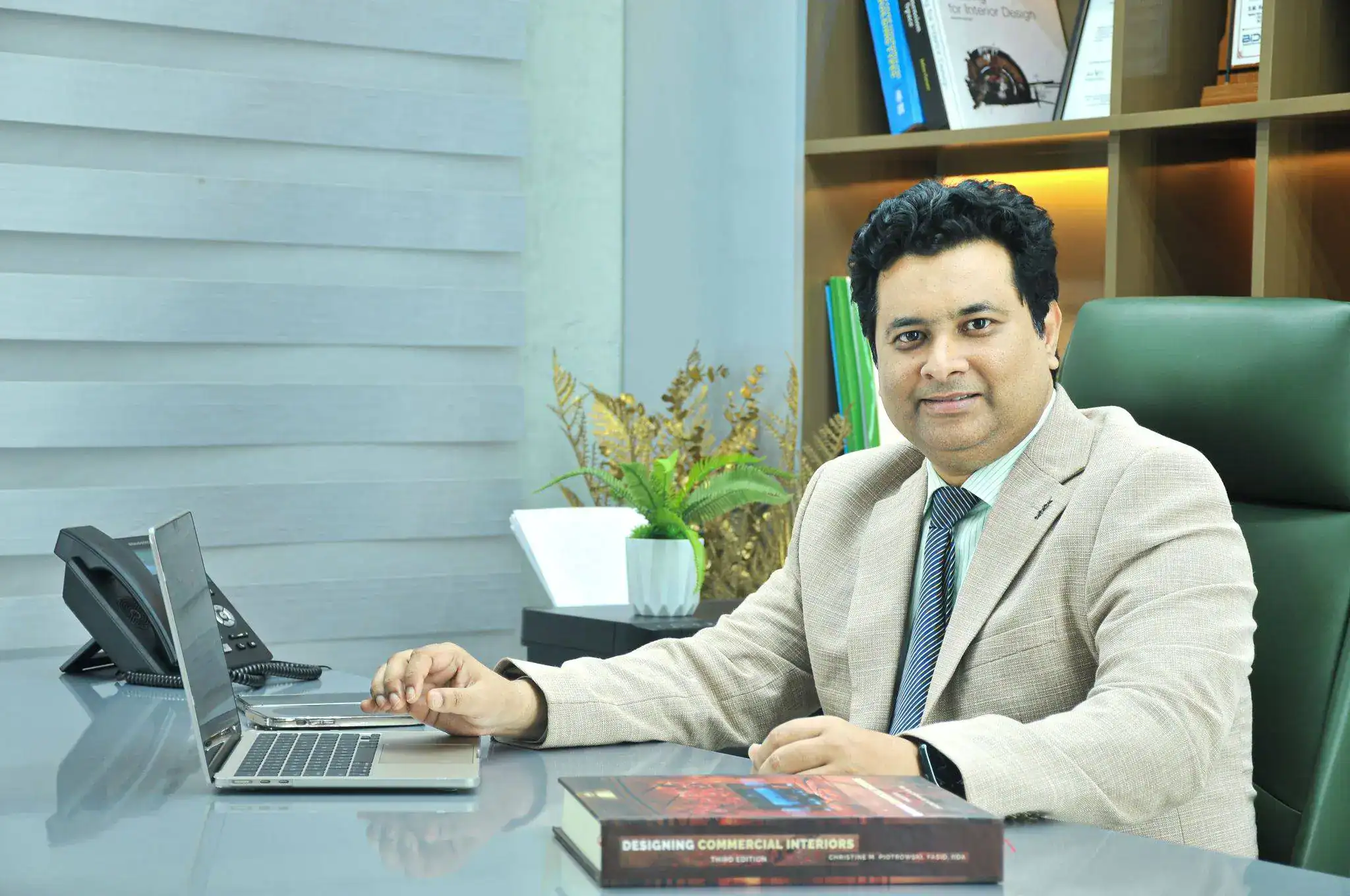
S.M. Rezaul Haque is a seasoned interior design consultant with 15+ years of experience. An AIUB graduate and Senior Vice President of BIDCOA, he specializes in creating functional, sustainable, and visually inspiring spaces. As the driving force behind BD INTERIOR, he has helped shape 700+ Bangladesh’s most innovative interior design projects.