
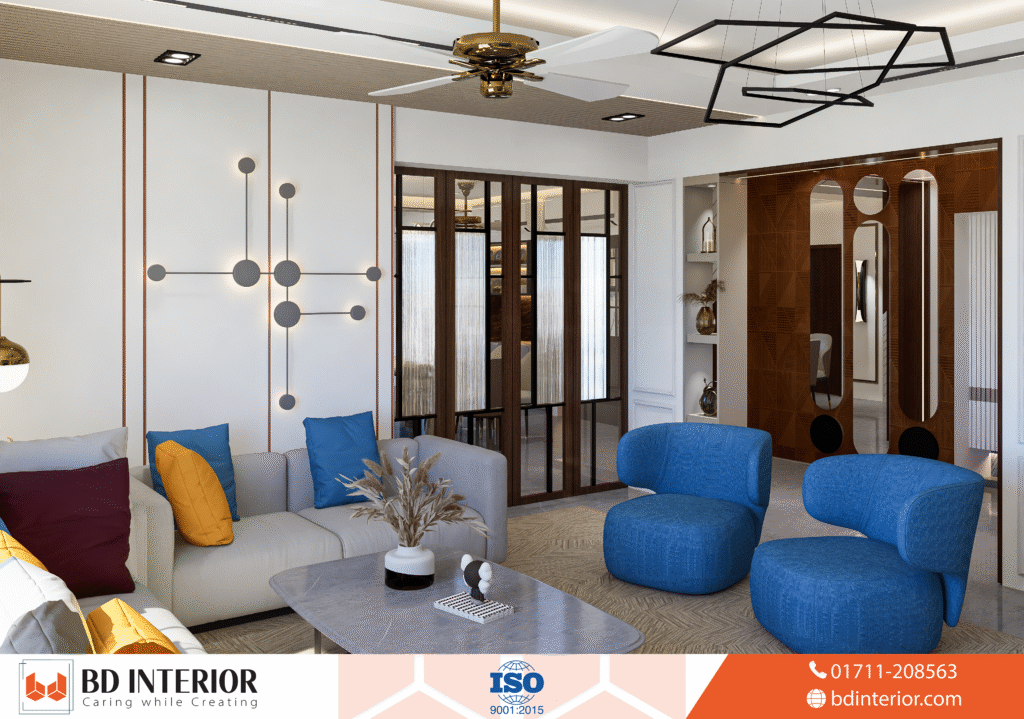
Creating a modern drawing room means balancing daily comfort with practical function. This Modern Drawing Room Design: Complete Guide to Creating Your Perfect Space walks through layout planning to color selection. You can build a room that works for how you live. Recent industry reporting confirms that 2026 living rooms are moving away from stiff showroom styling toward warmer, more livable spaces that feel personal rather than staged.
TL; DR
- Modern drawing rooms in 2026 prioritize warmth, flexibility, and comfort over rigid formal styling and matching furniture sets.
- Deep, saturated earthy tones are replacing all-beige minimalism as the dominant color direction across multiple 2026 design trend reports.
- Layered lighting with warm 2700K to 3000K bulbs and flexible curved furniture define the current style direction.
Key Point
If you're skimming, here's what actually matters for getting this right:
- Keep at least 30 inches of clearance along every primary walkway to prevent the room from feeling cramped or blocked.
- Choose a rug extending 6 to 8 inches beyond each side of your sofa so the front legs of all seating rest on it.
- Skip single overhead fixtures; use multiple warm lamps between 2700K and 3000K for layered, inviting light throughout the room.
Table of Contents
- What Is Modern Drawing Room Design?
- Color and Texture Direction for Modern Drawing Room Design
- Lighting and Furniture for Your Modern Drawing Room Design
- Managing Small Footprints and Awkward Layouts
- People Also Ask
- Final Thoughts
What Is Modern Drawing Room Design?
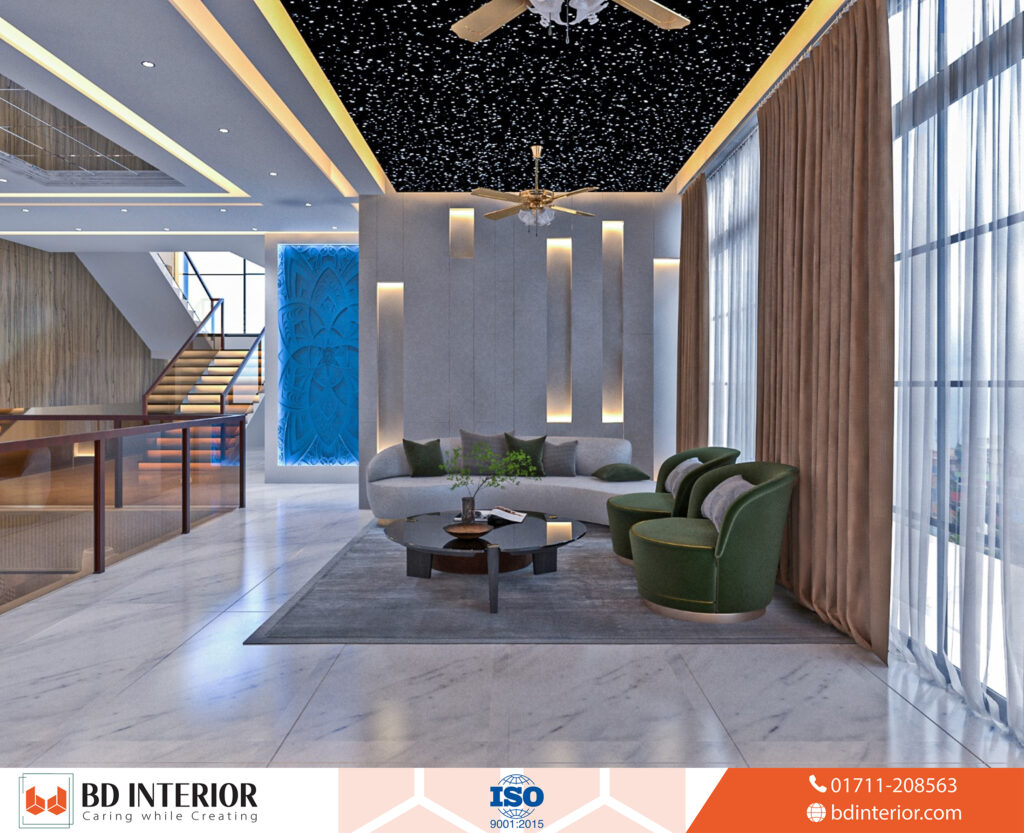
Modern drawing room design centers on adaptable layouts, natural materials, and furniture that serves both daily living and occasional entertaining without feeling formal or stiff; instead of rigid parlor seating, contemporary rooms prioritize comfortable conversation zones, clear walkways, and integrated storage that keeps the space open and livable.
Historical reception rooms were built for formal presentation. Today's homes need multi-purpose flexibility, and in early 2025, design forecasts showed demand for multi-sensory social spaces would reshape residential architecture. As Ideal Home expert coverage notes, "the main theme of 2026 living rooms is a relaxed, comfortable feel."
Layouts in 2026 favor relaxed, flexible configurations over rigid formal sets. Performance speaks. Floating consoles, low-profile seating, and open-base coffee tables keep sightlines clear.
You don't need matched furniture sets or perfect symmetry to make the space work; in urban apartments across Dhaka.
Where floor area comes at a premium, keeping at least 30 inches of clearance along main walkways helps compact rooms feel really larger.
Personalization has become a defining feature of modern drawing rooms. Designers bit by bit recommend gallery walls, hand-picked displays, and vintage art mixed with contemporary pieces to make rooms feel collected rather than catalog-ordered. The goal is a space that looks like someone actually lives there.
How does broken-plan zoning differ from open-plan layouts?
For the average user, broken-plan zoning divides spaces using open shelving, half-walls, or level changes rather than full structural walls. This preserves visual connectivity while craft subtle boundaries between different activities.
Instead of removing every wall, broken-plan setups introduce partitions like library-style wrapping shelves or fluted glass panels. These elements define zones for reading, entertaining, or remote work while keeping the room connected. A minimalist interior design layout can help you plan these zones without clutter.
Color and Texture Direction for Modern Drawing Room Design
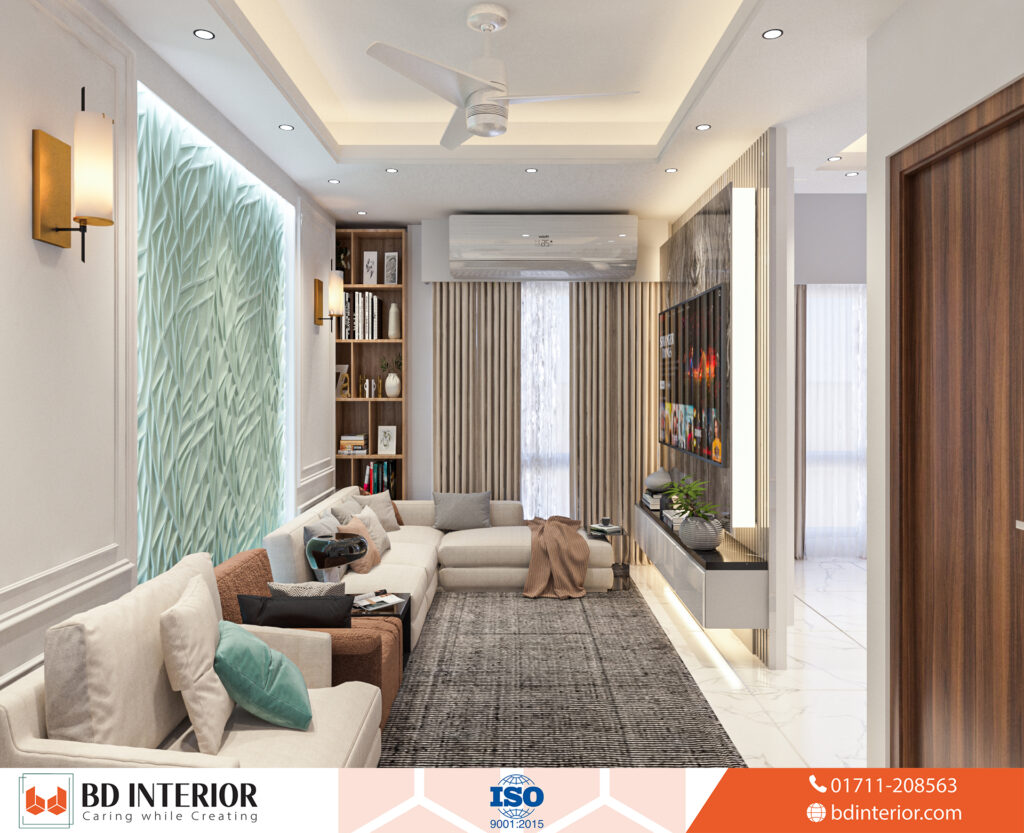
The dominant 2026 color direction leans toward deep, saturated, earthy, and warmer tones, replacing the all-beige minimalism that dominated previous years. Industry data indicates that richer colors and layered textures create a more welcoming room, a shift echoed across multiple 2026 trend reports.
As of October 30, 2024, warm minimalism had largely replaced the stark, clinical white interiors of earlier years. Homeowners now gravitate toward soft greiges, warm greys, and muted sands paired with forest greens, terracotta, or deep navy. In humid subtropical regions like Bangladesh, matte finishes and treated hardwoods hold up far better than high-gloss laminates, which show moisture smudges quickly. Natural materials remain central to the modern look, and linen, wood, rattan, cane, and stone add tactile depth without complex decor.
| Material Type | Practical Advantage | Ideal Application |
|---|---|---|
| Natural Teak & Oak | Adds organic warmth and structural longevity | Furniture frames, slatted partitions, floating ledges |
| Tempered Glass | Preserves light flow across compact rooms | Coffee table tops, display shelving units |
| Matte Black Metal | Delivers crisp contrast without high glare | Floor lamp stems, chair legs, hardware accents |
| Woven Jute & Linen | Absorbs sound and softens geometric edges | Area rugs, drapery panels, throw cushions |
Meredith Owen, a designer quoted in recent coverage, puts it straight up: "Deep, saturated color will be a major theme in 2026." Shea McGee of Studio McGee adds that "pattern-on-pattern layering will continue to see a resurgence this year through drapery, wallpaper, upholstery, and throw pillows.", so don't shy away from bolder tones, but coordinate carefully so patterns complement rather than compete.
Many the majority like personalized decor. But some worry that too many patterns or statement pieces can make the room feel busy. Pick one dominant pattern and let the others play supporting roles.
What colors work best for a modern drawing room?
Warm neutrals like greige, cream, and soft taupe paired with an earthy accent tone work best. These shades reflect natural light efficiently during the day and create a restful backdrop for evening socializing. Avoid stark white on its own, and which can feel sterile without texture to warm it up.
Lighting and Furniture for Your Modern Drawing Room Design
Effective lighting in a modern drawing room requires three distinct layers: ambient overhead illumination, task lighting for reading, and accent lights to highlight architectural features.
A single bright ceiling fixture can't handle every scenario. Warm bulbs between 2700K and 3000K across multiple sources create a restful ambiance rather than harsh glare.
In most scenarios, homeowners constantly welcome the shift toward warmer, cozier rooms. Because it feels more livable than showroom styling. Understanding why lighting matters in interior design helps you choose the right color temperature and fixture placement. The recommended split is roughly 45% ambient base; 35% task fixtures — and 20% accent highlights. So each layer handles its job without overpowering the others.
Recommended Lighting Distribution for Modern Drawing Rooms (%)
Curved sofas and softer silhouettes are a recurring 2026 signature. A L-shaped sectional paired with two armchairs gives flexible seating that encourages eye contact without physical barriers. Group decorative accessories using the 3-5-7 rule in interior design, applying odd-numbered arrangements to create a balanced yet casual display.
What furniture setup works best for entertaining?
Under normal conditions, pair a curved sofa with two low-slung armchairs opposite it, keeping the center open for circulation. Lightweight nesting tables let you reposition surfaces as guest numbers shift. More precisely, keep at least 18 inches between the sofa and coffee table. So most of us can walk through comfortably.
Managing Small Footprints and Awkward Layouts
To improve compact or irregularly shaped drawing rooms, use vertical storage, wall-mounted consoles, and furniture with raised legs to reveal more floor area. Choosing fewer, appropriately scaled pieces prevents visual clutter that makes small spaces feel cramped. The goal is visual breathing room, not squeezing in as many pieces as possible.
Don't force standard symmetrical layouts on narrow walls or angled corners. If you need to fix an awkward room layout, position your main sofa parallel to the longest unobstructed wall and use corner shelving to turn dead spaces into storage. Since around 2002, industry experience confirms that durable built-ins consistently outlast freestanding flat-pack furniture in urban homes. Built-in library bookcases and floating media benches eliminate floor-level visual bulk, which matters most when every square foot counts.
Under normal conditions, avoid buying downsized novelty furniture for small rooms. Multiple tiny items make a space feel more cluttered than two well-proportioned, functional pieces.
- Measure circulation paths — Confirm all main walkways retain at least 30 inches of unobstructed width.
- Audit your lighting temperature — Replace stark daylight bulbs with 2700K to 3000K warm LED options across floor and table fixtures.
- Select an anchoring rug — Choose a substantial weave that accommodates the front legs of your primary seating.
- Consolidate loose decor — Group decorative ceramics and books into odd-numbered clusters while leaving clear negative space.
People Also Ask
How can I make my drawing room look modern on a budget?
Shifting gears a bit, focus on decluttering, switching bulbs to 2700K warm white, and introducing a single large area rug. Repainting accent walls with a muted neutral and styling shelves with fewer, larger objects set up a polished look without custom carpentry costs.
What is the best color for a modern drawing room?
Warm neutrals like greige, cream, and soft taupe paired with an earthy accent tone work best.
How do I choose the right size rug for a drawing room?
Select a rug that extends at least 6 to 8 inches beyond each side of your sofa, allowing the front legs of all chairs to rest on top. Undersized rugs that float in the center make the room feel smaller and disconnected.
Can I combine traditional items with modern drawing room design?
Yes. Pairing contemporary clean-lined sofas with handcrafted artisan items like brass planters or regional embroidered textiles make a layered look. The key is maintaining clean background architecture. Plus, so traditional accents stand out as intentional focal points rather than random additions.
Final Thoughts
Your modern drawing room design comes down to one principle: build for how you live, not how a showroom looks. Choose curved furniture, layer your lighting, adopt warmer tones, and keep walkways clear. Personalize with vintage pieces and mixed metals so the room tells your story.
Remember that trend-led styling ages faster than a timeless neutral base, so invest in quality foundational pieces and let trends fill the accents. Measure your room, sketch your layout, and pick your palette. That's where every great drawing room begins.

S.M. Rezaul Haque is a seasoned interior design consultant with 15+ years of experience. An AIUB graduate and Senior Vice President of BIDCOA, he specializes in creating functional, sustainable, and visually inspiring spaces. As the driving force behind BD INTERIOR, he has helped shape 700+ Bangladesh’s most innovative interior design projects.